


An important revenue stream for Russia in Central Asia appears to be faltering, with increasing financial difficulties threatening the nation’s dominance in the region's power sector.
For years, Russia's state-controlled atomic energy company, Rosatom, and other Kremlin-linked enterprises have played a key role in energy projects across Central Asia. However, mounting evidence suggests that financing these ventures is becoming increasingly difficult, leading to a slowdown in business.
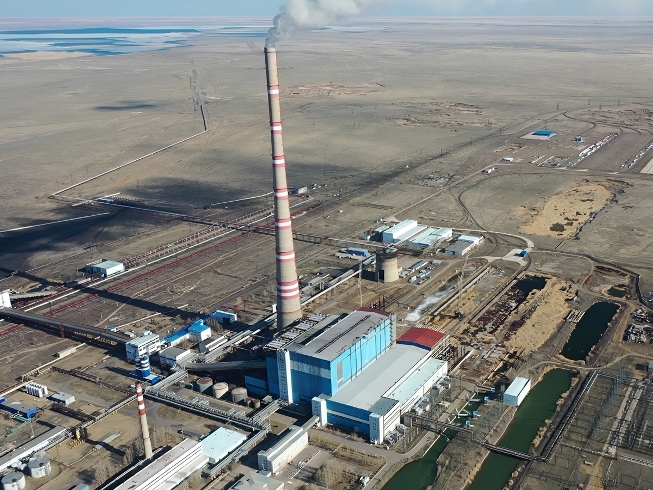
Eurasianet says one of the most notable examples of this shift can be seen in Kazakhstan, where Russian companies have been edged out of key power projects. Initially, Russian firms were slated to complete the next phase of construction at the Ekibastuz GRES-2 power station, one of the country’s largest energy projects. However, after the Kremlin's financing plan fell through, Kazakhstan opted to engage China’s Harbin Electric International instead. The Chinese company agreed to finish the project at a significantly lower cost—almost two-thirds less than the Russian estimate—saving the Kazakh government nearly $500 million.
In addition to the Ekibastuz GRES-2 setback, Russia's financial woes have resulted in the loss of other key contracts in Kazakhstan. In 2025, state-controlled Inter RAO lost contracts to build power plants in the cities of Kokshetau, Semey, and Oskemen. The contracts were subsequently awarded to Chinese companies, further highlighting the shifting dynamic in the region.
Uzbekistan is also showing signs of unease regarding Russia’s ability to fulfill major energy projects. Officials in the Central Asian nation have expressed concerns over Rosatom’s ability to deliver on plans to build nuclear reactors. As a result, Uzbekistan has turned to France’s Framatome to explore potential participation in its nuclear plant construction projects. In a statement issued on March 9, Uzbekistan's energy agency, Uzatom, confirmed discussions with Framatome centered on the introduction of advanced automated technological management systems at nuclear power plants.
As Russia’s financing challenges continue to mount, it remains to be seen whether the country will be able to maintain its foothold in Central Asia’s power sector or whether the region will increasingly turn to Chinese and Western companies for energy infrastructure projects.