


The State Agency for Public Service and Social Innovations under the President of the Republic of Azerbaijan (SAPSSI) and its “ASAN Service” were established in 2012 at the initiative of President Ilham Aliyev as an essential part of comprehensive institutional reforms in public administration of the country.
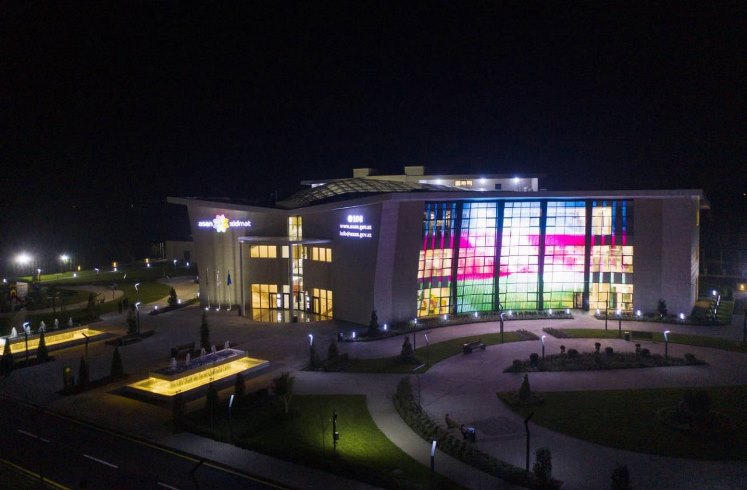
The “ASAN Service” centers represent a unique one-stop-shop model for facilitating public service delivery, allowing citizens to access over 400 services, offered by 15 public and 30 private organizations, under one roof. Created to maximize citizen satisfaction, the model allows for the transparent, accountable, and efficient provision of public services. Currently, there are 28 “ASAN Service” centers operating throughout the country, which have in total received over 91 million citizen applications and citizen satisfaction rate currently stands at an impressive 99.8%.
The ASAN model has become one of the central pillars of Azerbaijan’s national anti¬corruption strategy. By minimizing direct interaction between citizens and officials and ensuring that all payments are made electronically, ASAN Service has significantly reduced opportunities for bribery and informal payments. Each service process is digitally tracked, service halls are designed with transparent glass walls, and transactions are processed through the ASAN Payment System or online platforms, measures that altogether ensure maximum accountability and transparency.
To ensure efficient management of “ASAN Service” centers and continuous improvement in service delivery, several innovative technological systems such as Electronic Document Flow System, Business Intelligence Reporting System, Human Resources Management System, Monitoring and Evaluation System, ASAN Payment System, and ASAN Appeal System have been developed.
Recognizing that not everyone may have access to traditional “ASAN Service” centers, the SAPSSI has initiated mobile "ASAN Service." Comprising ten specially equipped buses, this fleet operates on a predetermined schedule, delivering essential public services directly to locals residing in distant regions, thus ensuring inclusivity and accessibility for all.
The SAPSSI also operates one of the first dedicated public service radio and television platforms in the region – “ASAN Radio” and “ASAN TV.” These media outlets serve as vital tools for raising public awareness, promoting transparency, and fostering civic engagement.
Besides public service delivery, the SAPSSI takes lead in promoting the startup ecosystem in Azerbaijan. Through the INNOLAND” Incubation and Acceleration Center, the “Innovations Center” LLC under the SAPSSI provides an environment for promoting the development of various startup projects. Since its establishment in November 2018, INNOLAND has become a cornerstone of Azerbaijan’s innovation landscape. Over six years, the center has incubated 88 startups and accelerated 36 promising ventures, hosted 25 co-working residents, fostering collaboration and creativity, organized 36 Demo Days, showcasing startup achievements, facilitated more than 50 Hackathons and over 70 InnoTalks, driving ideation and dialogue. Also, they have delivered 36 Webinars and 11 Product Hunt events, expanding outreach and engaged over 20,000 participants across all events and programs.
Over the years, “ASAN Service” has evolved into a distinctive intellectual product of the Republic of Azerbaijan, attracting significant international interest as a model of innovative public service delivery. To date, the SAPSSI has concluded over 30 MoU and Agreements with various countries and international organizations on the export of ASAN model. In this context, the SAPSSI maintains close partnerships with peer institutions in Romania, Turkiye, Indonesia, Pakistan, Ethiopia, Montenegro, Morocco, Uganda, Uzbekistan, Kyrgyz Republic, the Republic of Kazakhstan, Senegal, the United Arab Emirates, the Republic of Korea, Columbia, Guinea Bisau and etc. Several of these countries – namely Uganda, Uzbekistan, Afghanistan, Indonesia, and Ethiopia – have already adopted and operationalized the “ASAN Service” model to streamline the provision of public services to their citizens.
Currently, more than 200 “ASAN Service” based one-stop-shop centers are under operation in Indonesia and Uzbekistan.
“ASAN Service” has been internationally recognized for its innovative approach to public service delivery, receiving multiple prestigious awards. It is a two-time recipient of United Nations accolades – namely, the 2015 UN Public Service Award and the 2019 UN Special Award for promoting innovation in digital public service delivery. Additionally, at the 10th World Government Summit held in Dubai, “ASAN Service” was honored with the title of “Best Government Service in the World”.
The concept of "ASAN Service," which has established a significant presence in global affairs, has further surged in importance. This is evident in the adoption of two resolutions by the United Nations Human Rights Council in 2018 and 2023 titled " Promoting Human Rights and the Sustainable Development Goals Through Transparent, Accountable, and Efficient Public Services Delivery." These resolutions highlight the significance of models such as “ASAN Service” in upholding human rights and realizing Sustainable Development Goals.
The Electronic Register of Public Services and the ASAN Service Index have been established to measure the quality, accessibility, and transparency of every government service. These tools enable performance assessment based on criteria such as legality, timeliness, citizen satisfaction, and degree of digitalization, thereby creating a continuous feedback loop that prevents bureaucratic abuse and promotes efficiency.
Another significant contribution to the anti-corruption environment is the ASAN Visa system, launched under the Presidential Decree of June 1, 2016, “On simplification of the procedure for issuing electronic visas and establishment of the ASAN Visa system.”
ASAN Visa provides a fully digital, user-friendly platform for foreign citizens to obtain Azerbaijani visas in just a few minutes, without any intermediaries or face-to-face contact with officials. All steps from application and payment to approval are automated and transparent, ensuring equal treatment, data integrity, and elimination of discretionary decision-making. By September 2025, the ASAN Visa system has served over 4 million applicants, becoming an international model for transparent and efficient governance.
The ASAN Appeal system also plays a vital role in strengthening public accountability and institutional integrity. It provides citizens and businesses with an accessible, online mechanism to submit complaints, appeals, or feedback regarding the quality of public services or potential cases of misconduct. All appeals are automatically registered, tracked, and reviewed by relevant authorities within fixed time limits, ensuring that responses are consistent, fair, and verifiable.
Overall, ASAN Service has redefined the relationship between citizens and the state in Azerbaijan by institutionalizing transparency, simplifying administrative processes, and ensuring equal access to public services. ASAN has fostered a culture of accountability, integrity, and citizen-oriented governance that continues to strengthen the national anticorruption environment.