CMWP Uzbekistan names Tajikistan a destination for adventure and niche tourism

0
Горный туризм

CMWP Uzbekistan, an international consulting company specializing in commercial real estate, has published a review of the hospitality industry across Central Asia, analyzing the presence and development of international hotel chains in the region.

The report notes that Central Asia is increasingly positioning itself as one of the emerging global tourism hubs, combining the heritage of the Silk Road, UNESCO World Heritage sites, mountain landscapes, and authentic cultural experiences.

According to the study, the region attracts not only mass tourism segments such as cultural routes and family travel, but also high value-added niche segments, including adventure, eco-tourism, medical, and gastronomic tourism.

Within this context, Tajikistan is described as a country particularly well suited for adventure and niche tourism, targeting travelers with specific and specialized interests rather than mass tourism.

“Tajikistan is developing a niche adventure tourism segment focused on mountaineering, trekking, and cycling marathons along the Pamir Highway, while also strengthening infrastructure around Silk Road fortresses and the Hisor Fortress near Dushanbe,” the CMWP Uzbekistan team noted.

The report highlights that Tajikistan has one UNESCO World Heritage site — the Sarazm archaeological site, an ancient settlement dating back to the fourth millennium BC.

Key nature-based tourism destinations include the Pamir Mountains, the Fann Mountains, and the Wakhan Valley, known for their turquoise lakes and unique landscapes along the Afghan border.

According to CMWP Uzbekistan, tourist arrivals to Tajikistan increased by 239% over the past decade, nearly a 3.4-fold rise.

Over the same period, tourism growth reached 300% in Uzbekistan, 138% in Kazakhstan, and 91% in Kyrgyzstan.

Approximately 92% of tourists visiting Tajikistan come from CIS countries — primarily Uzbekistan, Russia, and Kyrgyzstan — as well as from China, Iran, and Afghanistan. The main tourist season falls in summer and autumn due to the mountainous climate, while access is limited during the winter months.


Economic and political factors

The report notes that the growth of tourism in Tajikistan is constrained by underdeveloped infrastructure, transportation and energy limitations, and administrative barriers.

“However, macroeconomic stability, infrastructure development (including the Pamir Highway), ongoing reforms, and official strategic goals through 2030 provide a foundation for transforming Tajikistan into a promising destination for investment,” the authors conclude.

The publication also states that the presence of international hotel chains in Tajikistan remains relatively small — about 485 rooms — but is gradually diversifying through premium and niche hospitality projects.


Tajik judoka Muhiddin Asadulloyev wins bronze at Paris Grand Slam 2026

0
Мухиддин Асадуллоев (2)

Tajik judoka Muhiddin Asadulloyev claimed a bronze medal at the Paris Grand Slam 2026, the first event of the IJF World Judo Tour this season, held in the French capital.

The 19-year-old athlete from Tajikistan’s national team competed in the men’s under-73 kg category. In the bronze medal bout, Asadulloyev defeated France’s Dayan Boulemtafes, securing a podium finish at one of the most prestigious tournaments in world judo.

Asadulloyev opened the competition confidently, defeating Spain’s Anton Shukhaliyev in his opening match. He then displayed strong tactical discipline against French judoka Peter Jean, winning the bout by three shido penalties to advance to the quarterfinals.

In the quarterfinals, Asadulloyev faced one of the most experienced competitors in the division, Italy’s Manuel Lombardo. Although the Tajik athlete lost the contest, he retained a chance to fight for a medal through the repechage.

In the consolation round, Asadulloyev overcame Kazakhstan’s Yesset Kuanov before once again meeting Boulemtafes in the bronze medal match. In a closely contested bout, Asadulloyev prevailed 2–1 to secure third place.

The medal marks Asadulloyev’s first bronze at the Grand Slam level. He has previously won gold and silver medals at Grand Slam tournaments and is also a reigning junior world champion.

On the final day of Paris Grand Slam 2026, Tajikistan was also represented by Abubakr Sherov (81 kg), Muhammadjon Abdudjalilzoda (90 kg), and Abubakr Akobir (100 kg). Meanwhile, Mehrzod Sufiyev (60 kg), Nourali Emomali (66 kg), and Abubakr Boqiyev (81 kg) were unable to compete due to visa issues.

The most successful Tajik athlete on the final day was Abubakr Sherov, who finished seventh in the under-81 kg category. He won five matches, defeating Ukraine’s Vladyslav Kolobov, Brazil’s David Lima, and Egypt’s Abdelrahman Abdelghani to reach the quarterfinals.

Sherov lost his quarterfinal bout to Azerbaijan’s Zelim Tskayev by shido and was later defeated by Japan’s Yoshito Hojo in the repechage round.

In the under-90 kg division, Muhammadjon Abdudjalilzoda began with a win over American John Jane but was eliminated in the second round after losing to France’s Alexis Mathieu. Abubakr Akobir (100 kg) was defeated in his opening bout by French judoka Fares Mehou and did not advance further.

As a result, Tajikistan’s only medal at the Paris Grand Slam 2026 was the bronze won by Muhiddin Asadulloyev in the under-73 kg category.

It is also worth noting that Asadulloyev was named Rising Star of the Year at the IJF Judo Awards 2025. In 2025, he won the Dushanbe Grand Slam, captured the junior world championship title, and claimed silver at the Abu Dhabi Grand Slam, confirming his status as one of the most promising judokas on the international stage. 

Are the гse and mining of cryptocurrencies legal in Tajikistan?

0
кр

The use and mining of cryptocurrencies are not officially prohibited in Tajikistan, and a registered cryptocurrency exchange is operating in the country, Director of the Agency for Innovations and Digital Technologies Khurshed Fayzullozoda said at a news conference on February 6.

Responding to journalists’ questions about possible restrictions, Fayzullozoda emphasized that there is “not a single law in Tajikistan that prohibits the use or circulation of cryptocurrencies.”

According to him, as part of a pilot project, one of the residents of the IT Park has developed a domestic cryptocurrency exchange. “Banks can integrate with this platform and directly exchange funds for cryptocurrency, after which its use will be legal. Those who use foreign platforms are acting illegally. Users can register and operate on the platform developed within the IT Park,” he said.

At the same time, Fayzullozoda noted that cryptocurrency mining is not regulated by Tajik legislation. Given the existing electricity shortages, launching mining projects in the country is currently impossible, and there are no officially operating mining centers.

“Mining requires a large amount of electricity. At present, the government’s priority is to ensure electricity supply for the population and key sectors of the economy. In the future, when our energy capacity increases, mining may be developed, along with the creation of large artificial intelligence centers,” he said.

Meanwhile, a source within the Agency, speaking to Asia-Plus on condition of anonymity, said that the establishment of cryptocurrency mining centers will not be considered before 2027, until electricity supply issues affecting the population are fully resolved.

“As soon as the population is fully provided with electricity, we will reconsider this issue. At the moment, there are proposals from certain companies, but we are not ready,” the source said.


Legal uncertainty and criminal liability

Cryptocurrency is a type of digital asset whose production requires powerful computing equipment, high-speed internet access, and substantial electricity consumption.

In December last year, Tajikistan proposed introducing criminal liability for the illegal use of electricity for mining virtual assets or cryptocurrencies. Under the draft amendments to the Criminal Code, such offenses would be punishable by fines ranging from 15,000 to 75,000 somoni or imprisonment for a term of two to eight years.

Earlier, the Prosecutor General’s Office reported detecting cases of illegal connections of mining equipment, stating that these activities caused damage to the state budget amounting to millions of somoni. The Prosecutor General said that individuals were importing mining equipment into the country and illegally mining cryptocurrencies.

In the summer of 2025, he stated that “four to five criminal cases” had been initiated over the installation and use of cryptocurrency mining equipment. However, it remains unclear under which specific articles of the Criminal Code these cases were opened, as Tajikistan’s legislation still lacks a clear definition of cryptocurrency and does not formally regulate mining activities.

In practice, such offenses are usually classified as illegal use of electricity. 

Russia to expand grounds for dismissal of foreign workers

0
migranty-na-stroyke-t-1920x1024

Starting March 1, Russia plans to expand the list of grounds for terminating employment contracts with foreign workers. Employers will be allowed to dismiss migrant employees if regional authorities introduce restrictions on the use of foreign labor. TASS reported this, citing a document reviewed by the agency.

Previously, Russia’s Labor Code permitted the termination of employment contracts with foreign nationals only in cases where restrictions were imposed at the federal level. The proposed amendments would extend these provisions to include decisions adopted by regional governments.

Explanatory materials to the draft law note that in 2025 such restrictions had already been introduced in several regions, including the Moscow Region, Krasnodar Territory, and the Novgorod and Nizhny Novgorod regions. Regional regulations prohibited the employment of foreign nationals working under patents in certain sectors of the economy.

As a result, employers faced legal uncertainty: failure to comply with regional bans could result in fines of up to one million rubles or suspension of business activities, while dismissing a foreign employee could be deemed unlawful and entail additional legal risks.

According to the document, the proposed changes are intended to eliminate this legal gap and align labor legislation with existing regional practices in regulating migrant employment.

Earlier, the Liberal Democratic Party of Russia (LDPR) also proposed banning migrants from changing jobs during their first year of employment.


Russia seeks workers in India amid labor shortages

At the same time, amid a growing labor shortage, Russia has stepped up efforts to attract migrant workers from India and other South Asian countries.

According to Bloomberg, citing labor market participants, Moscow is increasingly recruiting workers beyond traditional sources of labor migration, a trend also reported by RBC.

Yelena Velyaeva, Chief Operating Officer of recruitment agency Intrud, described the developments on Russia’s labor market as a “real tectonic shift.” She noted that recruitment is being carried out not only in India, but also in Sri Lanka and Myanmar.

In December last year, during President Vladimir Putin’s visit to India, the two countries signed an agreement simplifying procedures for temporary labor migration. However, Bloomberg notes that the increase in the number of Indian workers in Russia began even before the agreement was signed.

According to data from Russia’s Ministry of Internal Affairs, more than 56,000 work permits were issued to Indian nationals in 2024, compared to around 5,000 in 2021.

Prices under control: Antimonopoly Agency says Tajikistan’s markets remain competitive

0
photo_2026-02-09_10-00-24

The markets for wheat, flour, sugar, vegetable oil, eggs, and poultry meat in Tajikistan remained competitive in 2025 and showed no signs of monopolization, Head of the Antimonopoly Agency under the Government of Tajikistan Haidarali Rajabzoda said at a press conference in Dushanbe on February 6.

According to him, a large number of companies continue to operate in these markets, helping to maintain healthy competition and restrain price growth for essential food products.


Wheat and flour imports

Rajabzoda said that 78 companies were engaged in wheat supplies to Tajikistan in 2025. During the year, the country imported 1.2784 million tons of wheat worth $300.9 million. The average price declined to $235 per ton.

Flour imports in 2025 were carried out by 41 companies, four more than in the previous year. The main suppliers were Durakhshi Osiyo, Sahad, and Taj Tour. At the same time, domestic production reached 693,800 tons of flour, which, according to the Antimonopoly Service, helped reduce dependence on imports and supported market competition.


More sugar and vegetable oil suppliers

In 2025, sugar was imported by 69 companies, 19 more than a year earlier. Tajikistan imported 191,000 tons of sugar worth $117.5 million. The average price stood at $615 per ton, $34 lower than in the previous year.

The vegetable oil market also remained competitive. In 2025, 105 companies supplied vegetable oil to the country. Imports totaled 103,700 tons worth $110.2 million, representing a 7.1% increase year-on-year. Kazakhstan accounted for the bulk of supplies (85.1%), followed by Russia (11.7%) and other countries.


Sharp increase in egg and poultry meat imports

In 2025, Tajikistan produced 1.419 billion eggs, up 12.1% compared to the previous year. Egg imports rose by 50.4% to 38.2 million units, with supplies handled by 22 companies.

Imports of poultry meat increased by 59.6%, reaching 12,268 tons worth $46 million, the Antimonopoly Service reported.  

Natural disasters cause over 20.7 million somoni in damage to Tajikistan

0
се

In 2025, Tajikistan recorded 287 emergencies and natural disasters, resulting in six fatalities and economic losses totaling 20.758 million somoni. This was reported by Rajabali Rahmonali, Chairman of the Emergencies Committee under the Government of Tajikistan.

For comparison, 639 emergencies were recorded in 2024, with total damage exceeding 161 million somoni.

According to Rahmonali, natural disasters affected 676 residential houses, including 67 completely destroyed, 283 partially damaged, and 326 classified as light structures. In addition, 161 auxiliary facilities, four economic facilities, 12 schools and kindergartens, three hospitals and diagnostic centers, and seven cultural and community facilities were damaged.

Infrastructure also suffered significant losses, with damage reported to 23.1 kilometers of roads, one bridge, 358 meters of riverbank protection structures, 5.2 kilometers of power transmission lines, 22.8 kilometers of irrigation canals, and 71.8 hectares of agricultural land.

As part of assistance efforts, 347 residential houses were built for affected families in 2025. On behalf of the President and the Government, material assistance totaling 78 million somoni was provided, including food supplies, household items, and construction materials.

Rahmonali also confirmed the deaths of two servicemen from the Ministry of Defense in the Vakhsh River. He said joint search operations were conducted several times but yielded no results. The soldiers drowned in July in the Kushoniyon district near the Harbmaidon training ground.

The press conference also noted a decline in the number of high-risk zones across the country. Jamshed Kamolzoda, Head of the Main Directorate for the Protection of Population and Territories at the Committee, said that 1,149 hazardous areas were identified in 2025 — 60 fewer than in previous years. The reduction was attributed to preventive measures, riverbank reinforcement, and population resettlement.

Last year, the authorities planned to relocate 175 families from high-risk zones, with 174 families actually resettled. Of these, 161 families received land plots, one-time financial assistance, and concessional loans, while 13 families have yet to receive full support.

In 2026, Tajikistan plans to relocate another 175 families from hazardous areas to safer locations. 

Tajikistan ranks below Afghanistan in global SCImago scientific research index

0
Статуя, олицетворяющая стыд

Tajikistan ranks below Afghanistan in the global SCImago scientific research index, Chairman of the Higher Attestation Commission (HAC) Saifiddin Davlatzoda told reporters in Dushanbe on January 28.

According to him, Tajikistan also trails Afghanistan in the Asian regional ranking. Data published on the official SCImago website show that Afghanistan ranks 26th among Asian countries, while Tajikistan is placed 27th. In the global ranking, Afghanistan holds 137th place, compared to Tajikistan’s 147th.

“Among Asian countries, we rank below Afghanistan. I have repeatedly raised this issue within the country’s academic community. As a scientist, I feel ashamed that despite the significant attention paid by the state and the government to science, we remain behind a country that has been living in a state of war for half a century. I personally feel responsible for the fact that we have failed to surpass even countries affected by armed conflict,” Davlatzoda said.

He noted that the main reason for Tajikistan’s low ranking is the limited publication of research articles by Tajik scholars in reputable international journals, as well as insufficient efforts to include domestic academic journals in global citation databases.

Davlatzoda added that the Higher Attestation Commission is planning to organize an Asian- or global-level scientific conference, along with training seminars aimed at encouraging Tajik researchers to publish in leading peer-reviewed international journals and ensuring that national academic journals are indexed in major global databases.

He expressed confidence that these initiatives would help improve Tajikistan’s position in the SCImago ranking.


Regional and global standings

While Tajikistan ranks above some small and island states, it remains near the bottom among Central Asian countries:

·         Kazakhstan — 69th place (64,913 documents)

·         Uzbekistan — 83rd place (38,873)

·         Kyrgyzstan — 130th place (7,118)

·         Tajikistan — 147th place (3,710)

·         Turkmenistan — 191st place (636)

The global top three are the United States (1st), China (2nd), and the United Kingdom (3rd). Russia ranks 12th, while Iran holds 19th place.

At the bottom of the ranking are the French Southern Territories (241st), Pitcairn (242nd), and the Heard and McDonald Islands (243rd).

The SCImago global ranking covers data from 1996 to 2024 and is updated every two years based on Scopus data. The next update of the research ranking is expected in 2026.


Top Tajik diplomat outlines current relations with Afghanistan

0
Сироҷиддин Муҳриддин

Tajikistan is shaping its relations with Afghanistan based on the protection of its national interests, Foreign Minister Sirojiddin Muhriddin said at a press conference in Dushanbe late last week.

“We believe that every sovereign state has the right to pursue its own policies in line with its national interests. In this context, it should be noted that many countries, including those bordering Afghanistan, are also building cooperation with this neighboring state based on their national interests,” the minister said.

According to him, Dushanbe has resumed the operation of border markets and continues to supply electricity to Afghanistan. He also noted that bilateral trade is on the rise, with trade turnover between the two countries exceeding $110 million last year.

The foreign minister stressed that Tajikistan welcomes international cooperation aimed at addressing the region’s socio-economic challenges and calls on the global community not to abandon Afghanistan amid a difficult humanitarian situation.

“Our position on Afghanistan remains unchanged. We want to see Afghanistan as a safe, stable, peaceful, and prosperous country,” Muhriddin said.

He added that in 2024–2025 Tajikistan delivered more than 6,000 tons of humanitarian aid to Afghanistan following a devastating earthquake.

Commenting on the increase in armed incidents along the Tajik-Afghan border over the past two months, the minister said that law enforcement agencies of both countries are working jointly to prevent such incidents. According to him, the Afghan side has stated that it will take the necessary measures to prevent a recurrence and conduct a comprehensive investigation.

“Ensuring security along the Tajik-Afghan border remains a critically important issue. For this purpose, working contacts have been established between the relevant agencies of Tajikistan and Afghanistan,” the minister emphasized, adding that both sides condemn the activities of criminal and terrorist groups in the border areas.

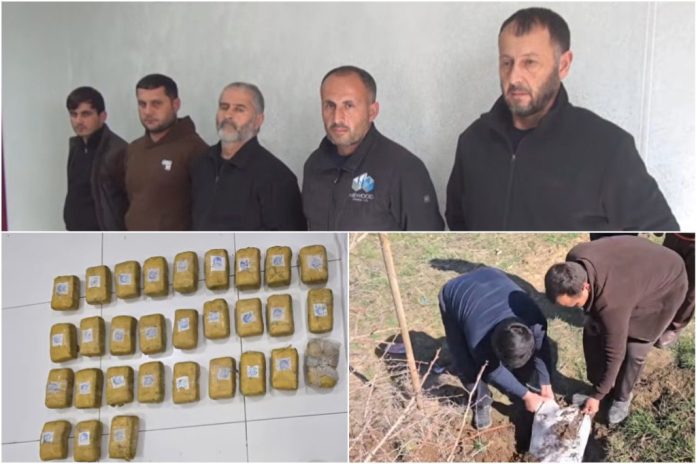
Earlier, the Border Troops of Tajikistan’s State Committee for National Security (SCNS) reported that they had prevented an illegal border crossing by five Afghan smugglers. During armed resistance on their part, three of the smugglers were killed, while two managed to flee back into Afghan territory.

Previously, as a result of two separate attacks launched from Afghan territory on Tajikistan’s border regions on November 26 and 30, 2025, five Chinese nationals were killed and five others were injured. Tajikistan strongly condemned the attacks and demanded that the Taliban detain those responsible. The Taliban’s Ministry of Foreign Affairs stated that the attacks were carried out by groups seeking to “create instability and distrust among countries in the region.”

According to Zafar Samad, Director of Tajikistan’s Drug Control Agency (DCA), 17 armed clashes occurred last year along the Tajik-Afghan border between Tajik security forces and Afghan smugglers, compared to six in 2024. As a result, 10 Afghan nationals were killed (three in 2024), along with two Tajik border guards.

In addition, nine Afghan nationals were detained last year for attempting to smuggle narcotics into Tajikistan. Samad said that in 2025 Tajik authorities seized 2.742 tons of narcotic substances along the Afghan border, up from 1.824 tons in 2024. Of this amount, 2.566 tons were seized along the border with Khatlon Province and 186 kilograms along the border with the Gorno-Badakhshan Autonomous Region.

Islamic finance and capital markets: international seminar concludes in Dushanbe

0
photo_2026-02-07_14-13-35

A five-day international training seminar titled “Joint Cooperation between Tajikistan and Turkiye: Islamic Finance and the Capital Markets of the Future” concluded in Dushanbe on February 6.

The event was organized by the Ministry of Finance of Tajikistan in cooperation with the Turkish Cooperation and Coordination Agency (TİKA) and was held as part of the implementation of instructions issued by President of Tajikistan Emomali Rahmon in his address to a meeting of both chambers of the Parliament on “The Main Directions of the Republic’s Domestic and Foreign Policy” dated December 16, 2025.

The Address emphasizes the need to expand the market for government and corporate securities, issue “green” financial instruments, develop an active and transparent secondary market, and draft and adopt a Capital Market Development Strategy.

Speaking at the closing ceremony, Ms. Nigina Abdurahmonzoda, Director of the Securities and Special Registration Agency under the Ministry of Finance of Tajikistan, noted that the seminar marked an important stage in the institutional development of the capital market and in enhancing the professional capacity of specialists.

According to her, the development of the capital market and the introduction of Islamic financial instruments are part of the country’s long-term strategy to modernize its financial system. She stressed that the goal is not only to study international experience, but also to adapt it to national conditions and to form a sustainable, transparent, and competitive securities market.

“Islamic financial instruments can become a source of long-term financing for the country’s economy,” Abdurahmonzoda said.

TİKA Program Coordinator in Tajikistan İbrahim Ethem Ünal highlighted that the seminar represented an important step in strengthening bilateral cooperation and building a professional foundation for the implementation of sustainable financial instruments.

The seminar brought together 72 representatives from government agencies, the National Bank of Tajikistan, the banking and insurance sectors, professional participants in the securities market, joint-stock companies, and chambers of commerce and industry.

The training seminar covered the fundamentals of Islamic economics and finance, Islamic banking and insurance (takaful), capital markets and Islamic financial instruments, including sukuk, institutional and legal conditions for capital market development, as well as prospects for introducing Islamic financial instruments in Tajikistan.

Presentations were delivered by Turkish experts — professors and doctors of sciences Ibrahim Guran Yumusak, Yusuf Dinc, and Servet Bayindir from Istanbul Sabahattin Zaim University — who shared the experience of Turkiye and other countries in these areas.

According to the organizers, the seminar confirms the systematic efforts of relevant agencies and the Securities Agency to implement the President’s instructions aimed at developing the capital market, attracting investment, and introducing modern financial instruments.

The event is seen as laying the groundwork for the further development of Islamic finance and the securities market, as well as for strengthening cooperation between Tajikistan and Turkiye.

Emomali Rahmon condemns terrorist attack on Shia mosque in Pakistan

0
таркиши исломобод

President of Tajikistan Emomali Rahmon has strongly condemned the suicide terrorist attack on a Shia mosque in Islamabad that occurred on February 6 and resulted in numerous casualties.

In connection with the tragedy, the Tajik head of state on February 7 sent messages of condolence to President of Pakistan Asif Ali Zardari and Prime Minister Shehbaz Sharif, the press service of the President of Tajikistan reported.

“I ask the Almighty to grant mercy and forgiveness to those who lost their lives, and a swift and full recovery to all those injured. The Republic of Tajikistan resolutely condemns this brutal terrorist act and, as always, all manifestations of terrorism, consistently emphasizing the need for an uncompromising fight against it,” the message from Emomali Rahmon said.

Media reports say a suicide blast claimed by the Islamic State group (IS) at a Shiite mosque in Islamabad killed at least 31 people on Friday, February 6, with 169 more wounded in the deadliest attack in Pakistan's capital since the 2008 Marriott hotel bombing.

Pakistani officials said 32 people died in the explosion at the Imam Bargah Qasr-e-Khadijatul Kubra mosque in the Tarlai area on the Islamabad's outskirts, with scores more being treated for injuries. The death toll was expected to rise further.

The blast occurred at Friday prayers, when mosques around the country are packed with worshipers. IS said one of its militants had targeted the congregation, detonating an explosive vest and "inflicting a large number of deaths and injuries", according to the SITE Intelligence Group, which monitors jihadist communications, Le Monde reports.

Thousands of mourners gathered in the capital on Saturday to bury the victims of the attack, which killed at least 32 worshippers and injured 170 others, officials said, according to Al Jazeera.