Home Blog Page 73

Another clash on the Tajik-Afghan border: three Afghan smugglers

0
photo_2026-01-30_13-48-55

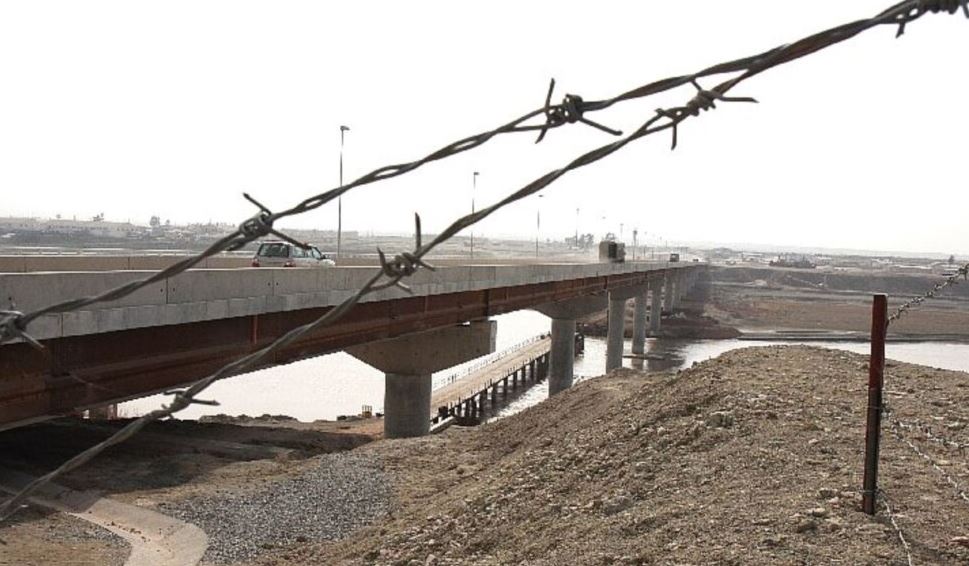
Another armed clash took place on the Tajik-Afghan border on January 29, as the Main Border Guard Directorate of the State Committee for national Security (SCNS) of Tajikistan reported an encounter with Afghan smugglers, according to the state-run news agency Khovar.

The incident reportedly occurred around 7:30 PM near the Bakhorak border post of SCNS’s military unit 0341. Five Afghan smugglers illegally crossed the border and entered Tajikistan from Afghanistan.

Following operational investigative measures, Tajik border guards identified the criminals' movement route in the area. When ordered to stop, the smugglers opened fire and attempted to retreat back into Afghanistan. The border guards returned fire, and as a result, three Afghan smugglers were killed at the scene.

The killed individuals were identified as Jaweed waladi Davlatmand and Rashid waladi Davlatmand, residents of Qariya Voricha, and Sabir waladi Zahir, a resident of Qariya Andjir, in the Chah Ab district of Takhar province, Afghanistan. Two smugglers managed to escape into Afghanistan under the cover of darkness.

At the scene, border guards reportedly confiscated three Kalashnikov assault rifles with four magazines, 150 rounds of ammunition, 73 packages of narcotic drugs (hashish and opium) in four bags, and a boat.

The SCNS confirmed that the situation on the border is under control, and a criminal case has been initiated, with charges including the illegal trafficking of narcotics, smuggling, illegal border crossing, and the unlawful possession of firearms.

This incident is not the first armed clash on the Tajik-Afghan border. Previously, there have been multiple attempts to illegally cross the border from Afghanistan. Notably, on November 26 and 30, 2025, two attacks from Afghanistan targeted border areas in Tajikistan, resulting in the deaths of five Chinese nationals, with another five injured. These attacks were carried out on the Shohin-SM mining company base in the Shamsiddin-Shohin district of Khatlon province and on a road construction company in the Darvoz district of the Gorno Badakhshan Autonomous Region (GBAO).

Tajikistan strongly condemned these attacks, demanding that the Taliban government ensure security along the joint border and apprehend those responsible for the crimes. The Taliban's Ministry of Foreign Affairs stated that the attacks were carried out by groups seeking to "create instability and mistrust between the countries of the region."

On the night of December 23-24, Tajik border guards foiled an infiltration attempt from Afghanistan into the Shamsiddin-Shohin district, which resulted in the deaths of three militants and two Tajikistani border guards.

Tajikistani authorities criticized the Taliban for not fulfilling their international obligations to stop cross-border attacks. They urged the Taliban leadership to apologize to the people of Tajikistan and take meaningful steps to ensure the security of the shared border

According to Afghan media outlet Hasht-e Subh, the militants killed by Tajik border guards were members of the terrorist group Jamaat Ansarullah.

On January 18 of this year, militants infiltrated Tajikistan from the Darbandak village in Afghanistan’s Badakhshan province, crossing into the jurisdiction of the "Yol" border post in the Shamsiddin-Shokhin district. The terrorists ignored orders to surrender and fought back with weapons. All four militants were killed during the confrontation. There were no reported casualties among the Tajik border guards.

At the scene, authorities seized three Kalashnikov assault rifles, one "Kruz" rifle, six magazines, 183 rounds of ammunition, three mobile phones, a radio, and a boat.
9,000 Tajik children return from Russia after struggling to access education

0

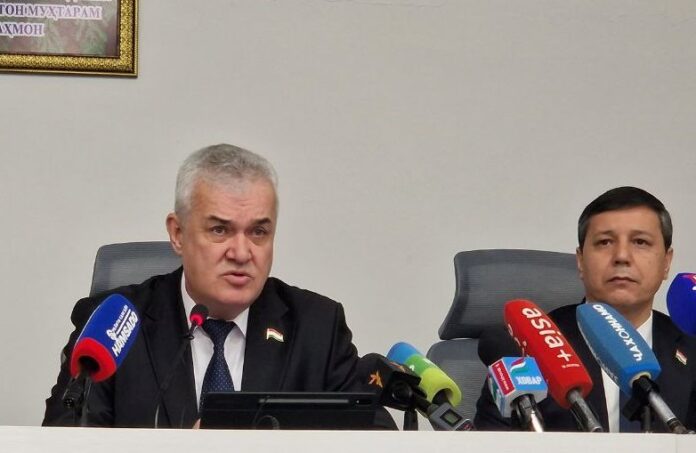
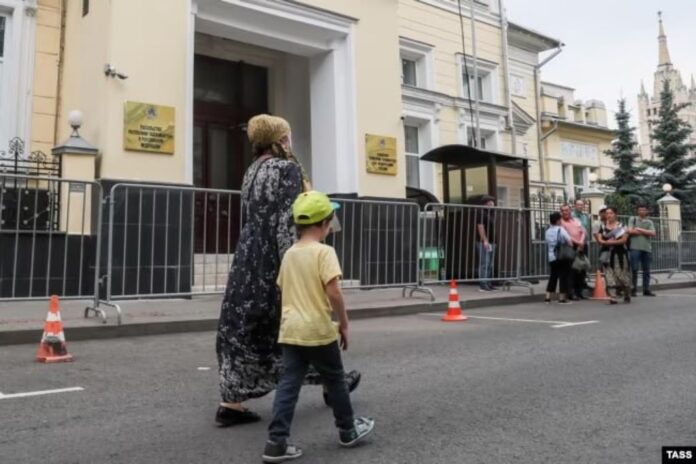
In 2025, approximately 9,000 Tajik children who had been studying in schools across Russia returned to Tajikistan due to difficulties in continuing their education abroad, the country’s Minister of Education and Science, Rahim Saidzoda, told reporters in Dushanbe on January 30.  These children have since been reintegrated into the country’s education system.

Speaking at a news conference, Saidzoda expressed concern about the situation of migrant children from Tajikistan in Russia, many of whom are left without access to education. However, he added that there is no precise data on the number of such children.

"All the children who have returned are under my direct supervision—they are our children," Saidzoda stated. He noted that some children faced challenges because they had not been attending school while living in Russia.

For example, Saidzoda described a case where a boy, who had been removed from a Tajik school in the 4th grade, returned to Tajikistan and wished to continue his studies in the 8th grade, despite spending four years in Russia without attending school. "We are doing everything we can to address such issues," the minister said.

The large return of Tajik students from Russia coincided with the implementation of a new law in Russia requiring migrant children to demonstrate proficiency in the Russian language before enrolling in schools. As a result, thousands of children were left without access to education when the school year began.

When asked about the number of Tajik children in Russia who are still unable to attend school, Saidzoda stated that his ministry does not have precise statistics, as tracking this data does not fall under the ministry’s purview.

Regarding the possibility of offering online education to Tajik children living abroad, particularly in Russia, the minister gave a negative response, clarifying, "This is not within the scope of the Ministry of Education and Science of Tajikistan’s responsibilities."

It is worth noting that two years ago, Tajikistan's authorities pointed out the absence of Tajik schools or classes in Russia. As a result, Tajik children living abroad do not have access to education in their native language or according to the curriculum established by the Ministry of Education and Science of Tajikistan.

Earlier, Ministry sources explained that the lack of online education opportunities was due to energy supply limitations and slow internet speeds in some areas. Since then, there have been no further reports of efforts to launch distance learning for Tajik students abroad. 

WHO assesses Nipah virus spread risk as low, no travel restrictions recommended

0
images

The World Health Organization (WHO) has assessed the risk of the Nipah virus spreading as low and does not recommend imposing travel or trade restrictions due to recent cases in India, according to a statement on the organization’s website.

In January, two cases of Nipah virus were reported in healthcare workers in West Bengal, India. Nearly 200 individuals who had contact with the infected people were tested, but no new cases were found, and there were no signs of sustained human-to-human transmission, the WHO reported.

“The regional and global risk of the infection spreading is assessed as low,” the organization stated.

The Nipah virus is transmitted from animals to humans and, in rare cases, between humans. There are no vaccines or specific treatments for the virus, and its fatality rate ranges from 40% to 75%.

In response to the outbreak in India, neighboring countries such as Tajikistan, Kyrgyzstan, Kazakhstan, and Uzbekistan have increased border controls.

Earlier, Tajikistan’s Ministry of Health and Social Protection of the Population (MoHSPP) informed Asia-Plus news agency that the situation regarding the threat of infection in the country is being closely monitored and considered under control.

Tajikistan’s Minister of Health and Social Protection of the Population, Jamoliddin Abdullozoda, stated at a news conference in Dushanbe pn January 28 that diagnostic tests for detecting the Nipah virus, supplied by the Russian Federation, have already been delivered to Tajikistan.

These measures are aimed at strengthening epidemiological control, especially in light of the international situation surrounding the outbreak, Abdullozoda explained.

He emphasized that, to date, no cases of Nipah virus infection have been reported in Tajikistan, as the primary hosts of the virus—certain species of tropical bats—do not reside in the country.

Abdullozoda also noted that over 1,500 students from India, where the outbreak has been detected, are currently studying in Tajikistan. To prevent the spread of the virus, remote thermoscanners have been installed at Dushanbe airports to monitor the health of incoming passengers, including those from India.

Tajikistan reportedly resolves teacher shortage, education ministry reports significant increase in educators

0

The Ministry of Education and Science of Tajikistan has announced that the shortage of teachers in the country’s schools has been fully addressed. According to the ministry, the number of teachers has significantly increased in 2025 compared to previous years.

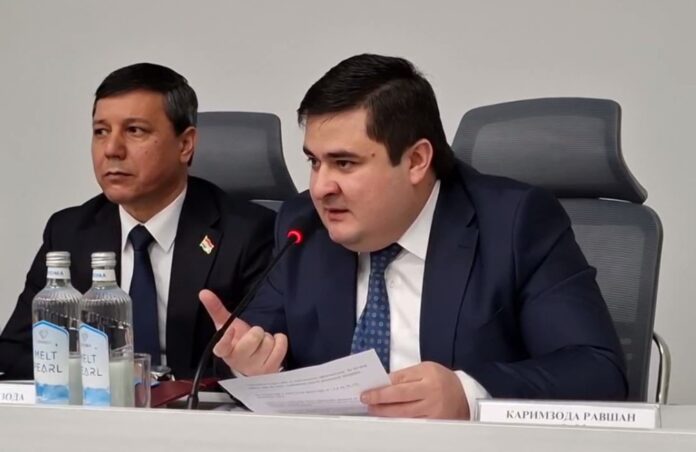
In response to concerns about a lack of subject-specific teachers, Deputy Minister of Education Ravshan Karimzoda stated that the issue of teacher shortages in Tajik schools has been "completely eliminated." He emphasized that, in the 2025-2026 academic year, 9,178 teachers were hired, a rise of 5,384 compared to 2024.

“We currently do not have a teacher shortage problem. Yes, there are nearly 700 teachers working outside their specialties, but we are actively working on addressing this issue as well,” Karimzoda explained. “It’s also important to note that out of 136,000 teachers across the country, 16,000 are on maternity leave, and their positions are being filled by other teachers. This is why some teachers are instructing multiple subjects,” he added.

Earlier, in a July 2025 press conference, the country’s Minister of Education, Rahim Saidzoda, had stated that Tajikistan was facing a shortage of 3,848 teachers in its schools.

Karimzoda also highlighted that, in 2025, based on a distribution plan, 2,439 graduates from higher education institutions, including 533 students who had studied under the presidential quota, were assigned by the Ministry of Education for employment. Of this number, 248 teachers were deployed to educational institutions in Gorno-Badakhshan Autonomous Oblast (GBAO), 975 teachers to the Khatlon province, 635 teachers to the Sughd province, 196 teachers to Dushanbe, and 385 teachers to cities and districts subordinate to the center.

Additionally, 1,944 students in their 4th and 5th years of university were reportedly involved in teaching at general education institutions.

Furthermore, 7,496 people were hired in the field of secondary vocational education, including experienced educators returning from leave and graduates of short-term training courses.

This significant increase in teacher recruitment is seen as a step forward in addressing previous staffing challenges in Tajikistan's education system. 

Tehran calls IRGC a ‘counterterror’ force as EU labels it a terrorist organization

0
CORPS

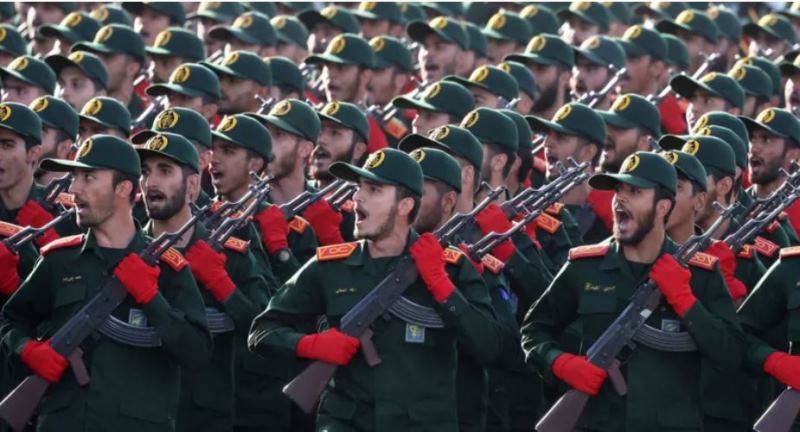
Western media reports say European Union foreign ministers took a significant step on January 29, agreeing to designate Iran's Islamic Revolutionary Guard Corps (IRGC) as a terrorist organization.  

"Repression cannot go unanswered," EU foreign policy chief Kaja Kallas wrote on social media platform X. "Any regime that kills thousands of its own people is working toward its own demise."

Iran's most powerful armed force, the IRGC was set up shortly after the 1979 revolution to defend the country's Islamic system. It is estimated to have about 190,000 active personnel, with capabilities across land, air and sea, as well as overseeing Iran's strategic weapons.

While some EU member states have long advocated for adding the IRGC to the terrorist list, others have been hesitant, fearing the move could sever communication channels with Tehran and potentially jeopardize the safety of European citizens in Iran. However, a brutal crackdown on nationwide protests earlier this month, which led to the deaths of thousands, reportedly provided the final push for the decision.

France and Italy, who had previously opposed labeling the IRGC as a terrorist entity, lent their support to the move this week.

Despite concerns that this designation might lead to a complete breakdown in diplomatic relations with Iran, Kallas reassured reporters on January 29 that “diplomatic channels will remain open.”

Iran has condemned EU designation of Revolutionary Guards as terrorists. Iran’s foreign ministry called the European Union’s move to designate Iran’s Revolutionary Guards as a terrorist organization “illegal and unjustified”.  In a statement, the ministry said designating a country’s official military institution as a “terrorist” organization is a dangerous move. It added that European concern about human rights in Iran was a “blatant lie and hypocrisy”, according to Iran International.

Iran’s parliament speaker Mohammad Bagher Ghalibaf called the Revolutionary Guards among the world’s most effective “counterterrorism forces.”

"The Islamic Revolutionary Guard Corps is one of the strongest and most effective anti-terrorism forces in the world; only those who stand on the side of the terrorists themselves could deny the IRGC's record in the fight against ISIS terrorism," he said in a post on X.

"Supporting terrorism will bring nothing but regret to the European countries," he added.

The exchange of criticism marks a growing rift between Iran and the West, with the EU’s decision underscoring the increasing tension over human rights abuses, regional security concerns, and Iran’s involvement in the ongoing war in Ukraine.

The EU also sanctioned entities such as the Iranian Audio-Visual Media Regulatory Authority and multiple software companies. Additionally, four individuals and six entities tied to Iran’s drone and missile programs were targeted, with the EU expanding restrictions on the export of technologies used to develop unmanned aerial vehicles (UAVs) and missiles to Iran.

Tajikistan’s education budget to increase to 14 billion somonis in 2026

0

In 2026, Tajikistan’s government spending on education will rise to 14 billion somonis, marking a 25.4% increase compared to 2025 and a 5.5-fold increase from 2015, the Ministry of Education and Science of Tajikistan announced at a news conference on January 29.

In 2025, the budget for education amounted to 10 billion 909 million 496 thousand somonis, which constitutes 6.6% of the country’s GDP and 21.1% of total state expenditures. Compared to 2024, the funding increased by 2 billion 677 million somonis, which is a 32.5% rise. In 2024, the education budget was 8 billion 231 million 867 thousand somonis.


Distribution of budget funds in 2025

The funds in 2025 were allocated as follows:

·         For general education — 6 billion 195 million somonis (a 35.6% increase);

·         For primary and secondary vocational education — 576.2 million somonis (an 18.7% increase);

·         For preschool education — 606.9 million somonis (a 21.9% increase);

·         For higher professional education — 1 billion 511 million somonis (a 22.1% increase);

·         For other sectoral expenses — 1 billion 511 million somonis, which is 40% more than in 2024.


Publication of educational materials

In 2025, nearly 9 million copies of textbooks and educational materials were published in Tajikistan. The Ministry of Education and Science reported that 28 school textbooks, 9 methodological guides, and 151 textbooks for higher education institutions were published. Special attention was given to the development of textbooks for primary grades. New textbooks for mathematics, Russian language, and literary reading for first graders have already been distributed to educational institutions.


Cooperation with Russia

Under the intergovernmental agreement with the Russian Federation, an additional 800,000 Russian language textbooks for 3rd and 4th graders in Tajikistan, with Tajik as the medium of instruction, were printed.


Competitive selection and printing of textbooks

As a result of the competitive selection process, 118 textbook titles were chosen for printing in 2025, with a total circulation of 8.05 million copies. A total of 7.15 million textbooks and educational materials were distributed to schools, lyceums, and gymnasiums, which is a 41.5% increase compared to 2024.

Tajikistan’s minister of agriculture criticizes meat price speculators

0
photo_2026-01-30_10-03-22

On January 29, Tajikistan’s Minister of Agriculture, Qurbon Hakimzoda, criticized sellers who artificially inflate meat prices, calling them speculators. He emphasized the need for collective action to stabilize prices and address the issue of inflated meat costs, which harms both the economy and consumers.


Meat imports in Tajikistan

The Minister reported that over the past year, Tajikistan imported more than 8,000 tons of meat and 12,000 tons of poultry. He explained that meat is imported from various countries, including Belarus, Kazakhstan, and Russia, as well as small livestock meat from Mongolia. According to Hakimzoda, the misunderstanding surrounding imported meat is linked to debates within the Food Security Committee over the halal status of the products.

“We mainly import meat from Belarus and Kazakhstan, with some from Russia. Small livestock meat comes from Mongolia, and poultry comes from Russia, Belarus, and partly from Kazakhstan,” Hakimzoda clarified. He emphasized the importance of cooperation with Belarus, where the slaughter of meat is conducted according to halal standards.


Meat prices at bazaars and fairs

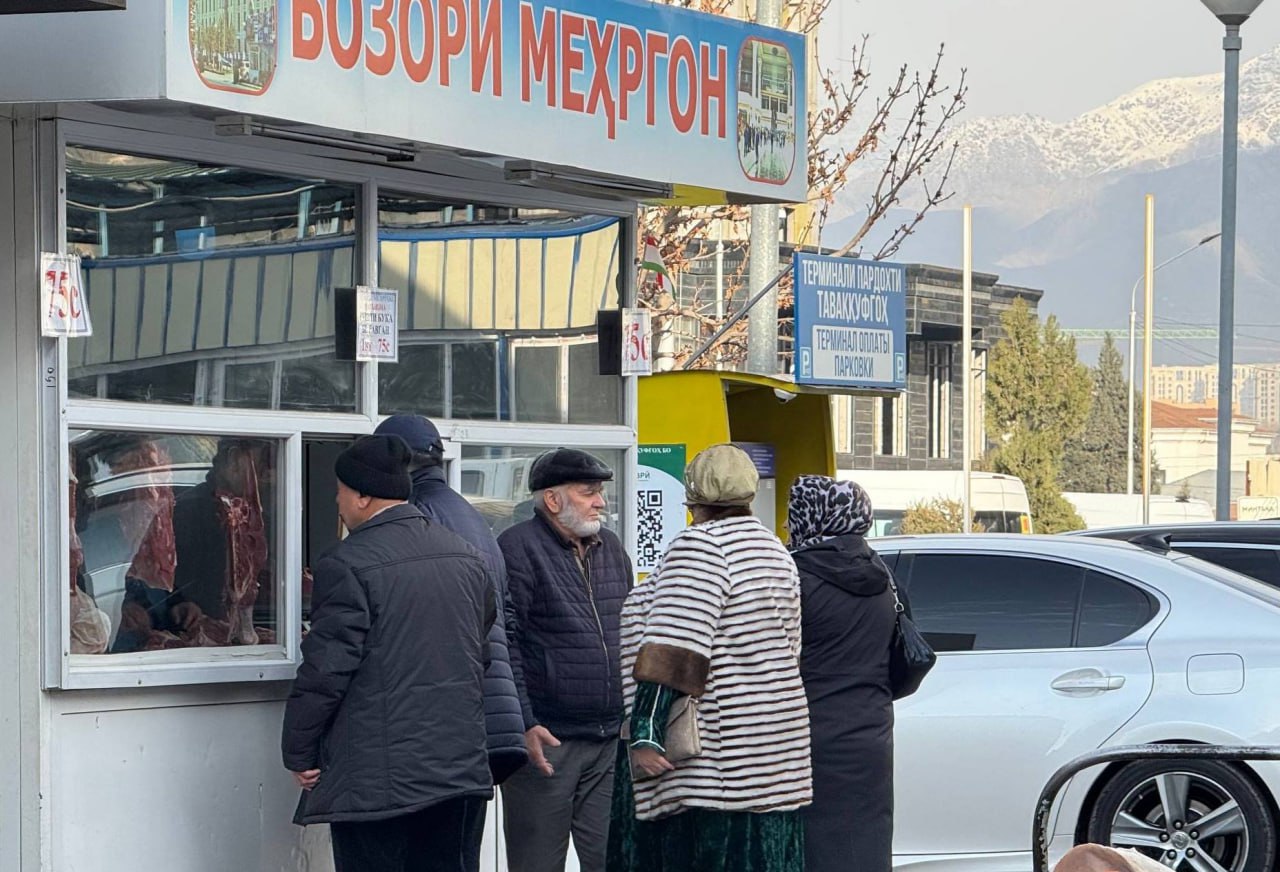
Regarding prices, the Minister noted that imported meat is sold at prices ranging from 65 to 80 somoni per kilogram, depending on quality. “Currently, the price of imported meat is 75-77 somoni, and at fairs it ranges from 65 to 70 somoni,” said Hakimzoda. Over the past three years, poultry meat prices have remained stable at 27-28 somoni per kilogram.


The issue of speculators

Qurbon Hakimzoda also expressed his displeasure with speculators who artificially raise prices. “Many speculators (sorry for using this term) raise prices unjustifiably for their own gain,” he remarked.

He gave an example of the price of live-weight cattle: “It ranges from 50 to 54 somoni depending on the biological and physiological state of the animal, and then the meat is sold for 110-115 somoni. There should also be a sense of responsibility here?” Hakimzoda emphasized.


Measures to stabilize prices

The Minister stressed that the Ministry of Agriculture is responsible for meat production but does not intervene in retail prices, as other regulatory bodies handle this. He raised an important question: “Why does control work in Dushanbe, but not in other cities and regions?” He highlighted the need for joint efforts to stabilize prices.

Hakimzoda also pointed to the role of bloggers, who show the process of live-weight trade through social media and help monitor the situation. “The entire livestock market is on social networks. Bloggers show how live-weight trade is going. Count if a kilogram of meat is worth 100 somoni or more,” he said.


Recommendations and future outlook

The Minister called for collaboration among all stakeholders to prevent further price hikes: “Let’s work together to stop those who would raise meat prices. I’m sure the price will stabilize.”

Impact on prices

According to data from the Statistics Agency under the President of Tajikistan, since the beginning of 2025, lamb prices have increased by 17%, and beef prices by 14.4%.

Meanwhile, media outlets in Kyrgyzstan reported that Tajikistan has the highest meat prices among CIS countries, with the average price of 1 kilogram of meat in Tajikistan being $13.

For comparison, in Uzbekistan, the price is $11.89, in Russia — $11.72, in Armenia — $10.87, in Belarus — $10.58, in Kazakhstan — $7.43, and in Kyrgyzstan — $7.78.


Solar panels being installed in Dushanbe: a step towards energy savings and a sustainable future

0

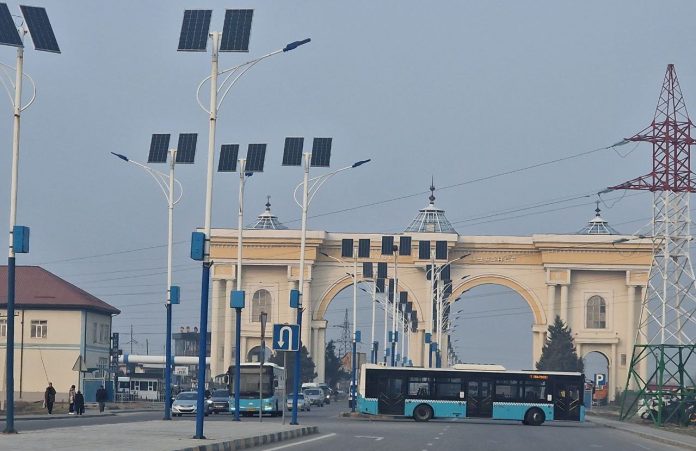
The installation of solar panels has begun in the capital of Tajikistan, Dushanbe, including on roadways. This initiative reportedly aims to save electricity and ensure sustainable energy supply.

One of these solar panels was installed on the railway bridge near the city's Textile Combine. During a news conference on January 29, the Committee for Architecture and Construction under the Government of Tajikistan revealed that the primary goal of the project is not only to save electricity but also to utilize solar panels in the future for small industrial enterprises, children's institutions, and residential buildings.

“The installation of solar panels and the examination of related objects were approved by the order, which was signed on April 1, 2024, and since then, 1,530 projects have passed examination, all of which will include the installation of solar panels with capacities ranging from 250 to 500 watts,” said the chairman of the Committee for Architecture and Construction, Nizom Mirzozoda.

He explained that solar panels will provide energy during daylight hours when power grids are functioning, thus significantly reducing the use of energy from the main grid. Additionally, this will ensure energy supply in case of power outages.

The chairman also added that elevators and video surveillance systems will operate on solar panels, which will help reduce the load on centralized power grids.

The installation of solar panels is planned on 558 objects from April 1, 2024. These include 381 residential buildings, 23 industrial enterprises, 61 public schools, 13 preschools, 42 hospitals and medical centers, and 38 administrative buildings.

In November last year, during a government meeting chaired by President Emomali Rahmon, the Minister of Energy and Water Resources, Daler Juma, stated that the implementation of the Power Sector Development Program for 2026–2030 would achieve key goals. These include the introduction of 2,680 MW of new capacity through the construction of hydropower plants, an increase in capacity by 253 MW through the reconstruction of existing plants, the restoration of 440 MW through equipment upgrades, and the generation of 1,500 MW through solar energy.

Furthermore, President Emomali Rahmon instructed the installation of solar panels on residential buildings and their integration into the national power grid, which also contributes to achieving the program's goals.

Tajikistan significantly increased electricity exports in 2025

0

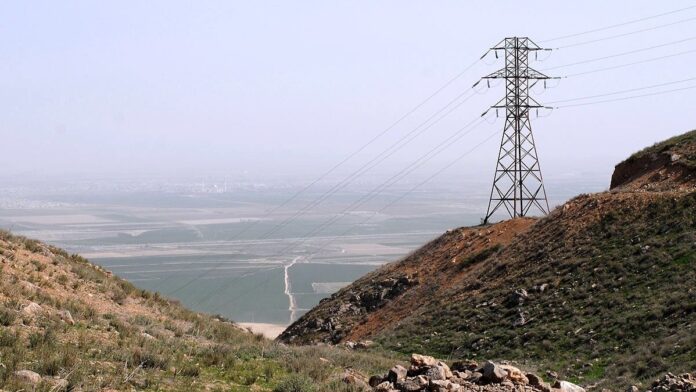
In 2025, Tajikistan greatly increased its electricity exports to neighboring countries, according to the Ministry of Energy and Water Resources (MoEWR). The total electricity export reportedly reached 5.356 billion kilowatt-hours, a 37.3% increase compared to 2024 (an increase of 1.454 billion kWh).

Of this total, 2.666 billion kWh were supplied to three neighboring countries, worth 912.8 million somonis (approximately $100 million). More than 90% of this export occurred during the period of high river runoff, from April to September.


Electricity exports by country

·         Afghanistan
Volume: 742 million kWh

Sum: 1.8 billion somonis

·         Uzbekistan
Volume: 170 million kWh

Sum: 895 million somonis

·         Kyrgyzstan
Volume: 1 million kWh

Sum: 12 million somonis


Overall, Tajikistan’s electricity production in 2025 amounted to 23.983 billion kWh, a 6.5% increase compared to 2024.

Electricity exports are divided into several categories, each with distinct characteristics:

·         Commercial export — Sale of electricity to the external market for profit, based on market relations and contractual obligations.

·         Technical export — Export of electricity to maintain the stability of energy systems, such as balancing frequencies and ensuring grid reliability.

·         Humanitarian export — Supply of electricity to disaster-stricken areas, often free of charge or on favorable terms.

·         State or intergovernmental export — Electricity supplies based on interstate agreements, which may include favorable conditions or political objectives.

·         Bilateral export — Supplies of electricity governed by agreements between countries, often involving barter of goods and services.

Each type of export serves a different purpose and may vary in terms of supply conditions and payment arrangements.


Electricity imports and losses in 2025

Electricity imports to Tajikistan in 2025 totaled 2.702 billion kWh, a 67% increase compared to 2024. Specifically, 2.688 billion kWh were imported from Uzbekistan in the winter, and 13.9 million kWh from Kyrgyzstan, with Tajikistan selling electricity to Kyrgyzstan during the summer months.

Electricity losses in 2025 amounted to 3.992 billion kWh, or 15% of the total, a 3.6% decrease compared to 2024. The Ministry of Energy notes that losses in generation (0.37%) and transmission (3.1%) comply with international standards, while losses in distribution networks, which account for 15.6%, still require close attention. 

President approves official emblem for 35th independence anniversary

0
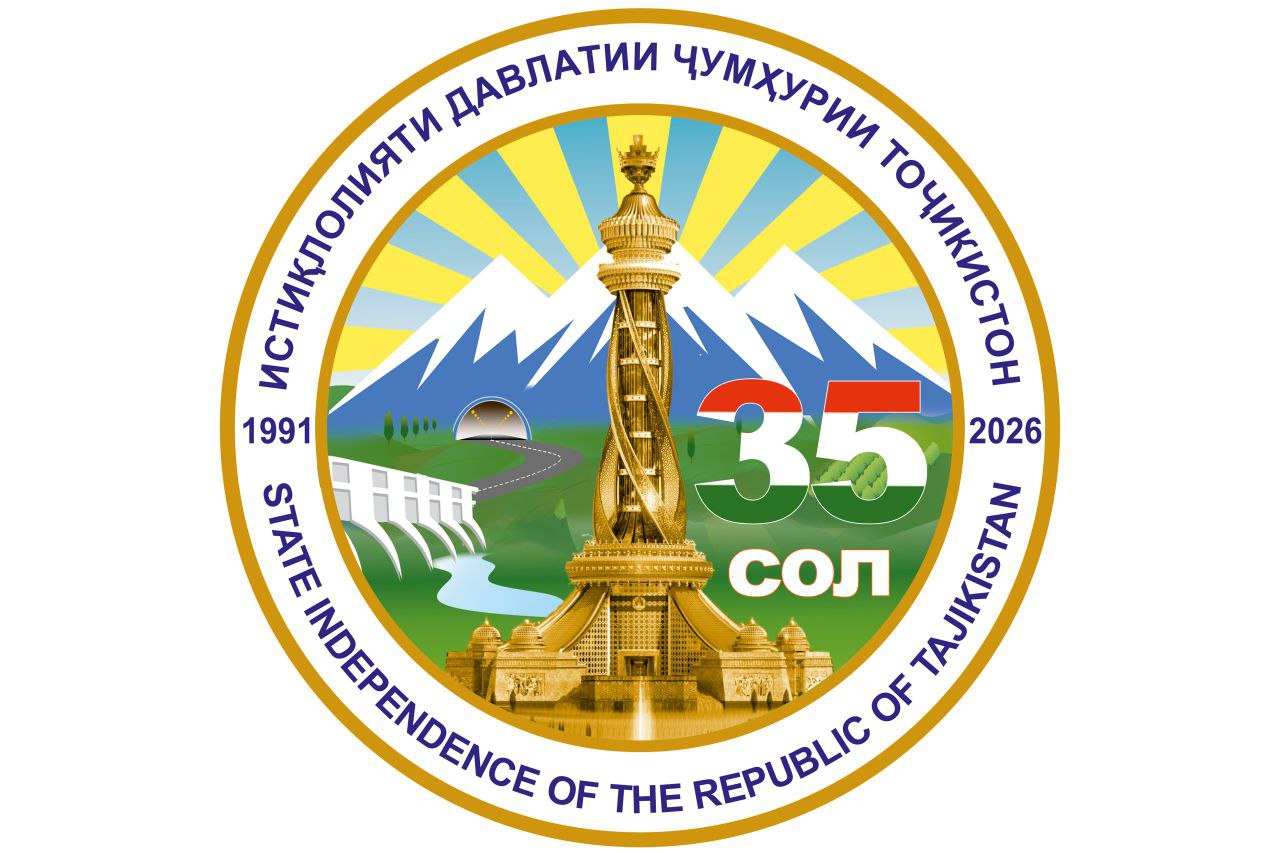
photo_2026-01-30_09-19-17

The President of Tajikistan, Emomali Rahmon, has approved the official emblem dedicated to the 35th anniversary of the country's independence, according to the Tajik president’s press service.

The emblem is crafted in a round shape with gold detailing. Surrounding it are inscriptions in both Tajik and English, reading "State Independence of the Republic of Tajikistan" along with the years 1991–2026.

At the center of the emblem is the "Istiqlol" Complex, symbolizing the revival of national statehood, freedom, and the independence of Tajikistan. The sunlit background represents peace and the aspiration for a bright future, as stated in the announcement.

Images of mountains, glaciers, water resources, and green pastures emphasize the country's natural wealth, while also reflecting the president's international initiatives on water and climate issues. Roads, tunnels, and hydroelectric stations represent the achievements of independence and the strategic directions of the country’s development.

The press service also reported that the approved emblem is authorized for use by government bodies and the media.