DUSHANBE, October 27, 2008, Asia-Plus — Public TV exists in that or other form in any country that has television, Saidali Siddiqov, the head of the information analysis department within Tajik President’s Executive Office, remarked at the 10th OSCE Central Asia Media Conference that was held in Almaty, Kazakhstan on October 17.
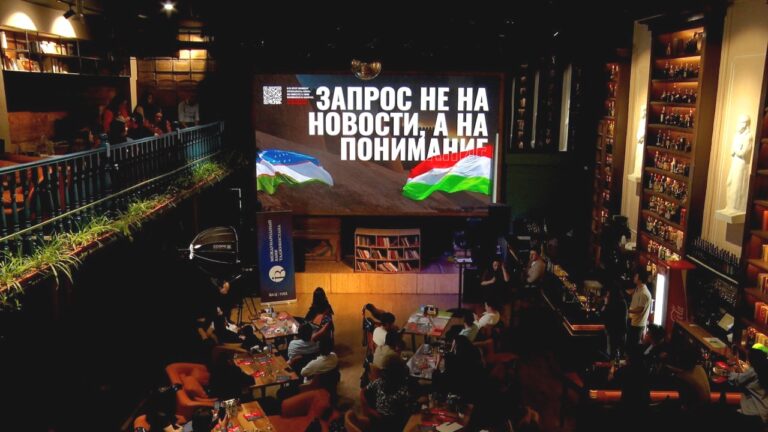
The future of public-service broadcasting and how the digital switchover can support media freedom and pluralism was the focus of the conference, staged by the office of the OSCE Representative on Freedom of the Media under support of the OSCE Center in Astana. The conference brought together media professionals and government officials dealing with media governance from Kazakhstan, Kyrgyzstan, Tajikistan and Uzbekistan, as well as prominent international and regional experts, to discuss the latest media developments in their countries.
Speaking at the conference, Siddiqov noted that any media belonged to society to a certain extent and should meet interests of society, otherwise it could not exist. “Public TV of its kind exists in Tajikistan as well,” said Siddiqov. “It is financed by state, but officials do not interfere in affairs of TV people because it is prohibited by Article 6 of the country’s law on TV and radio-broadcasting.”
Siddiqov noted that 28 TV organizations have been registered with the Tajik Ministry of Justice to this date. Eight of them are state-run and the remaining 20 are non-governmental (private, commercial, corporate, etc). “The national TV channels – Channel One, Safina and Bahoriston (children’s TV channel) – cover 91% to 99% of the country’s population,” said Siddiqov, “Television with such a popularity may be named public TV.”
Nourddin Qarshiboyev, chairman of the National Association of Independent Media of Tajikistan (Nansmit), and Jovid Muqim, Professor with Tajik National University, also gave papers at the conference on the media situation in Tajikistan.
The conference addressed ways to create a legally protected broadcasting infrastructure, with guaranteed editorial autonomy, and with a financing system that allows public-service broadcasters to be independent from both political and commercial interests.
Participants also discussed the changes affecting broadcasting in the digital age. The event concluded with calls to governments to regard the increase in the number of broadcasting channels on all new platforms as a new opportunity to strengthen media pluralism.
Speaking at the conference, Miklos Haraszti, the OSCE Representative on Freedom of the Media, noted, “Public-service broadcasting is one of the basic tools of democracies. It is indispensable in ensuring the freedom and transparency of elections, in fighting against hate speech, and in protecting the minority cultures of a country, by offering objective news reporting and by broadcasting high quality programs.” He encouraged the governments of the region to transform their state-owned broadcasting institutions into independent public services.
The conference resulted in a declaration on the future of public-service broadcasting and the digital switchover in Central Asia.