DUSHANBE, September 17, 2008, Asia-Plus — Asian Development Bank (ADB) said in its new major report that economic growth in Central Asia is slowing. The Asian Development Outlook 2008 Update (ADO Update) said the growth in the region in 2008 is expected to moderate to 7.6% from 11.6% in 2007. The report expects that the pickup in 2009 predicted in April”s Asian Development Outlook 2008 (ADO 2008), will be more muted-it revises downward the projection for 2009 from 8.4% to 8.0%, reported Uzreport.
A slowdown is under way in the Central Asian subregion in an external environment of global financial turmoil as well as rising fuel and food prices.
In several countries, strong remittance inflows are helping sustain private consumption (Kyrgyzstan, Tajikistan, and Uzbekistan). Foreign direct investment inflows (Armenia) and ramped-up public spending (Azerbaijan) are supporting investment activity. Nevertheless, across the subregion, the expansion in domestic demand is weakening.
Tajikistan is likely to see its economic situation improve by 2009 with a return to prudent macroeconomic management.
Inflation was in double digits in June 2008 year on year for all countries in the subregion except Armenia, and even there it was well above the central bank”s target rate. It exceeded 32% in Kyrgyzstan and 20% in Azerbaijan, Kazakhstan, and Tajikistan. The main drivers were increases in food and fuel prices. Food prices, a category that has the largest weight in overall consumer price index baskets, have surged across the subregion, touching 48.2% in Kyrgyzstan and 33.1% in Tajikistan in June 2008. Wheat and wheat products, edible oils, meat, and dairy products have seen the largest price increases. Higher energy prices have also been a contributory factor to overall inflation and to higher food prices (through higher transport costs and fertilizer prices).
To address rising inflation expectations, some central banks are tightening monetary policy.
Subregional inflation is expected to remain high in 2008 before easing in 2009, determined largely by supply factors. Available forecasts for food prices suggest that wheat prices are likely to fall with better harvests in the large grain-exporting countries of the subregion, but that edible-oil prices will remain high. Energy prices are expected to remain at elevated levels in 2008-2009, reflecting tight supply conditions. With few exceptions, monetary policy frameworks are not robust enough to act counter cyclically. The Update revises upward the subregion”s inflation forecasts for 2008 from 14.4% to 15.4% and for 2009 from 10.2% to 11.4% (Figure 3.1.2).
The subregional current account surplus is climbing because higher prices are boosting the current account surpluses of the hydrocarbon exporters.
For the fuel and food importers, the main risks are higher than anticipated price increases in these categories. The reserve positions of Georgia, Kyrgyzstan, and Tajikistan are vulnerable to shocks in fuel and food prices. An oil price shock (Kyrgyzstan), a food price shock (Tajikistan), or both types of price shock could see these countries” reserve position in terms of months of import cover fall to very low levels, according to recent simulations by the International Monetary Fund (IMF).
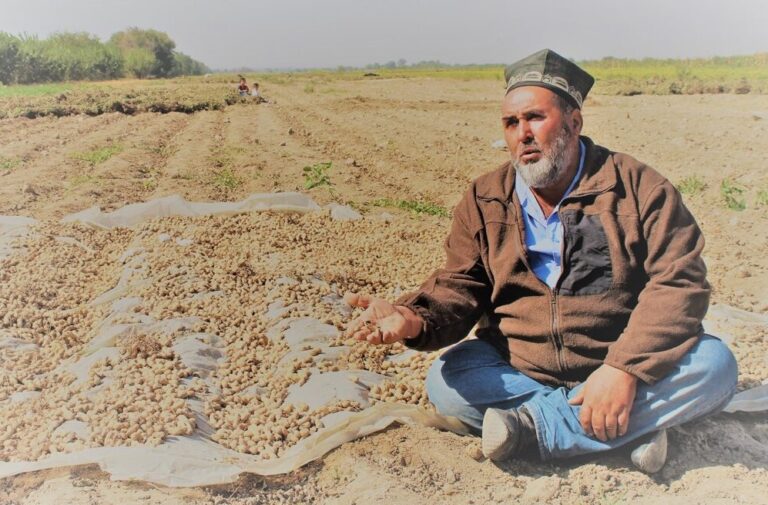
Tajikistan is currently following a staff-monitored program of IMF that aims to provide a framework for macroeconomic stability. Following a poor harvest, growth of the agriculture sector for 2008 is expected to decline, and industrial production has been hit by winter electricity shortages.
The Update has therefore lowered GDP growth projections for 2008 and 2009 to 5.0% and 7.0%, respectively. High inflation has reduced purchasing power and adversely impacted private consumption, although stronger remittance inflows have had a mitigating effect. Inflation accelerated to 25.3% in June, year on year, with food price inflation reaching 33.1%. Prices of bread and wheat have doubled in the 12 months to June 2008. Meat prices are also up because of livestock deaths caused by the severe winter. The annual contract price of natural gas imports from Uzbekistan is up by 50%. Higher fuel prices have added to food transportation costs. The Update revises the inflation projections for 2008 and 2009 from 17% and 10% to 18.5% and 10.5%, respectively.
Food shortages and high prices have affected an estimated 2 million people, with those living in rural areas particularly hard hit. Targeted support for the poor will need to be combined with a prudent fiscal policy to restore macroeconomic stability in the short term.
The Update expects a somewhat better current account outturn than projected in April, as part of the authorities” strategy of winding down unsustainable imbalances. It forecasts the deficits for 2008 and 2009 to be narrower than earlier indicated, down from 15.3% and 11.1% of GDP in 2008 and 2009 to 10% and 8.1%, respectively.