
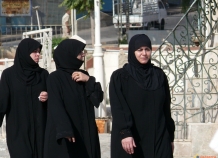
DUSHANBE, April 21, 2015, Asia-Plus – Dushanbe authorities plan to toughen measures against import and sale of female black clothing “that is alien to Tajik culture and traditions.”
Speaking at an enlarged meeting of the mayor’s office, Dushanbe Mayor Mahmadsaid Ubaidulloyev yesterday ordered senior representatives of the Agency on Standardization, Metrology, Certification and Trade Inspection (Tajikstandart)’s office in Dushanbe to take adequate measures to prevent import and sale of female clothing alien to Tajik culture and traditions.
The mayor ordered to remove such clothing from all Dushanbe’s shops.
We will recall that in his speech on the occasion of the Mother’s Day, Tajik President Emomali Rahmon on March 7 criticized women who wear “foreign” clothing, especially the black veils associated with conservative Islam.
“Since ancient times our people have had beautiful women’s dresses, our girls have never worn black clothes. Traditionally, black clothes are not welcome,” Rahmon told female activists ahead of the Mother’s Day, which is marked on March 8. The president never specifically named Islamic hijab, but his target was clear: “Strangers” are using these clothes in their drive “to promote obtrusive ideas and want to create another new extremist trend in our country.”
The First Deputy Interior Minister, Abdurahmon Alamshozoda, held a meeting on March 28 to discuss the implementation of president’s instructions and orders on preventing local women from following alien culture and traditions and wearing alien clothing.
The meeting participants included heads of police directorates and departments as well as other police subdivisions.
Speaking at the meeting, Alamshozoda reportedly noted that there were cases of propagation of alien culture, traditions and clothing among female population in some districts of the country. He ordered chiefs of police directorates and departments to strengthen explanatory work among the population.
Hijab and other overt signs of religious observance are frowned on in Tajikistan. Since 2005, education ministry regulations banning hijab from universities and schools have been in place. Headscarves worn in the traditional Tajik manner – generally colorful and tied behind the head are deemed un-religious and are hence acceptable.
