DUSHANBE, February 24, 2016, Asia-Plus – An article “Tajikistan and IMF in Talks over Bailout” by Jack Farchy that was posted on the
Financial Times
(FT)’s website on February 23 says that Tajikistan is discussing a possible International Monetary Fund bailout program worth as much as US$500 million as its economy suffers the fallout from Russia’s recession.
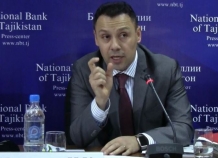
Jamoliddin Nouraliyev, First Deputy Head of the National Bank of Tajikistan (NBT), told the
Financial Times
that the IMF could lend to the country under its extended-credit facility and that US$500 million would be a “reasonable” amount, although he added the government had not yet decided whether to make a formal request for assistance. “We are in a dialogue with the Fund,” he said.
Tajikistan’s talks with the IMF highlight how the fall in oil prices and recession in Russia are causing ripples across the economies of the former Soviet Union.
Although Tajikistan, a small, mountainous country bordering Afghanistan and China, is not rich in oil, its economy was indirectly lifted by the oil boom as hundreds of thousands of Tajiks moved to Russia to work and began sending money back to relatives at home.
The country has become the world’s most dependent on such remittances, which according to the IMF represent 45 per cent of the country’s GDP. But remittances from Russia to Tajikistan fell 65 per cent year-on-year in dollar terms in the first nine months of 2015, according to Russian central bank data, as the ruble tumbled.
“It’s crisis time,” said Mr. Nouraliyev, although he added the Tajik central bank’s data showed a smaller decline in remittances.
The fall in remittances has hurt the economy, with a recent World Bank report estimating that Tajik household income declined by some 10 per cent in real terms last year. Tajikistan’s currency, the somoni, has fallen 31 per cent against the dollar in the past year.
Mr. Nouraliyev said Tajikistan was also in talks with other international financial institutions. The Asian Development Bank approved a US$60 million loan in December and Mr. Nouraliyev said Tajikistan was in talks for a further US$30 million loan from the World Bank and US$20 million from the Eurasian Fund for Stabilization and Development.
Any support from the Fund is likely to require the government to take several steps, including ending currency controls and reforming the banking sector and state companies. However, the total size of the funding would probably be significantly lower than US$500 million.
Following a staff visit to the Tajik capital Dushanbe this month, the IMF said that “in the face of an economic outlook in 2016 that is substantially worse than previously anticipated” it stood ready to “assist the authorities’ economic and reform program, including by considering financial assistance provided the authorities take early and substantial policy actions”.
Tajikistan has resorted to administrative measures in an attempt to stabilize the currency, closing down private currency exchange offices and forcing ruble-denominated remittances to be converted to somoni, moves which have created a divergence between official and black market exchange rates.
Mr. Nouraliyev denied these moves amounted to capital controls. Showing the
Financial Times
messages on his phone relaying exchange rates in different cities around Tajikistan, he said the central bank had succeeded in stabilizing the currency market.
Nonetheless, the restrictions on foreign currency transactions have hurt the Tajik banking system. A senior banker in the region said the country’s banks were “being hammered” by the central bank’s moves: “People will start buying stuff in Russia and bringing it to Tajikistan instead of bringing money into the banking system.”