The Coal Mining in the EDB Countries survey released by the Eurasian Development Bank (EDB) Department for Strategic and Sectoral Analysis notes that sophisticated investment climate as well as social and political risks could impede the development of the coal mining in Tajikistan
Improvement of oil import conditions can lower attractiveness of coal as an energy source for Tajikistan, the survey said.
EDB experts note that Tajikistan’s possible coal reserves are estimated at least 4.3 billion tons.
Exploration and development of coal fields has been intensified in Tajikistan since 2012 when Uzbekistan stopped gas shipments to Tajikistan.
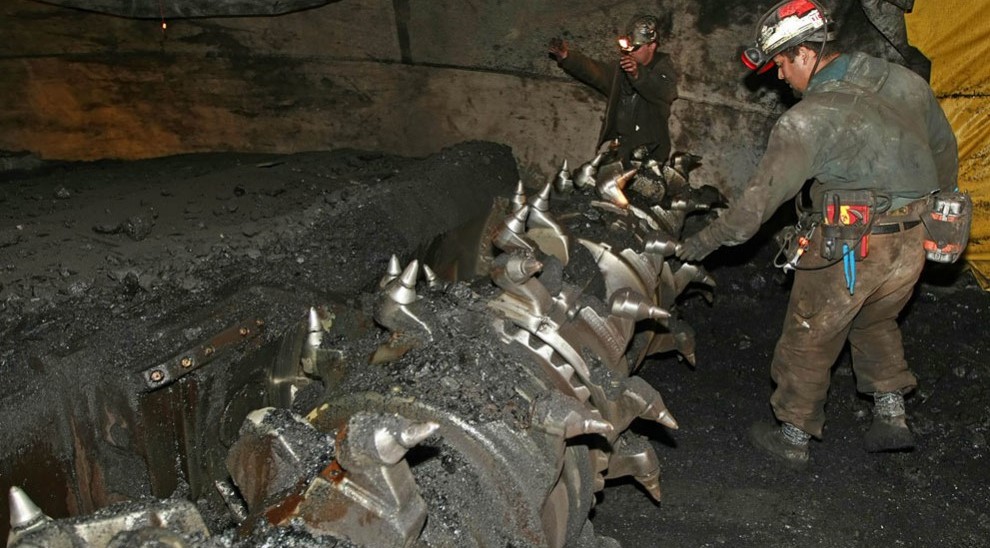
The coal mining in Tajikistan has vast prospects for further development, EDN experts say.
Eurasian Development Bank (EDB) is an international financial organization founded by Russia and Kazakhstan in 2006. The members of the Bank are Russia, Kazakhstan, Armenia, Tajikistan and Belarus (2010). Other states or international organizations can become members by joining the Agreement Establishing the EDB. The Bank has the status of an international organization, and is subject to international law.
Over the first eight months of this year, Tajikistan has produced more than 770,000 tons of coal, which was 245,000 tons more than in the same period last year, according to the Ministry of Energy and New Technologies (MoINT).
An official source at a MoINT says Tajikistan is expected to produce 1.7 million tons of coal this year.
Last year, Tajikistan reportedly produced more than one million tons of coal, which was 130,000 tons more than in 2014.
The ban on coal exports was introduced in Tajikistan on March 1, 2013, the source added. A coal law, which is intended to promote attraction of funds in development of Tajikistan’s coal mining sector, was adopted in 2012.
Coal production has reportedly increased due to a shift in the country’s industrial enterprises from more expensive natural gas and electricity to more economical coal for heating and other needs.
Since 2007, more than more than 160 industrial enterprises in Tajikistan have been shifted to coal, the source said. More than 200 coal-fired enterprises now operate in Tajikistan.
Eighteen coal-producing enterprises now operate in Tajikistan. Fon-Yaghnob Mine is Tajikistan’s largest coal-producing enterprise.