
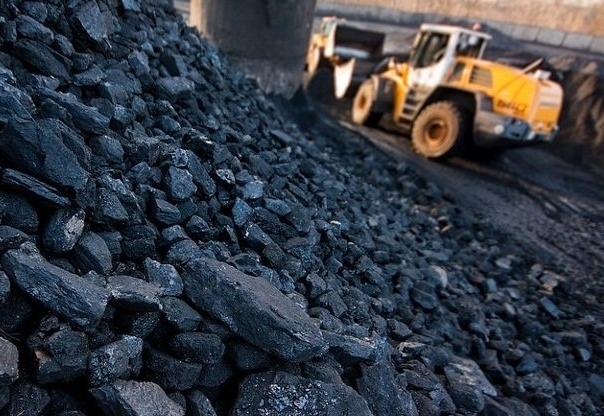
Prospects of development of coal industry in Tajikistan and its impact on the climate and environmental policy have been discussed here at a roundtable organized by Little Earth NGO.
The meeting participants discussed possible alternatives and ways of development of clean energy resources in the country.
They, in particular, noted that the future of the coal industry is limited in Tajikistan despite its increasing indicators.
The meeting participants pointed to the necessity of developing green energy resources, including water, wind and solar energy.
The head of the Mining and Technical Inspectorate, Muzaffar Nozimzoda, noted that development of the coal industry without observing appropriate environmental protection norms would pose serious threat to the environment and the population health.
Tajikistan’s possible coal reserves are reportedly estimated at 4.5 billion tons. Eighteen enterprises are now engaged in production of coal in the country: Angisht; Fon-Yaghnob; Koni Angishtin Toshkurgan; Koni Angisht Mughiyon; etc.
An independent expert from Ukraine, Oleg Savitskiy, reported on China’s investment in coal sector of Central Asia’s nations and development of alternative energy resources in other countries.
According to him, alternative energy resources have begun producing more energy than the coal-powered plants in recent years.
Farrukh Sultonov, the head of the Tajik-Norwegian Center for Sustainable Development, reported on an economic justification of development of the coal industry in Tajikistan.
According to him, increase in coal production in Tajikistan is conditioned by existence of resources, relative cheapness of technologies and lack of access to natural gas and other necessary resources.
“Increase in production of coals in Tajikistan will continue in a medium-term perspective,” Sultonov noted.
The meeting resulted in adoption of a special statement that will be published in the near future.
Established by a group of young activists in 1997, Little Earth is an environmental non-profit, non-governmental organization (NGO). It is a voluntary, local-based and self-driven organization. Little Earth mainly works in field of sustainable energy, climate change adaptation, environmental education and youth environmental movement development. The NGO is headquartered in Dushanbe, Tajikistan.
Little Earth reportedly has rich experience in the fields of sustainable energy, education for sustainable development and climate change adaptation. Little Earth is focal point for the international School Project on Application of Resources and Energy (SPARE) and co-founder of the Tajikistan Network of NGOs on Climate Change.