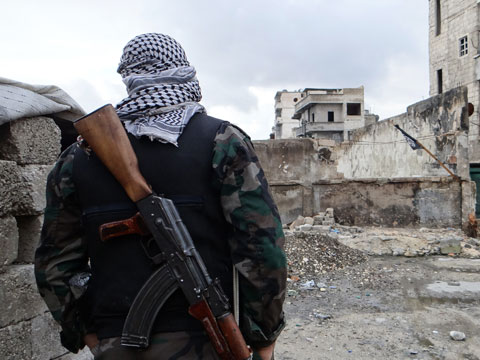
1,300 Tajik nationals are fighting alongside Islamic State (IS) militants in Syria and Iraq, a new report says. The Soufan Center, a US-based think tank, says that anther nearly 3000 people have been detained in Turkey. 147 Tajik nationals have reportedly returned home voluntarily.
The report titled BEYOND THE CALIPHATE: Foreign Fighters and the Threat of Returnees says that in all, more than 4,200 people from Central Asia have traveled to Syria and Iraq to fight alongside IS militants. Hundreds of them have reportedly returned home.
According to the report, 1,500 Uzbek nationals have fought alongside IS militants. Besides, 500 people from Kazakhstan, 500 people from Kyrgyzstan (44 people have returned home voluntarily) and 400 people from Turkmenistan.
Citing figures provided by the authorities in 33 countries, the Soufan Center says at least 5,600 foreign fighters are now believed to have returned home.
They include 400 of the 3,417 fighters from Russia; 760 of the 3,244 from Saudi Arabia; 800 of the 2,926 from Tunisia; and 271 of the 1,910 from France.
Added to the unknown numbers from other countries, this represents a huge challenge for security and law enforcement entities, according to the report.
The report says the returnees – most of whom are imprisoned or disappear from view – will continue to present a security challenge for years to come.
IS has lost much of the territory that once made up the "caliphate" it proclaimed in June 2014, attracting thousands of jihadists from across the world.
The Soufan Center's report says the flow of foreign fighters came to a virtual standstill in late 2015, as IS began to suffer defeats and states implemented better measures to prevent travel.
The report warns that as the territorial "caliphate" shrinks and is increasingly denied an overt presence, the IS leadership is highly likely to look to supporters overseas, including returnees, to “keep the brand alive.”
Returnee women and children represent a particular problem, as states struggle to understand how best to reintegrate them, the report adds. Proper mental health and social support mechanisms will be especially relevant for children, according to the report.