An article “Uzbekistan & Tajikistan: Catalysts for a Regional Water Solution?” by William Persing that was posted on EurasiaNet.org website on January 23 notes that the continuing rapprochement between Uzbekistan and Tajikistan could provide a boost to regional efforts that address one of Central Asia’s key strategic issues: the sustainable management of water resources.
The author notes that Uzbek President Shavkat Mirziyoyev has placed water management high on his reform agenda. At the United Nations General Assembly in 2017, the Uzbek leader discussed at length the importance of water in Central Asia and the need for cooperation.
The Central Asia Climate Change Conference, which opens January 24 in Almaty, will serve as a test of Mirziyoyev’s commitment to cooperation, and can serve as a gauge for the chances of a breakthrough in the development of a water management system, according to the article.
For most of the post-Soviet era, the divergent priorities of upstream Central Asian states, namely Tajikistan and Kyrgyzstan, and their downstream neighbors — Kazakhstan, Uzbekistan and Turkmenistan — have proven unbridgeable. Uzbekistan’s intransigent opposition to water-management reform was widely seen as a major stumbling block, the author says.
Uzbekistan’s Development Strategy for 2017-2021 reportedly underscores Mirziyoyev’s focus on water issues. The strategy proposes comprehensive reforms in the agricultural sector to reduce Uzbekistan’s water usage, primarily via the introduction of greater efficiency. If implemented as envisioned, this would mark a major turn in water management for Uzbekistan.
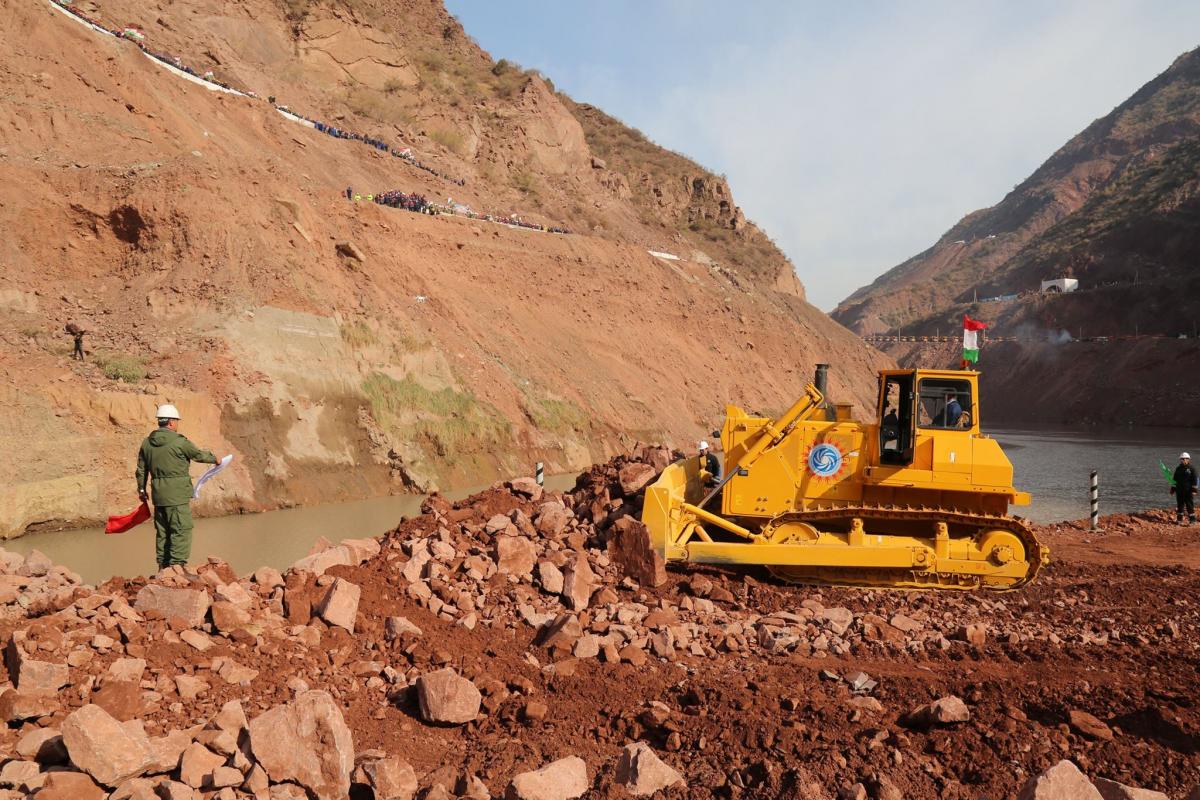
The author says that in the search for a regional water solution, no bilateral relationship is more important than that of Uzbekistan and Tajikistan. For nearly two decades, Uzbek-Tajik ties were characterized mainly by acrimony. Tajikistan’s efforts to construct the Roghun Dam reportedly riled Tashkent.
Although Roghun construction remains a top economic priority for Tajikistan, Mirziyoyev has softened Uzbekistan’s position on the issue.
Since Mirziyoyev’s rise to power, the Uzbek government has pursued a thaw in its relations with Tajikistan.
The normalization of Uzbek-Tajik relations could be a catalyst for regional efforts to promote water security, the article says. There are reportedly several existing framework pacts that can facilitate the joint search for solutions, including the 1992 Agreement on Cooperation in the Joint Management, Use and Protection of Water Resources of Inter-State Sources, and the 2006 Framework Convention for the Protection of the Environment [and] for Sustainable Development in Central Asia.