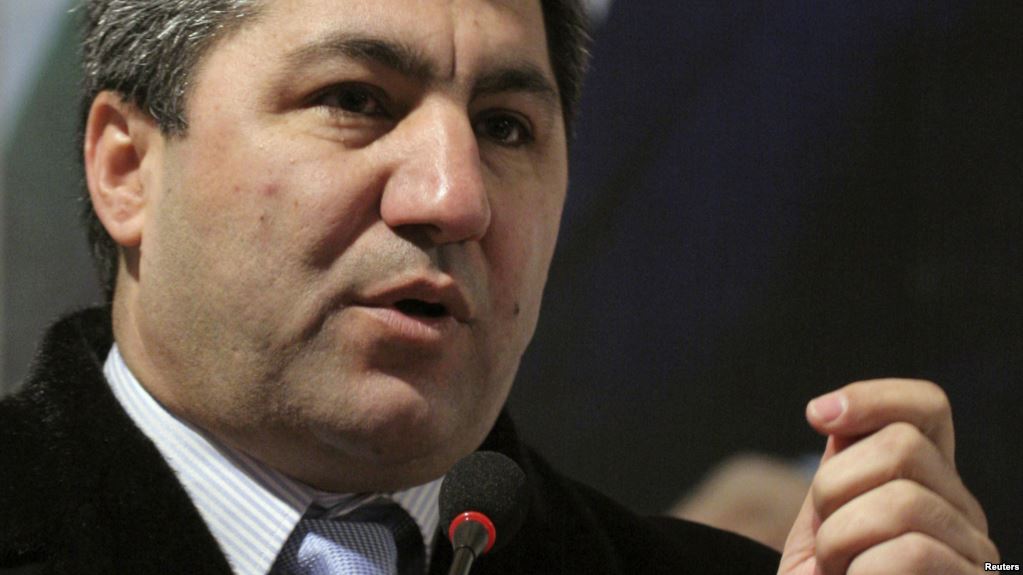
A human rights organization Fair Trials reported on February 28 that Interpol has taken name of Muhiddin Kabiri, the leader of Tajikistan’s now banned Islamic Revival Party (IRPT), off its “Red Notice” list, an international wanted person alert.
Alex Mik, campaigns and communications manager at the Fair Trials rights group which, helped Kabiri liase with Interpol, said the relatively swift resolution of his case was a result of reforms implemented by the international police body to prevent abuse of its system.
IRPT leader Muhiddin Kabiri told Reuters by telephone on March 2 that the removal of the Interpol “Red Notice” would allow him to work more actively on building an opposition coalition.
Reuters says that according to Kabiri, its aim is to act as a check on any attempts by President Emomali Rahmon to extend his powers or pass them on to family members.
Kabiri’s Red Notice was issued in September 2016. Reuters cited his as saying that about 40 more IRPT members in exile still had such warrants active against them.
Tajikistan’s Interior Ministry said it was unaware of the Red Notice for Kabiri being deleted, Reuters noted.
Radio Liberty’s Tajik Service reports IRPT spokesman Mahmoudjon Faizrahmonov welcomed the news of “the removal of Interpol's Red Notice against Mr. Kabiri, a peaceful and moderate politician,” and said Interpol’s decision was “a setback for the Dushanbe government’s efforts to portray its opponents as militants and terrorists.”
Founded in October 1990, the Islamic Revival Party of Tajikistan was the only Islamic party officially registered in former Soviet Central Asia. The IRPT was registered on December 4, 1991. It was banned by the Supreme Court in June 1993 and legalized in August 1999.
Since 1999, the party had reportedly been the second-largest party in Tajikistan after the ruling People’s Democratic Party of Tajikistan.
In the 2005 and 2010 parliamentary elections, the IRPT won two out of 63 seats in the parliament, but the party suffered a crushing defeat in Tajikistan’s March 2015 vote, failing to clear the 5 percent threshold needed to win parliament seats.
Tajikistan’s Supreme Court banned the Islamic Revival Party as terrorist group on September 29, 2015 on the basis of a suit filed by the Prosecutor-General’s Office. The Supreme Court ruled that the IRPT should be included on a blacklist of extremist and terrorist organizations. The verdict forces the closure of the IRPT’s official newspaper Najot and bans the distribution of any video, audio, or printed materials related to the party’s activities.
Party leader Muhiddin Kabiri, who now is in self-imposed exile abroad, denies any wrongdoing or involvement in the violence.
Meanwhile, the Supreme Court of Tajikistan has put Muhiddin Kabiri on trial in absentia. Charges against IRPT leader include terrorism and involvement in what the government says was an armed attempt to seize power, led by mutinous former Deputy Defense Minister Abduhalim Nazarzoda, in September 2015.