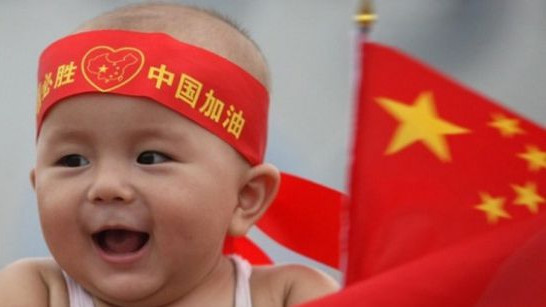
Citing Chinese media, the BBC reported on April 12 that a baby has been born in China to a surrogate mother four years after his parents died in a car crash.
The couple, who died in 2013, had frozen several embryos hoping to have a child through IVF.
After the accident, their parents fought a protracted legal battle to be allowed to use the embryos.
The boy was born in December to a surrogate from Laos and The Beijing News first reported the case this week, according to the BBC.
The newspaper explained how the lack of precedent for a case of this kind had forced the deceased couple's parents through a legal minefield before the surrogacy could proceed.
At the time of the accident, the embryos were reportedly stored safely in a Nanjing hospital, frozen at minus 196 degrees in a liquid nitrogen tank.
A court battle gave the four grandparents-to-be the right over the fertilized eggs.
There was no precedent as to whether they could inherit their children's frozen embryos, according to reports.
They were eventually granted the embryos, but it wasn't long until the next problem occurred. The embryos could only be taken from the Nanjing hospital if there was proof that another hospital would store them.
But given the legal uncertainty around untransplanted embryos, it was hard to find another medical institution in China willing to get involved.
And with surrogacy illegal in China, the only realistic option was to look beyond the country's borders.
Eventually, the future grandparents worked with a surrogacy agency and decided on Laos, where commercial surrogacy was legal.
As no airline was willing to accept a thermos-sized bottle of liquid nitrogen, the precious cargo had to be transported by car.
In Laos, the embryo was implanted into the womb of the surrogate mother and in December 2017 the boy was born.
Citizenship of the child, named Tiantian, was another problem though and so he was born not in Laos but in China – with the surrogate travelling there on a simple tourist visa.
With no parents left to prove paternity, all four grandparents had to give blood and take DNA tests to establish that the baby was indeed their grandson and that both parents had been Chinese nationals.