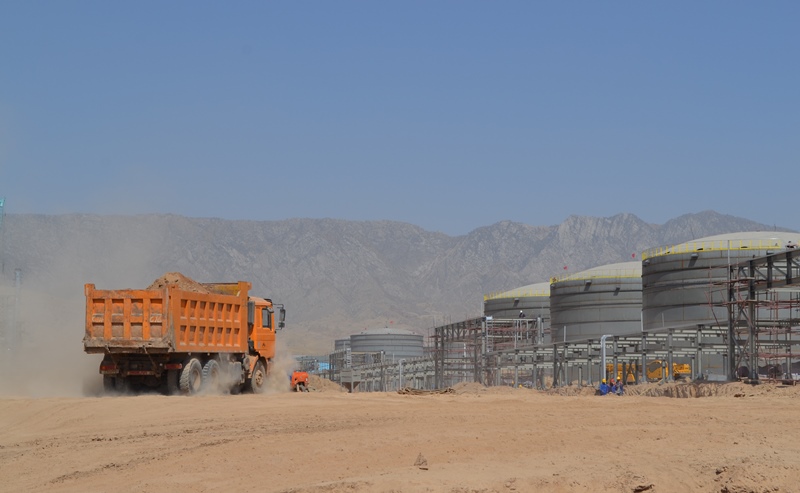
An oil refinery that has been built in the Danghara Free Economic Zone (FEZ) is expected to be introduced into operation in September this year. At the first stage, this Tajik-Chinese joint venture, JV TK-Oil, will produce diesel fuel as well as 80-octane and 92-octane gasoline.
“JV TK-Oil managers have promised that the first line of the oil refinery will be introduced into operation in September this year,” FEZ Danghara deputy head, Safarali Taifurov, told Asia-Plus in an interview.
According to him, crude oil will be pumped through the 1.2-kilometer pipeline that is being laid to the refinery from the cargo terminal that is being built at the Bokhtar-Kulob railway.
“At first, they planned to import crude oil from Iran but they were later forced to give up that intention because of the latest tense in relations between Iran and the West (the possibility of imposing new sanctions on Iran). Chinese investors have acquired two oil deposits in Kazakhstan and the plant will receive crude oil from those deposits,” Taifurov said.
He also noted that at the first stage, JV TK-Oil would produce diesel fuel as well as 80-octane and 92-octane gasoline and construction bitumen.
“At the next stage, the plant will also begin producing Euro04 and Euro-5 standard gasoline as well as liquefied natural gas (LNG),” said FEZ Danghara deputy head.
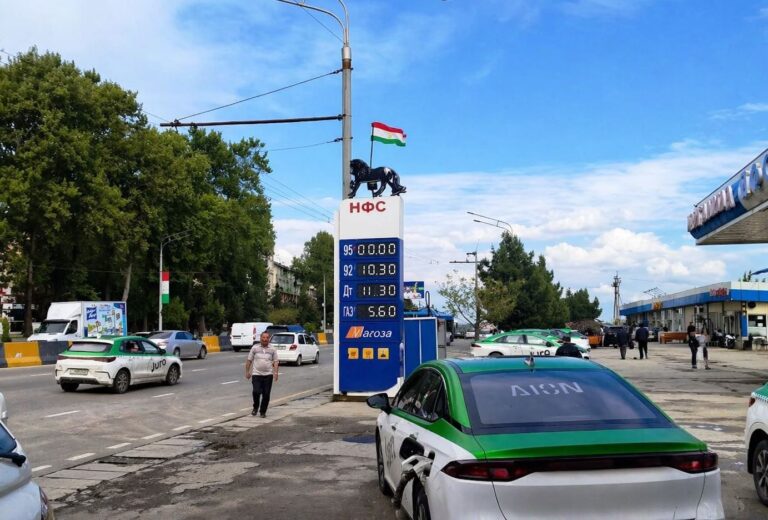
TK-Oil intends to launch a chain of its refueling stations across Tajikistan that will lead to decrease in prices for oil products in the country, Taifurov added.
Recall, the Government of Tajikistan and Limited Liability Co. HELI of China signed an agreement to construct an oil refinery in the Danghara Free Economic Zone in 2014.
The construction cost was estimated to be $80 million for the first stage of the project and between $300 million and $500 million for the second stage of the project.
The production capacity of the oil refinery was expected to be 500 t/yr, and the refinery would employ 200 people. In the second stage of the project, the capacity of the refinery would increase to 1.2 Mt, and the refinery would employ 500 people.
The share of the Chinese side in the project amounts to 90 percent and the share of Tajikistan amounts to 10 percent.
Tajikistan was exempted from paying Russian tariffs on oil and gas exports from 1995-2010 and Russia cancelled Tajikistan’s tax exemption on May 1, 2010 that resulted in gasoline prices rising in the country.
Construction of small and medium-sized oil refineries began in various regions of the country. However, those enterprises have not been introduced into operation, while domestic production of oil products decreased from nearly 4,000 tons in 2010 to little more than 2,800 tons in 2015. Current domestic production of oil products covers only 04 percent of Tajikistan’s requirements in oil products (700,000 tons).
In 2013, Tajikistan and Russia signed a government-to-government agreement on fuel supply cooperation.
Under this agreement, the sides consider and endorse the indicative fuel balance for the next calendar before October 1 of each year. Fuels delivered in addition to the indicative fuel balance will be liable to export duty.
The agreement prohibits re-export of Russian duty-free oil products to the third countries.
The indicative fuel balance for 2014 provided for supplying up to 1 million tons of duty-free oil products to Tajikistan. Tajikistan, however, managed to import only 576,000 tons of oil products
In 2015, Tajikistan imported only 560,000 tons of duty-free oil products from Russia though the indicative fuel balance for 2015 provided for supplying 830,000 tons of duty-free oil products to the country.
Current Tajikistan’s annual requirements in oil products are estimated at 1.5 million tons.