The World Bank’s Board of Executive Directors on March 21 approved for $24 million in grant financing from the International Development Association (IDA).
Villages that are home to around 200,000 citizens in rural Tajikistan are expected to gain better local infrastructure thanks to support from the CASA1000 Community Support Project for Tajikistan (CASA1000 CSP),according to the World Bank Country Office in Tajikistan.
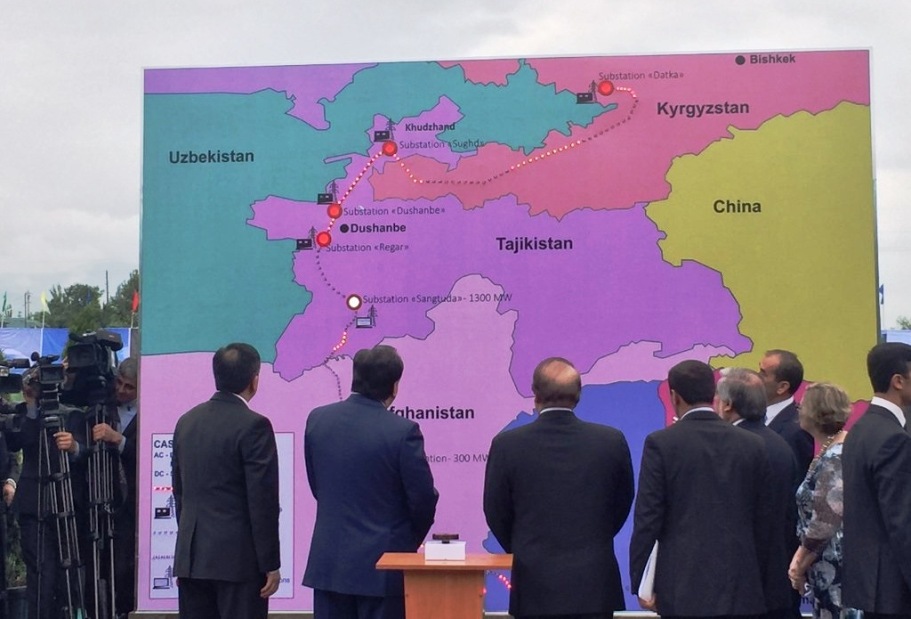
The villages are located along the transmission line supported by the Central Asia South Asia Electricity Transmission and Trade Project (CASA1000).
An additional $2 million is being provided from the CASA1000 Multi-Donor Trust Fund, with funding by the UK’s Department for International Development (DfID) and United States Agency for International Development (USAID).
The CASA1000 Project, which aims at facilitating energy trade along the transmission line in the Kyrgyz Republic, Tajikistan, Afghanistan, and Pakistan, was approved by the World Bank in March 2014 and has entered its construction phase. To ensure benefits to communities that are situated along the transmission line, the World Bank has initiated Community Support Projects in all four participating countries by investing in local-level infrastructure improvements. The Tajikistan portion of the 170km transmission line extends from the northern Sughd region to the southern Khatlon region.
Empowering local communities, the project reportedly helps residents identify the most pressing infrastructure bottlenecks, while providing them with the support needed to address them.
The CASA1000 CSP will invest in improving local infrastructure and public services by financing the rehabilitation and upgrade of village-level electricity infrastructure and equipment to increase the reliability and quality of electricity services. In addition, it will provide subgrants to villages to finance small-scale socioeconomic infrastructure and facilities that are selected by the communities themselves.
In total, over 130,000 people residing in 60 villages and 24 jamoats in Sughd, Khatlon, and Districts Subordinate to the Center, will benefit directly from the project. In addition, 73,000 local residents of the Isfara district in Sughd will benefit from socio-economic investments and facilities for the construction of the Isfara-1 electricity substation and distribution network.
The project will use a Community-Driven Development approach so that communities are empowered and engaged in the decision-making process about the use of resources made available through the project. The project will be implemented by the power utility company Barqi Tojik, the Energy Sector Project Management Unit, and the National Social Investment Fund of Tajikistan.
The World Bank’s active portfolio in Tajikistan includes 16 projects, with net commitments of $625 million.