Dushanbe and Tashkent, in particular, agreed to expand bilateral cooperation in the field of light industry.
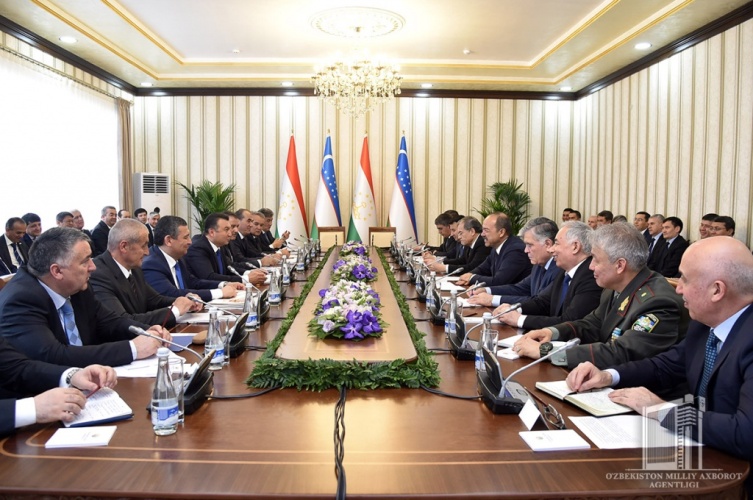
Presided over by Tajik Prime Minister Qohir Rasoulzoda and his Uzbek counterpart Abdulla Aripov, a session of the Tajik-Uzbek commission for trade and economic cooperation took place in the Uzbek city of Termez on April 3.
The session focused on issues related to bilateral economic cooperation between the two counties, implementation of tasks on expansion of many-sided cooperation set by the governments of both countries, says the Tajik MFA information department.
The two sides confirmed their interest in further expansion of bilateral mutually beneficial cooperation in in trade, energy, transportation, agriculture and science.
They reportedly reached an agreement to take concerted measures to promote further increase in the bilateral trade.
Sectors like agriculture, energy and light industry were outlined as areas of which could drive the two-way trade between Tajikistan and Uzbekistan.
The session ended with signing of a protocol.
Tajikistan and Uzbekistan have accumulated many problems after collapse of the Soviet Union. These problems caused the countries' relations to go into a deep freeze two decades ago, including disputes over water and borders. The two countries had had the worst bilateral relations in Central Asia.
Relations between the countries have become warmer after Shavkat Mirziyoyev came to power in Uzbekistan in 2016. Mirziyoyev has said that improving ties with Central Asian nations is a major priority of Uzbekistan’s foreign policy.
Emomali Rahmon and Shavkat Mirziyoyev have met several times since September 2016 and in March 2018, Mirziyoyev made an historic visit to Dushanbe, where 27 bilateral agreements were signed in the fields of trade, economy, investment, finance, transport and transit, agriculture, water and energy, taxes, customs, tourism, education and science, health, culture, interregional cooperation, in the field of security and countering crime. One of the agreements signed in Dushanbe on March 9 last year after the negotiations was a deal enabling nationals of Tajikistan and Uzbekistan to visit each other’s countries for up to 30 days without obtaining visa
Earlier in April last year, Uzbekistan's national airline resumed flights from Tashkent to Dushanbe after a hiatus of some 25 years. The air communication between Dushanbe and Tashkent was cut off in 1992 at Tashkent’s initiative and the issue of resumption of the direct air communication between the two countries has been raised at meetings between state officials of the two countries more than once.
27 bilateral governmental agreements addressing bilateral cooperation between Tajikistan and Uzbekistan in industry, education, border security, agriculture and much else were signed during President’s Rahmon’s state visit to Uzbekistan in August last year.