
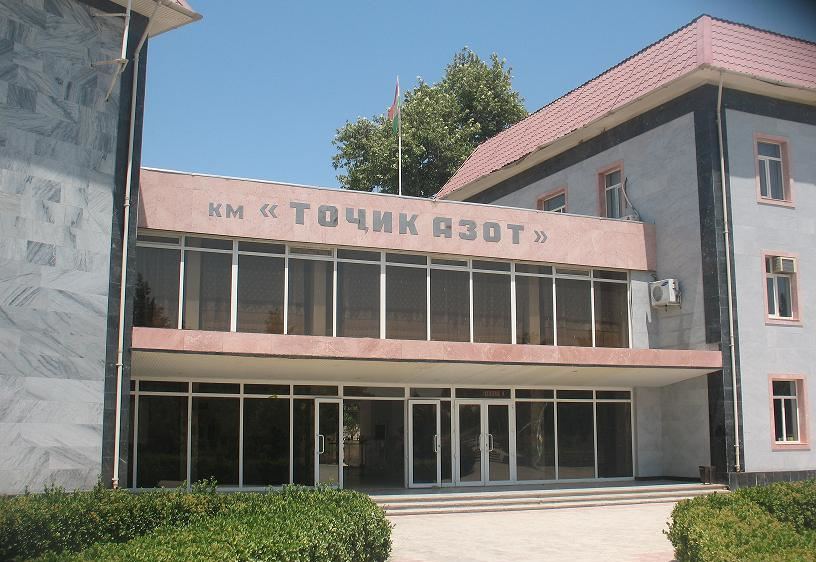
The Tajik authorities are again seeking investors for modernization of its fertilizer plant, Open Joint-Stock Company (OJSC) Azot (formerly TojikAzot), located in the southern city of Levakant (formerly Sarband). 350 million U.S. dollars are reportedly needed for modernization of this plant.
According to the State Committee on Investment and State-owned Property Management (GosKomInvest), the modernization of the enterprise will increase its annual capacity to 1.6 million tons and the enterprise will be able to export up to 1.3 million tons of mineral fertilizers to neighboring per year.
Meanwhile, Tajikistan’s current requirements in mineral fertilizers are 180,000 tons.
Over the past two years, Tajikistan has reportedly imported US$69 million worth of 352,000 tons of mineral fertilizers from Russia, Kazakhstan and Uzbekistan.
Recall, the Majlisi Namoyandagon (Tajikistan’s lower house of parliament) on December 14, 2016 voted for ratification of an investment agreement signed between the Government of Tajikistan and China’s Henan Zhongya Holding Group on September 3, 2016.
Under this agreement, the Chinese company will own 50%+1 shares of the enterprise for the first ten years and then it will transfer this package of shares to Tajikistan.
Henan Zhongya Holding Group has been committed to invest US$360 million in modernization of coal-powered technological equipment and construction of new shops for production of urea and ammonia in Tajikistan within the next three years. However, the construction works have not been begun.
Khatlon governor Davlatsho Gulahmadzoda told reporters last year that the Prime Minister Qohir Rasoulzoda ordered to unilaterally revoke the contract with Henan Zhongya Holding Group if they do not introduce the plant into operation until August and conclude contract with new investors.
The debt-ridden and loss-making fertilizer plant has not been in operation since 2008 due to lack of natural gas supplies.
Until 2008, when neighboring Uzbekistan upped the price of natural gas, a key input for the factory, TojikAzot served as a foreign investment-success story for Tajikistan’s economy.
TojikAzot was partly state owned, with the government controlling a 20 percent stake in the troubled enterprise. Ostark Ventures Limited (Ukrainian oligarch Dmitry Firtash is beneficial owner of Ostark Ventures Limited) assumed the 75% ownership interest in the enterprise and Khairullo Saidov, the son of ex-Minister of Industry Zayd Saidov, owned 5 percent of shares in TojikAzot.
On June 24, 2014, the Khatlon Economic Court invalidated the transaction for the sale of TojikAzot.
Tajikistan’s Agency for State Financial Control and Combating Corruption in March 2014 announced an investigation into a 2002 deal between Dmitry Firtash and the Tajik government to create TojikAzot, a plant specializing in the production of urea, an organic compound used in fertilizer. The anticorruption agency accused Firtash of illegal privatization of the company in 2002 and misappropriation of funds.
Firtash was arrested in Vienna on March 12, 2014, and released on a 125 million Euro bail two days later
Following Firtash’s arrest, Tajikistan’s anticorruption agency charged him on March 15 with the illegal privatization of the clothing factory Guliston in 2002.
The anticorruption agency has argued that Zayd Saidov was involved in the fraudulent privatization of Guliston and TojikAzot.
