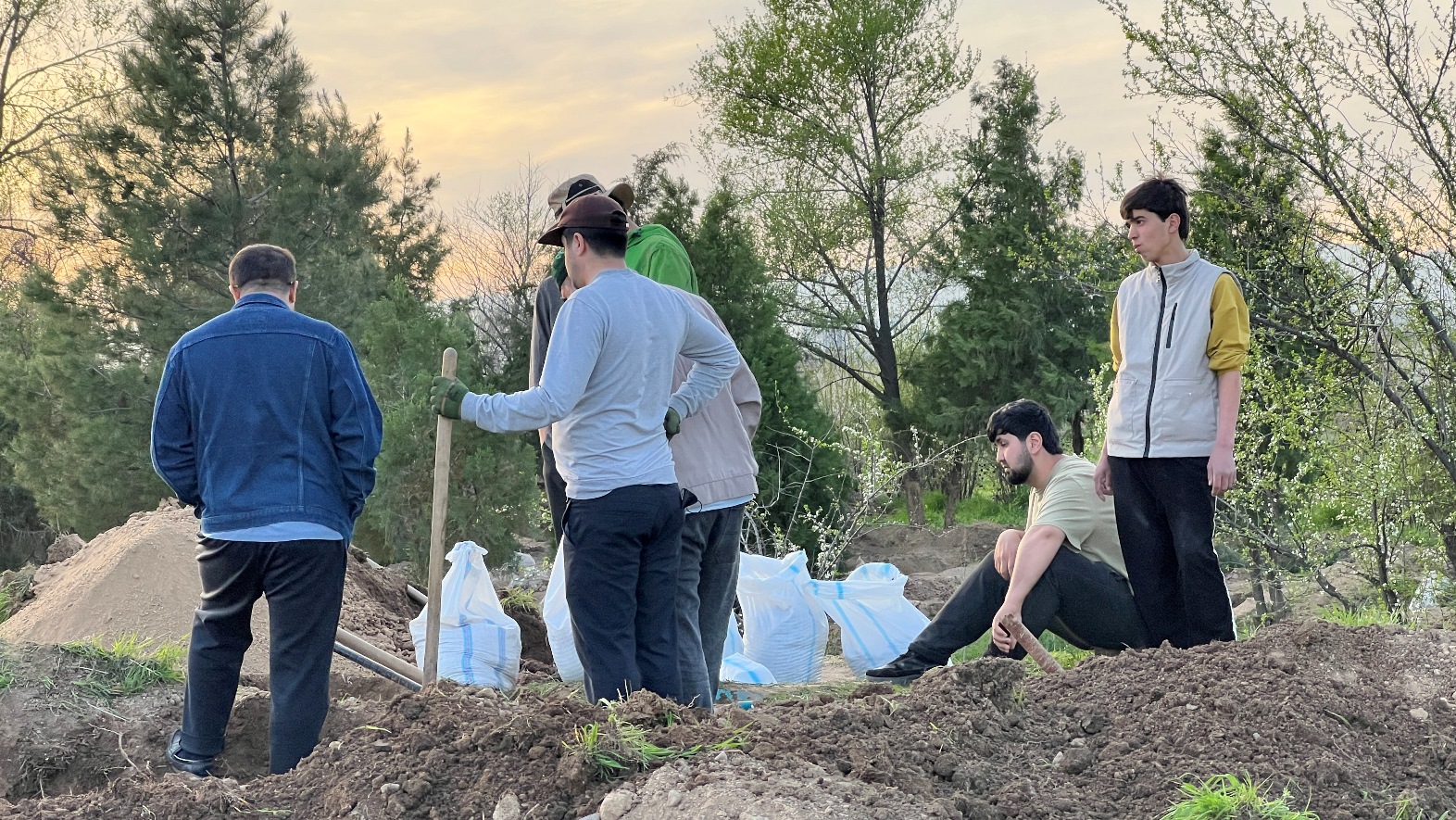
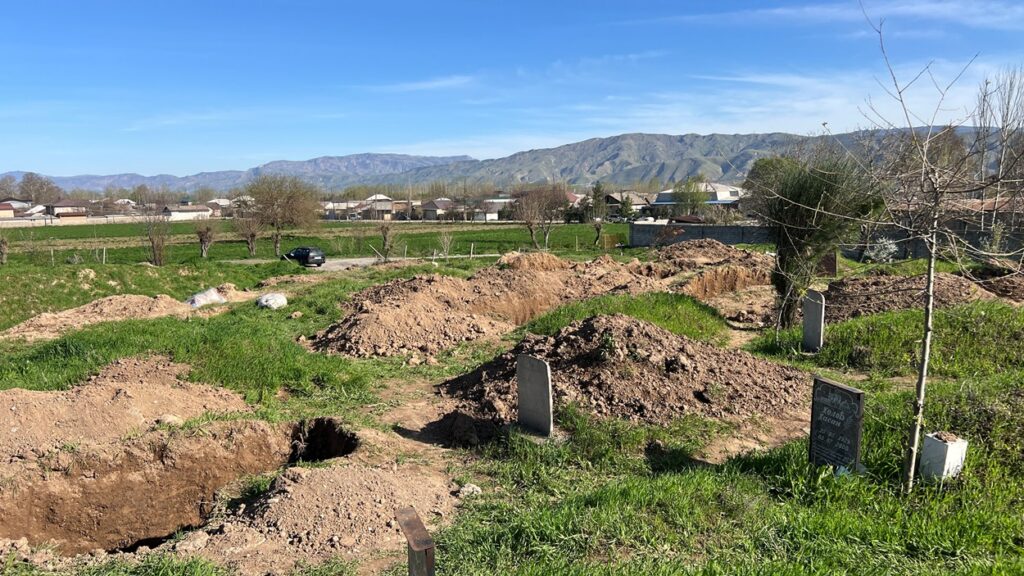
Two cemeteries are being demolished in Dushanbe, and the buried bodies are being exhumed and reburied in other cemeteries. Authorities report that a mosque will be built on the site of one of these cemeteries, and a new building for Dushanbe International Airport will be constructed on the other.
Asia-Plus visited these two cemeteries and spoke with residents and officials.
The Cemetery Management Office of the Dushanbe City Hall confirmed to Asia-Plus in a phone conversation that these two cemeteries are being relocated and reported that a mosque will be built on the site of the cemetery on Hayoti Nav Street, and a new international airport building will be constructed on the land in Khalkachar.
The Main Department of Architecture of the capital, where we sought details, did not respond to questions, asking for an official request to be submitted.
Relatives were not notified in advance
A resident of the 84th neighborhood, whose relatives are buried in the cemetery on Hayoti Nav Street, says that the relocation of the graves should have been announced through the media and social networks.
Another resident of the neighborhood, Yekaterina, agrees: “It should have been announced on television and the internet, half of the residents of the 84th neighborhood have left, they are abroad. They do not know that they need to relocate their deceased.”
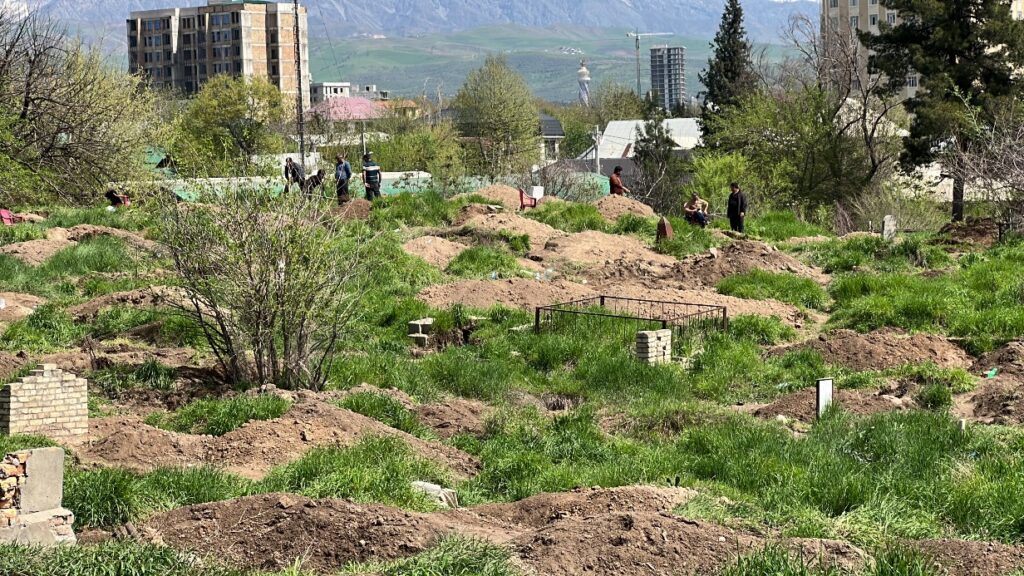
“We didn’t have time, we weren’t even notified, one day they just came and started,” says Faridun Yarov, a resident of Hayoti Nav Street.
Residents dig graves themselves. Without observing sanitary standards
The exhumation of bodies at the cemetery on Hayoti Nav Street is being conducted by relatives of the deceased, although they say they were assisted by a group from the Cemetery Management Office of the mayor’s office. Most of the remains from this cemetery have already been exhumed and reburied at the cemetery in the Mehrobod neighborhood of the capital.
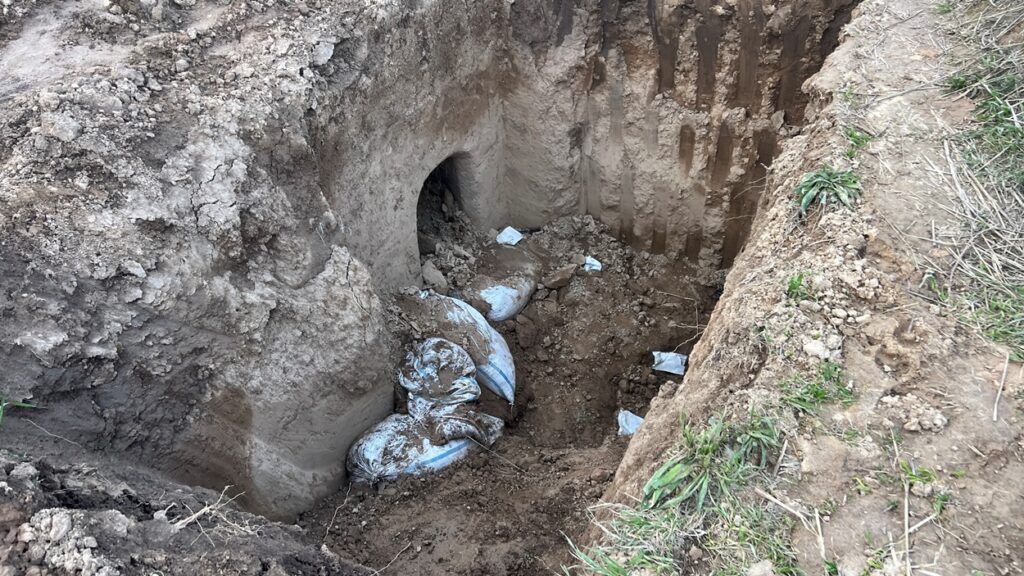
The Sharifov family, residing on this street, exhumed the last remains of their relatives a few days ago.
“It was my sister and my little daughter Manizha. And lastly, it was my wife. My sister was buried 35 years ago, my daughter in 2005 or 2004,” says Saidali Sharifov, a resident of Hayoti Nav Street.
The reburial of bodies from the cemetery in the Halqajar neighborhood of Dushanbe’s Shohmansour district has already been completed.
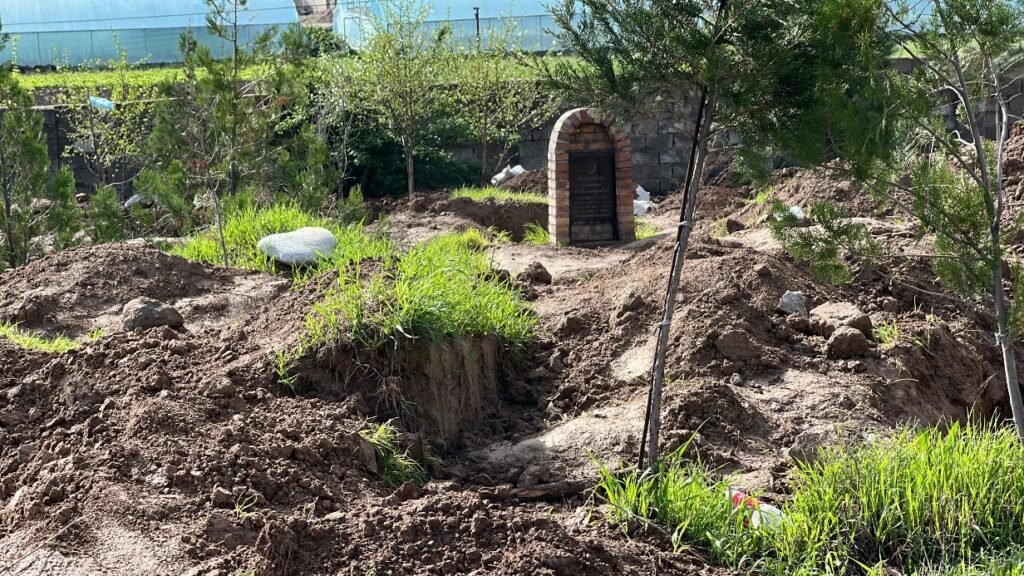
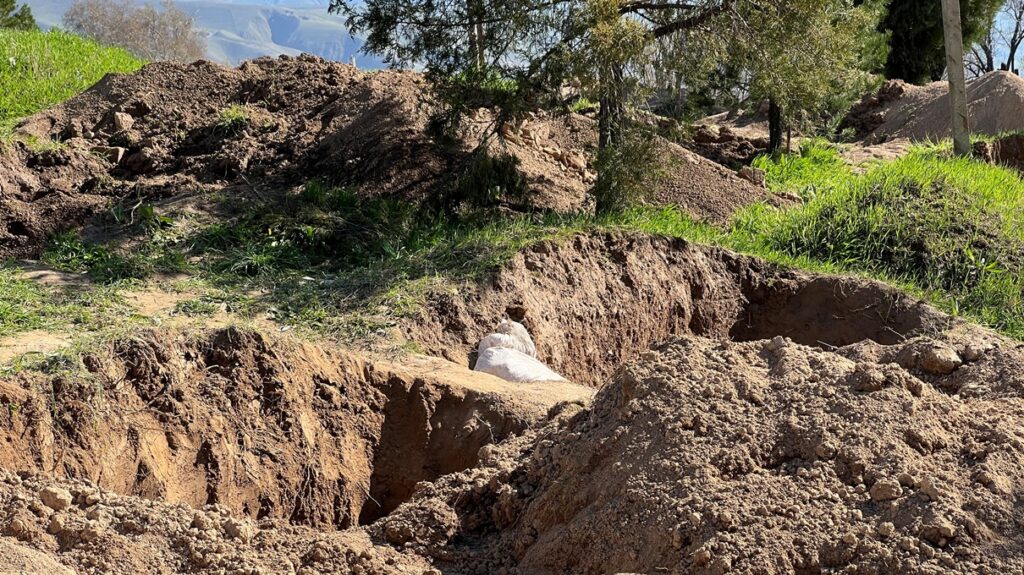
A four-day observation by Asia-Plus’s reporter at these two cemeteries showed that sanitary standards were not observed during the digging of graves and the exhumation of remains. The residents involved in the digging did not have masks, and some did not even have gloves.
At the same time, the sanitary-epidemiological center of the Shohmansour district informed Asia-Plus that specialists from the center conducted disinfection at the cemetery.
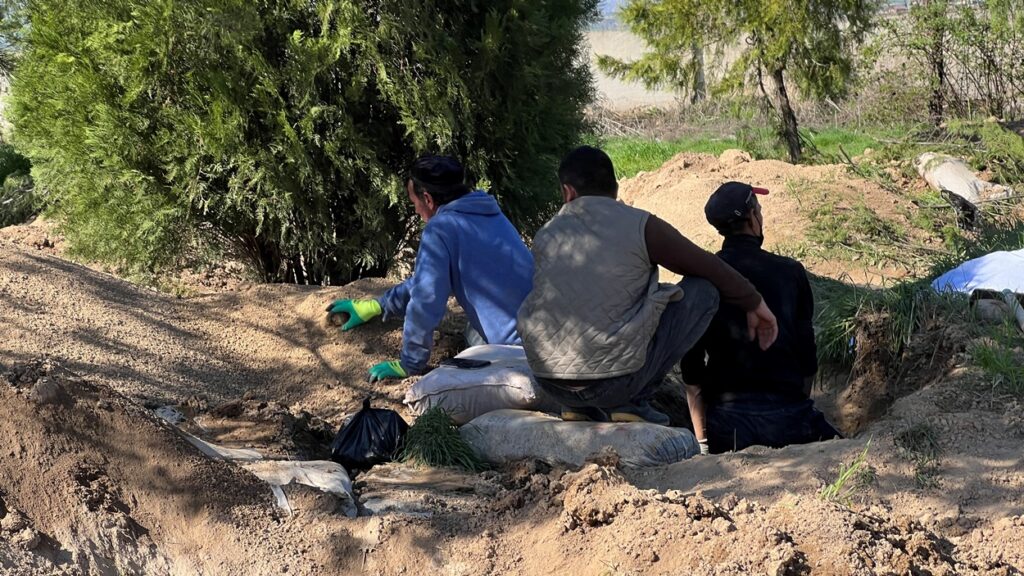
The chairman of the Shishkhona mahalla on Hayoti Nav Street told Asia-Plus that people participated in the grave digging voluntarily. According to him, residents used gloves and masks when exhuming the remains. However, as noted above, our observations showed otherwise.
The State Center for Sanitary and Epidemiological Surveillance of Dushanbe informed Asia-Plus that exhuming remains without observing sanitary standards could lead to the spread of various diseases, including tuberculosis, cholera, anthrax, and others. According to the institution, microorganisms remaining in the remains can persist in the soil for many years, and people involved in reburial without protective measures could become infected through respiratory pathways, skin, mouth, or contaminated water.
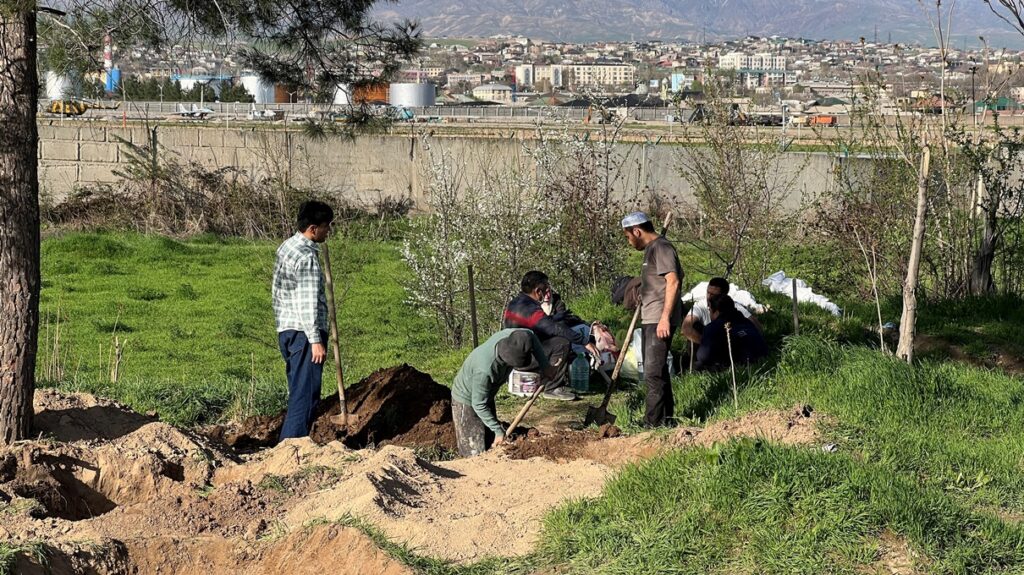
It was noted that improper grave digging could pose an epidemiological threat to the surrounding residents.
The State Center for Sanitary and Epidemiological Surveillance recommends using masks, disposable protective clothing, double gloves, protective goggles, rubber footwear during exhumation, and conducting soil disinfection after completing the work.
When can graves be excavated?
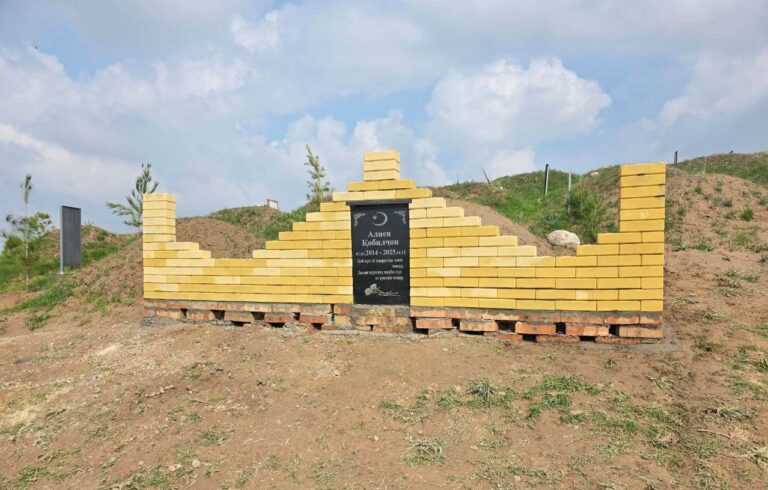
According to the resolution of the Government of Tajikistan “On the procedure for maintaining and using cemeteries,” approved in 2017, the use of the territory of closed cemeteries is allowed forty years after their closure. However, according to residents of the Khalkachar microdistrict, the last burial at this cemetery took place just a few months ago. The cemetery on Hayoti Nav Street, although closed in 2006, was still used for burials in subsequent years.
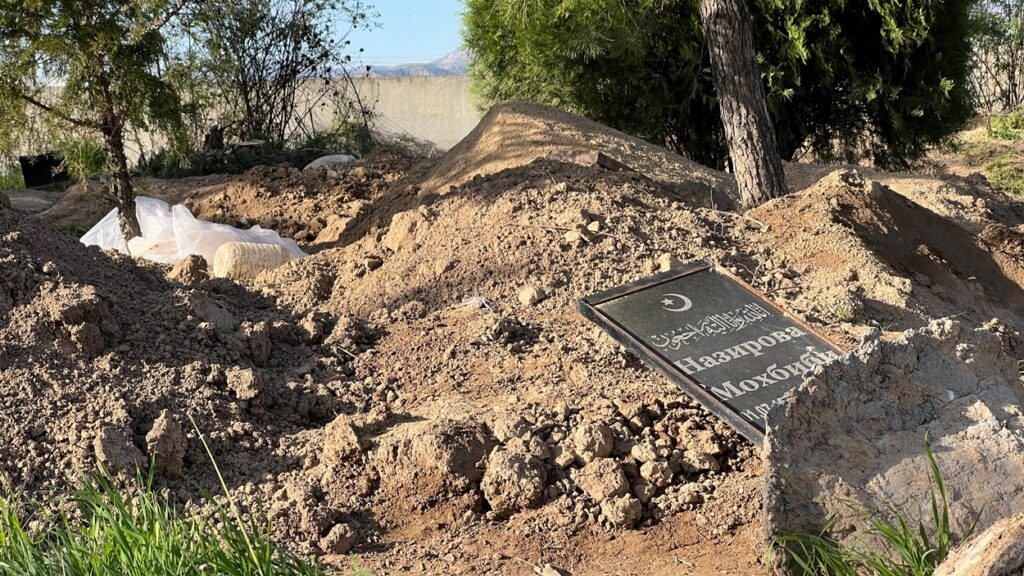
Shahrom Sharifov, a resident of this street, says: “My mother was buried here not long ago, this morning she was exhumed, thank God, she remained untouched. In 2020, she was in the Istiqlol hospital, passed away, and we brought her here. About a week ago, we were told that the authorities themselves would bring people to exhume those who were buried from COVID-19. We waited, they brought people, they dug it themselves.”
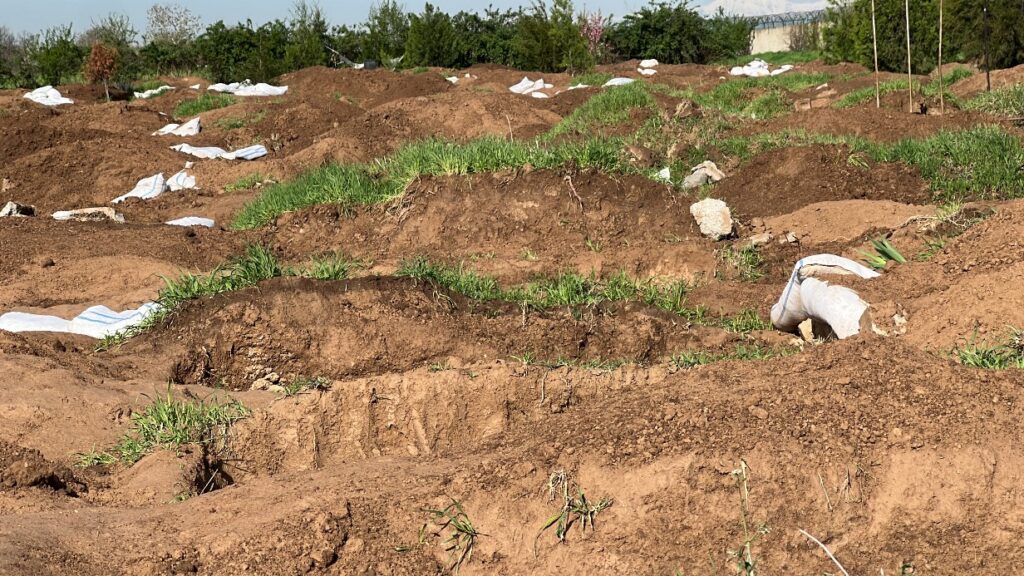
As of today, the cemetery in Khalkachar has been completely relocated, with more than 3,000 bodies moved to the Mehrobod cemetery and other sites. Over 200 remains have been exhumed from the Hayoti Nav cemetery, and digging continues there.
What did the mufti say?
The grand mufti of Tajikistan Saidmukarram Abduqodirzoda told Asia-Plus that just as a person is respected in life, the remains of the deceased must be respected, and they should be exhumed and reburied with full responsibility and adherence to etiquette.
He says that in cases of necessity, natural disasters, and other reasons requiring the relocation of burials, Islamic law allows this:
“Bones are wrapped in white cloth—not as a shroud but simply in white prayer cloth—placed in a bag, and moved to another cemetery where they are buried without a janazah prayer and without a lahad (a niche in the wall of the grave. — Ed. note).”
The Cemetery Management Office told Asia-Plus that the relocation of graves was carried out in accordance with the norms of the Islamic religion.