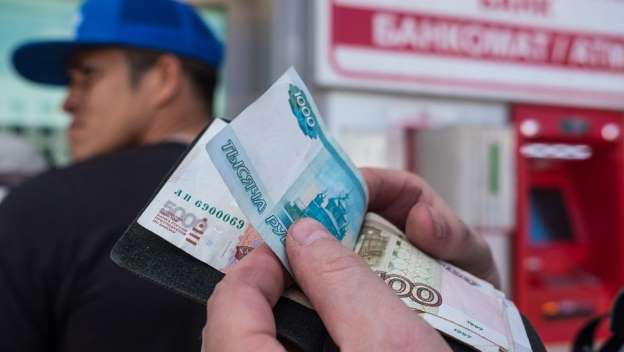
Over the first six months of this year, labor migrants have sent 999 million U.S. dollars to banks in Tajikistan, which was 174 million USD fewer than in the same period last year, the head of the National Bank of Tajikistan (NBT), Jamshed Nourmuhammadzoda, told reporters in Dushanbe on July 22.
As a whole, remittances to Tajikistan from abroad over the same six-month period have fallen 14.8 percent or 195 million USD compared to January-June last year, Tajik central bank head said.
Nourmuhammadzoda noted that remittances from Russia reduced by half in early May.
According to him, the situation with wire transfer improved in June. “Last month, they sent money to the country by 0.7 percent more,” NBT head noted.
As it had been reported earlier, according to Russia’s central bank, 359 million U.S. dollars (USD) have been sent by physical entities through money transfer system to Tajikistan from Russia over the first quarter of this year, which was 22.3 percent fewer than in the same period last year,.
In January-March last year, 462 million USD were reportedly sent through money transfer system to Tajikistan from Russia.
The World Bank in April this year predicted sharpest decline of remittances in recent history. According to the World Bank, global remittances are projected to decline sharply by about 20 percent in 2020 due to the economic crisis induced by the COVID-19 pandemic and shutdown. The projected fall is largely due to a fall in the wages and employment of migrant workers, who tend to be more vulnerable to loss of employment and wages during an economic crisis in a host country. Remittances to low and middle-income countries (LMICs) are projected to fall by 19.7 percent to $445 billion, representing a loss of a crucial financing lifeline for many vulnerable households, the World Bank noted.
In 2021, the World Bank estimates that remittances to LMICs will recover and rise by 5.6 percent to $470 billion. The outlook for remittance remains as uncertain as the impact of COVID-19 on the outlook for global growth and on the measures to restrain the spread of the disease. In the past, remittances have been counter-cyclical, where workers send more money home in times of crisis and hardship back home. This time, however, the pandemic has affected all countries, creating additional uncertainties.
Recall, US$2.576 billion were sent through money transfer system to Tajikistan from Russia last year, which was 23 million U.S. dollars more than in 2018. Last year, remittances from Tajik citizens sent through money transfer system to the country from Russia were reportedly equivalent to nearly 33 percent of all economic output (as measured by gross domestic product, or GDP).
In 2018, US$2.553 billion were sent through money transfer system to Tajikistan from Russia, which was 17 million U.S. dollars more than in 2017. In 2018, remittances from Tajik citizens sent through money transfer system to the country from Russia were reportedly equivalent to 36 percent of all economic output (as measured by gross domestic product, or GDP).