When the COVID-19 pandemic hit, many schools closed and distance learning became a necessity. The University of Central Asia (UCA)’s Education Improvement Program (EIP) had to respond quickly, according to the Aga Khan Development Network (AKDN).
On short notice teachers had to switch from using textbooks to online platforms and social media to facilitate learning. This meant identifying, adapting, and developing teaching and learning material for online and offline use. The new material prepared by EIP was sent directly to the teachers of the sixty public schools that UCA supports in Tajikistan, Kyrgyzstan, and Kazakhstan.
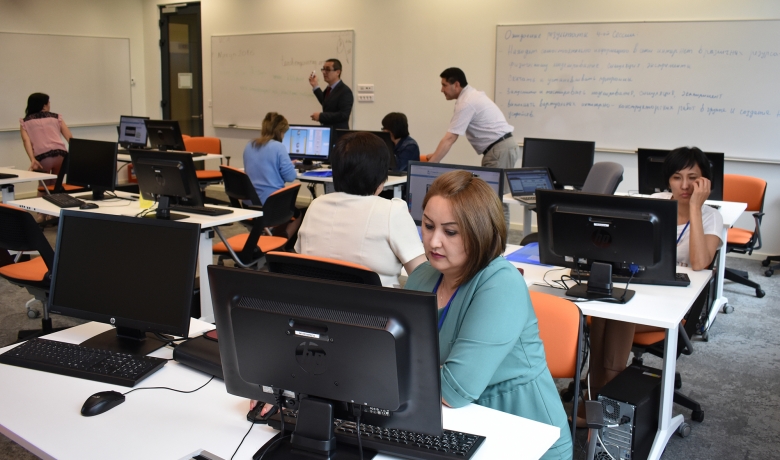
Responding to requests from teachers, EIP conducted an Online Professional Development Program (OPDP) in August for UCA partner and non-partner schools in Kyrgyzstan and Kazakhstan, demonstrating best practices for online teaching. The objective was to develop knowledge and skills in the effective use of online platforms and educational technologies. This included designing lessons for online teaching, and ways to foster and assess creative thinking.
The program modules were reportedly designed to develop autonomous, resourceful, and independent learners. Teachers were encouraged to ask open-ended questions, learn collaboratively, and conduct mock lessons and receive peer feedback. They also designed unit plans and created resources to support online teaching and learning. The program was conducted by EIP staff in cooperation with faculty members and teachers from partner institutions, and was offered in English, Russian, Kazakh and Kyrgyz languages.
One of the key issues highlighted by teachers was the lack of teaching and learning resources to support student development in the context of 21st century competencies and assessing student performance. As a result, teachers and faculty from partner institutions and EIP staff are developing teaching, learning, and assessment materials to facilitate project-based learning and conduct experiments using easily available low-cost material. Project assessment rubrics and pre-and post-tests will facilitate assessment of learning and the impact of these initiatives on the achievements of students.
Following the OPDP, teachers have been sharing their own and their students’ work with each other via social media. This spontaneous online professional learning community is being further developed with online teacher meetings in groups based on areas of interest.