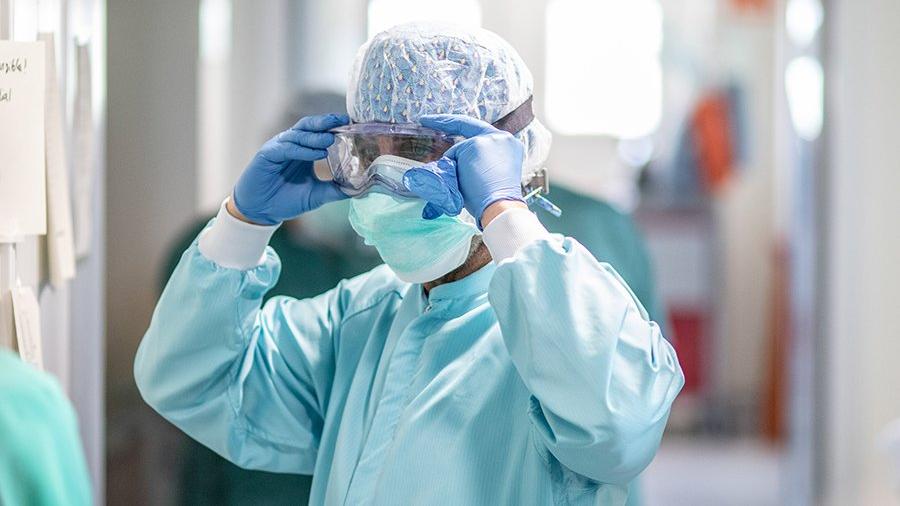
According to the data from the Ministry of Health and Social Protection of the Population (MoHSPP), 74 new officially confirmed cases of the novel coronavirus (COVID-19) were reported in Tajikistan over the past weekends (December 12-13), bringing a total number of the officially confirmed cases of COVID-19 in the country to 12,704 as of the morning of December 14.
The number of coronavirus-linked deaths remains the same in the country – 88, a MoHSPP says.
124 COVID-19 patients were reportedly discharged after recovery over the past weekends. In all, 12,133 (97.4 percent) coronavirus patients have reportedly recovered in the country as of the morning of December 14.
The COVID-19 pandemic in Tajikistan is part of the worldwide pandemic of coronavirus disease 2019 (COVID-19) caused by severe acute respiratory syndrome coronavirus 2 (SARS-CoV-2). The virus was confirmed to have spread to Tajikistan when its index cases, in Dushanbe and Khujand, were confirmed on April 30, 2020.
The coronavirus COVID-19 is reportedly affecting 218 countries and territories around the world and two international conveyances.
Meanwhile, the Asian Development Bank (ADB) has launched a US$9 billion vaccine initiative—the Asia Pacific Vaccine Access Facility (APVAX)—offering rapid and equitable support to its developing members as they procure and deliver effective and safe coronavirus disease (COVID-19) vaccines.
More than 14.3 million positive cases have reportedly been identified in Asia and the Pacific, causing more than 200,000 deaths. As the pandemic persists, economic growth in developing Asia is projected to contract by 0.4% in 2020—the first regional gross domestic product contraction since the early 1960s.
The APVAX provides a comprehensive framework and resource envelope for supporting developing Asia’s vaccine access, using two complementary components. The Rapid Response Component will provide timely support for critical vaccine diagnostics, procurement of vaccines, and transporting vaccines from the place of purchase to ADB’s developing members.
The Project Investment Component will support investments in systems for successful distribution, delivery, and administration of vaccines along with associated investments in building capacity, community outreach, and surveillance.
ADB financing for vaccines will be provided in close coordination with other development partners including the World Bank Group, World Health Organization (WHO), COVID-19 Vaccines Global Access Facility (COVAX), GAVI, and bilateral and multilateral partners.
APVAX promotes safe and effective vaccines to be accessed in a fair manner. For a vaccine to be eligible for financing, it must meet one of three criteria. It must be procured via COVAX, prequalified by WHO, or authorized by a Stringent Regulatory Authority. Additional access criteria, such as a vaccination needs assessment, a vaccine allocation plan by the developing member, and a mechanism for effective coordination among development partners also help ensure that vaccine support under APVAX can be fairly and effectively implemented.
ADB is also making available a $500 million Vaccine Import Facility to support the efforts of its developing members to secure safe and effective vaccines, as well as the goods that support distribution and inoculation.