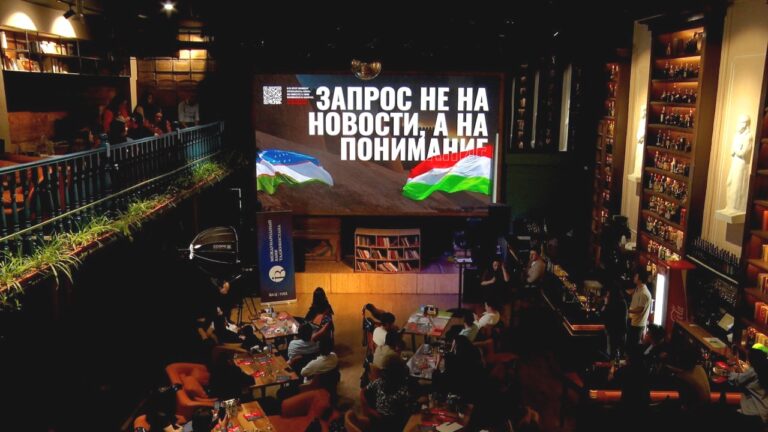
Over 50 experts from Central Asia (CA), representatives of the European Union (EU) and the international financial institutions (IFIs) discussed the ways to make city transport in the region more sustainable through development of Sustainable Urban Mobility Plans and green investments during a two-day online workshop, WECOOP Media reported on March 1.
Sustainable Urban Mobility Plan (SUMP) is a strategic plan designed to satisfy the mobility needs of people and businesses in cities and their suburbs for a better quality of life. It builds on existing planning practices and takes due consideration of integration, participation and evaluation principles. Green investment in urban mobility is an important tool for fulfilling national commitments under the Paris Agreement towards the achievement of relevant Sustainable Development Goals.
According to World Bank (2020), 45 % of the total population of CA lives in urban areas. Yet, according to the United Nations report (2021), only about 34 % of this population has convenient access to public transport, which was even further disrupted during the pandemic. The same report shows that less than 13 % of urban area in CA is allocated to streets, open public spaces and recreational areas. In this regard, long-term policies, SUMPs and targeted investments can help to develop accessible and less congested public transport systems in urban areas, and thus reduce health-related, social and other risks for the residents.
The workshop was reportedly organized by the EU-funded project “European Union – Central Asia Water, Environment and Climate Change Cooperation (WECOOP)” to discuss the application of SUMP in the CA cities and possible mechanisms for financing of the urban mobility as part of the EU commitment to promote investments in relevant sectors to contribute to measurable reduction in man-made pollution, including CO2 emissions.
During the workshop, participating experts from the EU and IFIs, among them European Bank for Reconstruction and Development (EBRD), European Investment Bank (EIB), French Development Agency (AFD), German Corporation for International Cooperation (GIZ), and World Bank (WB) presented their current mobility projects in Central Asia.
The participants reportedly also reviewed successful examples of SUMPs preparation and implementation in the Central and Eastern European countries.
The EU-funded project “European Union – Central Asia Water, Environment and Climate Change Cooperation” (WECOOP) (third phase from October 2019 to October 2022) aims to enhance environment, climate change and water policies at national levels in Central Asia through approximation to EU standards and to promote investments in relevant sectors with the aim of contributing to measurable reductions in man-made pollution, including CO2 emission.
The project activities include support to the EU–CA Platform for Environment and Water Cooperation and its Working Group on Environment and Climate Change, as well as implementation of the EU Green Deal’s international dimension in Central Asia to advance climate action.