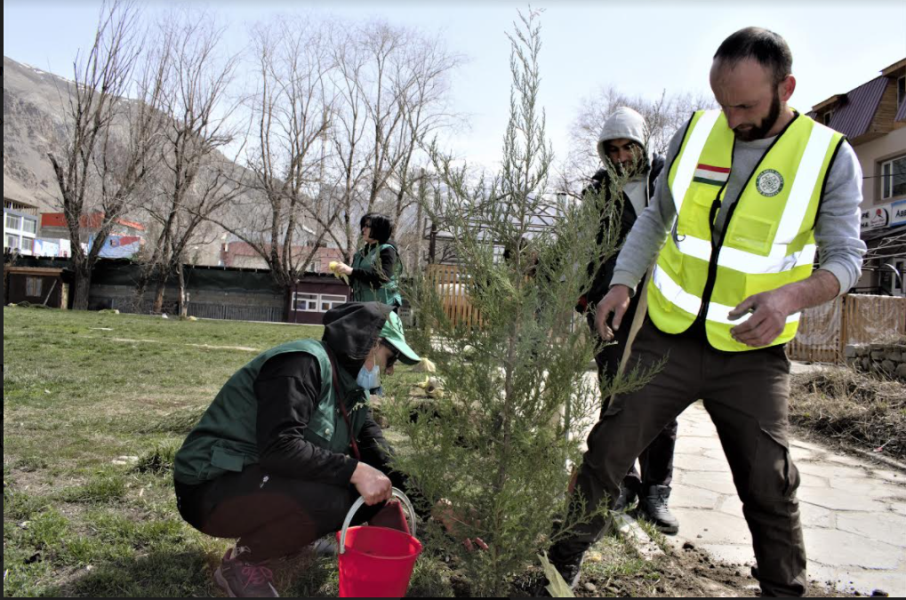
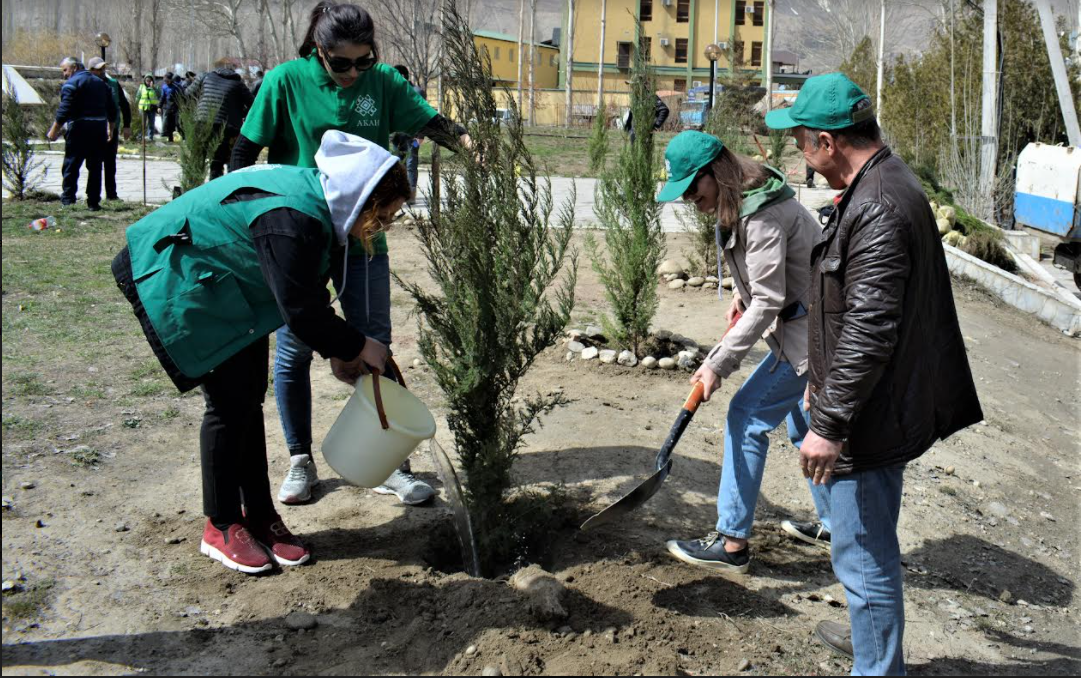
On Monday April 4, the Aga Khan Agency for Habitat (AKAH) and the Government of the Gorno Badakhshan Autonomous region (GBAO) planted over 2000 trees in GBAO across Khorog city as well as Shugnan, Darvoz, Vanj, Rushan, Roshtqala and Ishkashim districts.
A press release issued by the Aga Khan Development Network (AKDN) Resident Office in Tajikistan says this initiative is aimed to promote green environment, the environmental protection and alleviatiion of climate change impact on environment that are common priorities for both AKAH and GBAO Government that consider an environment and climate change perspectives in all the current and future initiatives across the region.
The tree planting initiative was funded through Prince Sadruddin Aga Khan Fund for Environment (PSAKFE).
To combat the climate change impact on environment, rapid deforestation and the subsequent effects of soil and water degradation, GBAO Government pledged to increase tree planting awareness across the population to support the nature and promote the green spaces and environment for the well-being of population.
Greenhouse gas emissions, that has root cause from human induced climate change, affects the water cycle (floods and droughts), negatively impacting human health, threating food security, and leading to more frequent and intense natural disasters. Coping with climate change is a challenge in particular for a landlocked mountainous area like GBAO. Affected by extreme events and dependent on natural resources, the region is highly vulnerable to climate variability and climate change impacts.
This event also builds on the initiatives and plans set under the country’s National Determined Contribution (NDC) and AKAH climate change strategies and actions, and strongly contribute to mitigate risks for vulnerable populations affected, or likely to be affected, by climate change, as well as support climate change resilience and adaptation in the country. AKAH and GBAO Government are undertaking a comprehensive environment and climate stocktaking exercise for their agencies and environmental issues are a cross cutting themes across their joint programming, within which both implement, wherever possible, tree planting initiatives designed to offset greenhouse gas emissions, including on properties within their agency’s purview, or contribute to tree planting initiatives being implemented by other partners in the region.
AKAH merges the capabilities of Focus Humanitarian Assistance, the Aga Khan Planning and Building Services, AKDN’s Disaster Risk Management Initiative, and the PSAKFE.
AKAH works to ensure that poor people live in physical settings that are as safe as possible from the effects of natural disasters; that, residents who do live in high-risk areas are able to cope with disasters in terms of preparedness and response; and that these settings provide access to social and financial services that lead to greater opportunity and a better quality of life.
AKAH helps communities prepare for the worst; provides immediate relief after disaster strikes; and helps build back better and greener while planning for a better future. AKAH currently operates in Afghanistan, Tajikistan, Syria, Pakistan, and India, with plans to expand further in Central Asia as well as East Africa.
The Prince Sadruddin Aga Khan Fund for the Environment (PSAKFE) is the center for environmental activities of the Aga Khan Development Network.