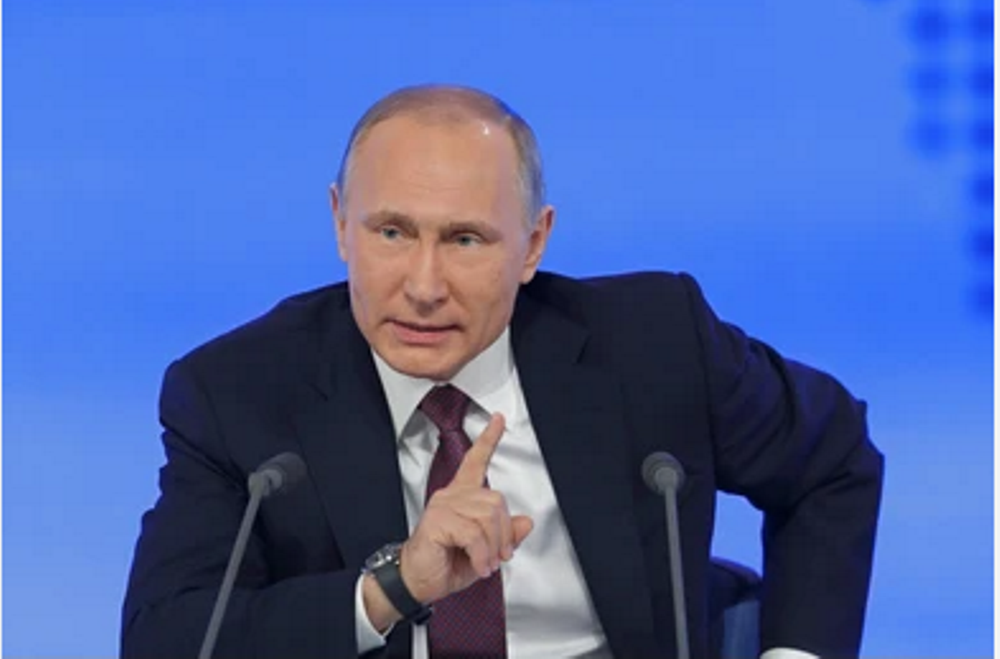
Putin signs decree banning Russian oil exports to countries imposing price cap for Russian oil

Russian President Vladimir Putin on December 27 delivered Russia's long-awaited response to a Western price cap, signing a decree that bans the supply of crude oil and oil products from February 1 for five months to nations that have imposed the price cap for Russian oil.  Putin yesterday signed a decree banning the supply of […]

Asia-Plus

Russian President Vladimir Putin on December 27 delivered Russia's long-awaited response to a Western price cap, signing a decree that bans the supply of crude oil and oil products from February 1 for five months to nations that have imposed the price cap for Russian oil. 

Putin yesterday signed a decree banning the supply of crude oil to foreign companies and citizens that abide by a US$60-per-barrel price cap set by Western allies as a means to squeeze Russian revenue used to fund the war in Ukraine.

By president’s decree the restrictions reportedly take effect on February 1 and remain in effect until July 1.  The decree applies not only to oil but also to oil products; however.

At the same time, the decree, published on the Kremlin’s website, notes that the government will separately determine the date from which sales of those products at the established price ceiling will be prohibited.

The decree was presented as a direct response to "actions that are unfriendly and contradictory to international law by the United States and foreign states and international organizations joining them."

Recall, finance ministers of the G7 group of nations agreed on September 3 to cap the price of Russian oil and petroleum products in order to reduce Russia's ability to finance its war on Ukraine without further increasing the 2021–2022 inflation surge.

The European Union tentatively agreed on December 1 to set an initial US$60-per-barrel price cap on Russian seaborne oil with an adjustment mechanism to keep the cap at 5% below the market price, reviewed every two months.  On December 2, the EU confirmed the price cap rate and joined the United States, other G7 countries and Australia in imposing the sanction from December 5 with two monthly reviews on the level of the price cap. 
Join us on social media!

Article translations:

Related Article

Оби зулол
Оби зулол

Most Read

Recent Articles

Media: the US struck Iranian ports but denies resuming war

Iran's military opened fire on forces that attempted to attack a pier on Qeshm Island.

Uzbekistan implements digital residency registration system

It will be possible to process it online through Face-ID.

The only GPW veteran in Dushanbe allocated more than 80,000 somoni

The mayor's office of Dushanbe allocated him 25,000 somoni.

GITEX AI Kazakhstan 2026: how Almaty became the main AI hub of Central Asia

More than 300 companies and startups, over 200 speakers and 100 investors from 50 countries — the region is entering the global stage.

A trade and economic park to be built at the border junction of Tajikistan, Kyrgyzstan, and Uzbekistan

President of the Kyrgyz Republic Sadyr Japarov familiarized himself with the project.

A project to protect soil from degradation to be developed in Central Asia

The initiative is of great significance for the mountainous countries of the region, including Tajikistan.

Mudslide, death, and destroyed homes: hundreds of families in Tajikistan left homeless

A correspondent from "Asia-Plus" visited Kulob and spoke with the families of those who died and were affected by the disaster.

Spring 2026 bright event: new issue of VIPzone now on sale

This issue is about people and ideas that change everything: from business and investments to fashion, food, and urban environment.

Godfrey Sullivan: “Tajikistan is a promising market for Visa to develop digital payments”

The Vice President of Visa explained why Tajikistan is becoming a promising market for digital payments and how artificial intelligence is influencing the future of finance.