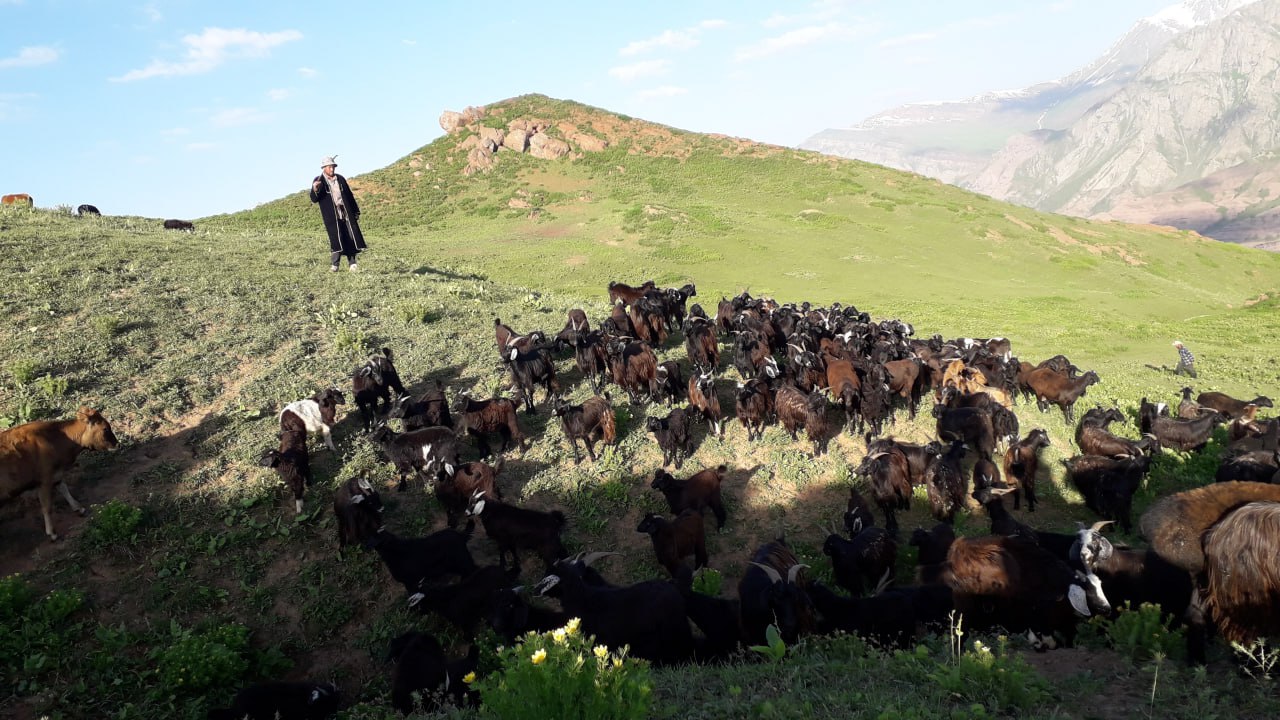
Once, Tajikistan's forests covered 25% of its territory, but due to overexploitation and uncontrolled grazing, only 3% remains today. Over 70% of the country's pastures are owned by the wealthiest individuals, who charge others for grazing their livestock on these lands, leading to the neglect and degradation of these vital resources. This not only impacts the country's food security but also threatens its environmental health.
Unprotected shepherds
A recent report by the United Nations identifies the conversion of pasturelands into crop farming and privatization as major factors leading to land degradation and reduced agricultural yields in Central Asia. With 60% of the region's land used for pastures and livestock providing a primary food source for the population, the shift from state management to privatization has left shepherds vulnerable and reliant on increasingly scarce natural resources. This trend is evident in Tajikistan, where the condition of pastures has sharply declined.
Decline of pasturelands
According to the Ministry of Agriculture of Tajikistan, 93% of large livestock and 82% of small livestock in Tajikistan are owned by the population, yet 70% of the pasturelands are controlled by the country's wealthiest individuals. These owners often demand high rental fees, leading shepherds to overstock pastures, causing overgrazing and soil erosion. Approximately 80% of Tajikistan's pastures are now degraded and eroded, with productivity falling 2-2.5 times.
The role of wealthy landowners
Rich landowners typically overstock their pastures for profit, leading to severe degradation. Pastures marked on state maps are often repurposed for housing, further reducing available grazing land. The mismanagement and overuse of these lands have significantly reduced their productivity, contributing to food insecurity and environmental degradation.
Government response and challenges
To address these issues, Tajikistan has adopted the Pasture Development Program for 2023-2027, which aims to improve pasture conditions and productivity. The program highlights the importance of public access to pastures and proposes the creation of pasture management commissions and user associations at the village level. However, the challenge remains whether these commissions can effectively reclaim pastures from negligent private owners.
UNCCD recommendations
The United Nations report advocates for the protection of pastoralism—a mobile lifestyle based on grazing various livestock—and calls for sustainable pasture management. It emphasizes the importance of preventing land degradation caused by overgrazing, soil erosion, and land conversion. The United Nations Convention to Combat Desertification (UNCCD) urges a paradigm shift in land management at all levels, from local to global, to restore and sustain pasturelands.
Global Initiatives
Recognizing the critical state of pasturelands, the United Nations General Assembly has declared 2026 the International Year of Rangelands and Pastoralists. The declaration calls for investments in sustainable pasture management, restoration of degraded lands, improved market access for pastoralists, and enhanced knowledge-sharing platforms to address gaps in pasture and livestock management.
Conclusion
The degradation of Tajikistan's pastures poses a significant threat to the country's food security and environmental health. Effective management, restoration, and equitable access to these lands are crucial for sustainable development. By adopting comprehensive strategies and fostering international cooperation, Tajikistan can reverse the decline of its pastures and ensure the well-being of its agricultural communities.