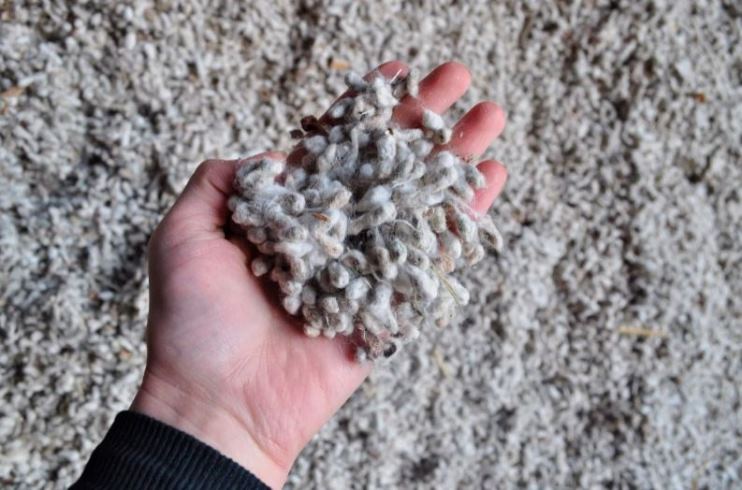
The National Strategy for the Development of Cotton Production, Processing, and Textile Industry, for the period up to 2040, aims to timely supply farmers with high-quality cotton seeds. The Tajikistan government is allocating more than 20 million somonis for seed production development from 2021 to 2025.
Raw material base of the textile industry
Significant attention is being paid to developing the textile industry in Tajikistan. Previously, the country sold raw cotton to foreign countries at low prices and purchased high-cost garments. Now, the focus is on processing cotton domestically and producing fabrics and clothing. Cotton is a priority crop in Tajikistan, but there is limited land for its cultivation—186,000 hectares annually, yielding 400,000-420,000 tons. Experts estimate that over 500,000 tons could be harvested on this land with using quality seeds, fertilizers, and modern technologies.
Why are there no quality cotton seeds?
To produce half a million tons of raw cotton, between 7,000 to 25,000 tons of seeds are needed annually, depending on quality. Currently, seed farms cannot produce this quantity. The existing strategy and seed production development program aim to address this issue. According to the strategy, Tajikistan has 90 specialized seed farms, 60 of which grow cotton seeds. These farms cover about 160,000 hectares, with around 40,000 hectares being irrigated. However, seed farms use only 16,000 hectares (10%), while the remaining 90% is rented out, often for crops other than seeds.
As a result, seed farms cannot fully meet the demand for certified seeds. Some farms still use low-quality conventional seeds instead of elite and reproductive seeds, leading to lower cotton yields. Cotton processing enterprises are not interested in producing seeds that meet state standards, often mixing and damaging seeds during processing. Farmers sow more seeds than necessary due to low germination rates, using 80-120 kg per hectare instead of 20-40 kg, resulting in additional costs and higher production expenses. Farmers seek cotton varieties that offer higher yields per hectare, which would positively impact the final product's prices.
Challenges faced by seed producers
Seed farms that cannot meet producers' needs require investments and state support. A new program for developing the seed industry (2021-2025) aims to provide certified seed material adapted to Tajikistan's natural conditions. State seed funds have been established, and five control points for seed quality analysis have been set up in Dushanbe, Isfara, Konibodom, Jayhuon, and Mastchoh districts to test imported seeds and plant protection products.
However, stimulating seed farms is crucial to solving industry problems. The program includes the following measures:
- Subsidies for breeding and seed centers to purchase equipment, build laboratories, and greenhouses for breeding work, covering at least 70% of costs.
- Subsidies for constructing seed production enterprises, covering at least 50% of costs, or providing preferential loans (up to 5% annual interest) for these purposes.
- Subsidies for purchasing super-elite seeds (up to 50% of costs), elite seeds (up to 30%), and reproductive seeds (R1 and R2) (10-20%).
These measures and funding apply not only to cotton but to all crops, including grains and vegetables.