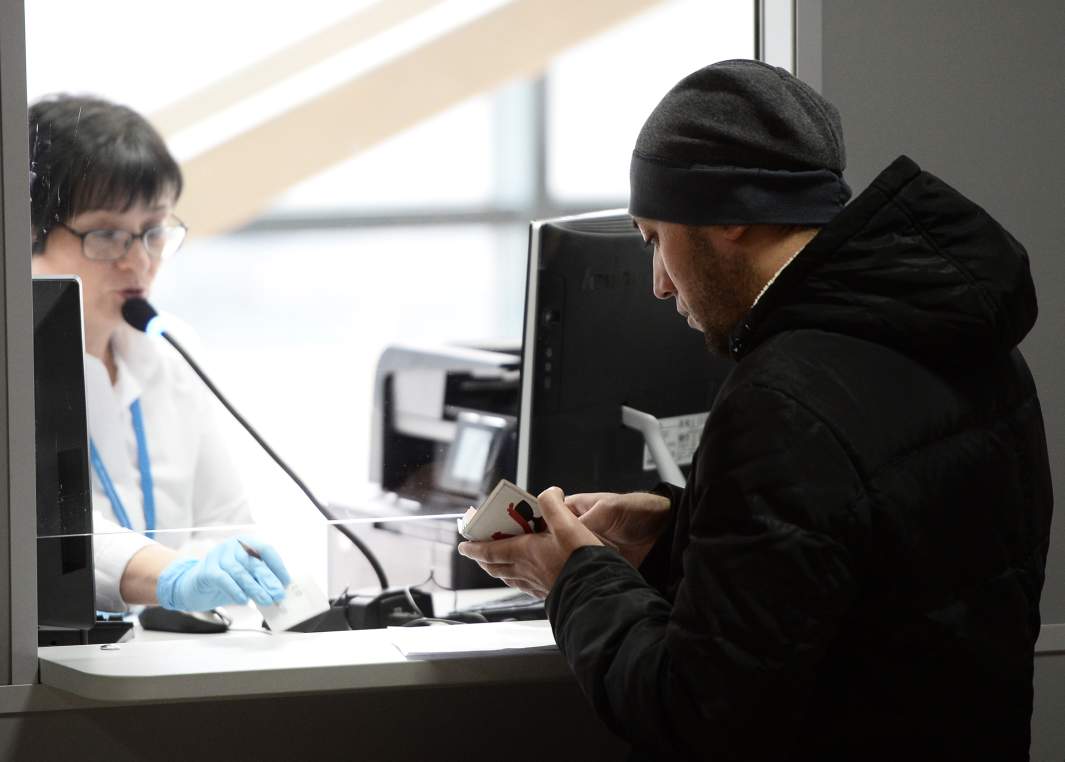
The number of patents issued to migrants in Russia over the first nine months of this year has decreased from 1.7 million in 2023 to 1.6 million in 2024, Izvestia reports, citing data from the Ministry of Internal Affairs.
Lyudmila Ivanova-Shvets from the Plekhanov Russian University of Economics reportedly attributes this decline to stricter regulations on the use of foreign labor, prompting employers to take a more responsible approach toward hiring foreigners. Additionally, there has been tighter control over their entry into Russia.
The drop in issued patents is also due to the rising costs, explains Alexander Safonov, a professor at the Financial University under the Government of the Russian Federation. For example, in Moscow and the Moscow region, the price for patent is now 7,500 rubles, marking a 40% increase since 2020.
The ruble has also depreciated by approximately 30% over recent years, making it less profitable for foreigners to earn wages in Russia.
During this period, the number of temporary residence permits (TRPs) issued nearly halved to 38,000, while residence permits (RVPs) fell by 20% to 169,000. Safonov noted that the reduced influx of foreign workers may contribute to wage growth in certain sectors of the economy.
Migration legislation changes, especially those introduced in spring to regulate the legality of foreign residents' stay in Russia, have also impacted migrant numbers.
Conversely, the number of work authorizations for migrants from January to September 2024 rose by 41% compared to the same period in 2023, reaching 120,200. This includes 34,900 high-skilled worker permits—a 55% increase from last year. Migration expert Vadim Kozhenov clarified that these specialists include healthcare workers, engineers, and machine operators. Highly qualified specialists can work in any profession.
Since the pandemic, Russia has faced a shortage of foreign workers, creating challenges in filling job vacancies. Ivanova-Shvets noted that the increase in work permits is driven by labor shortages, which are challenging to fill with local residents. More people are now coming from visa-friendly countries, such as China and Mongolia, to address these gaps.
While both work permits and patents allow foreigners to work in Russia, they differ. Work permits apply to citizens of visa-required countries, like China, the U.S., or Germany. For such workers, a company must first secure a permit to hire, followed by regional and job-specific documentation.
Patents, on the other hand, are for citizens from visa-exempt countries, such as Uzbekistan, Tajikistan, and Azerbaijan, allowing them to work only in the region where the patent was issued.
Patents are not required for foreigners with temporary or permanent residency, citizens of the Eurasian Economic Union (EAEU) member nations (Armenia, Kazakhstan, Kyrgyzstan, Belarus), Ukraine, or those with refugee or resettlement status.