Member countries of the Central Asia Regional Economic Cooperation (CAREC) Program have endorsed a new Climate Change Action Plan (CCAP) and launched the CAREC Climate and Sustainability Project Preparatory Fund (CSPPF) to strengthen regional collaboration on climate resilience, low-carbon growth, and sustainable development, says press release issued by the Asian Development Bank (ADB) Tajikistan Resident Mission (TJRM).
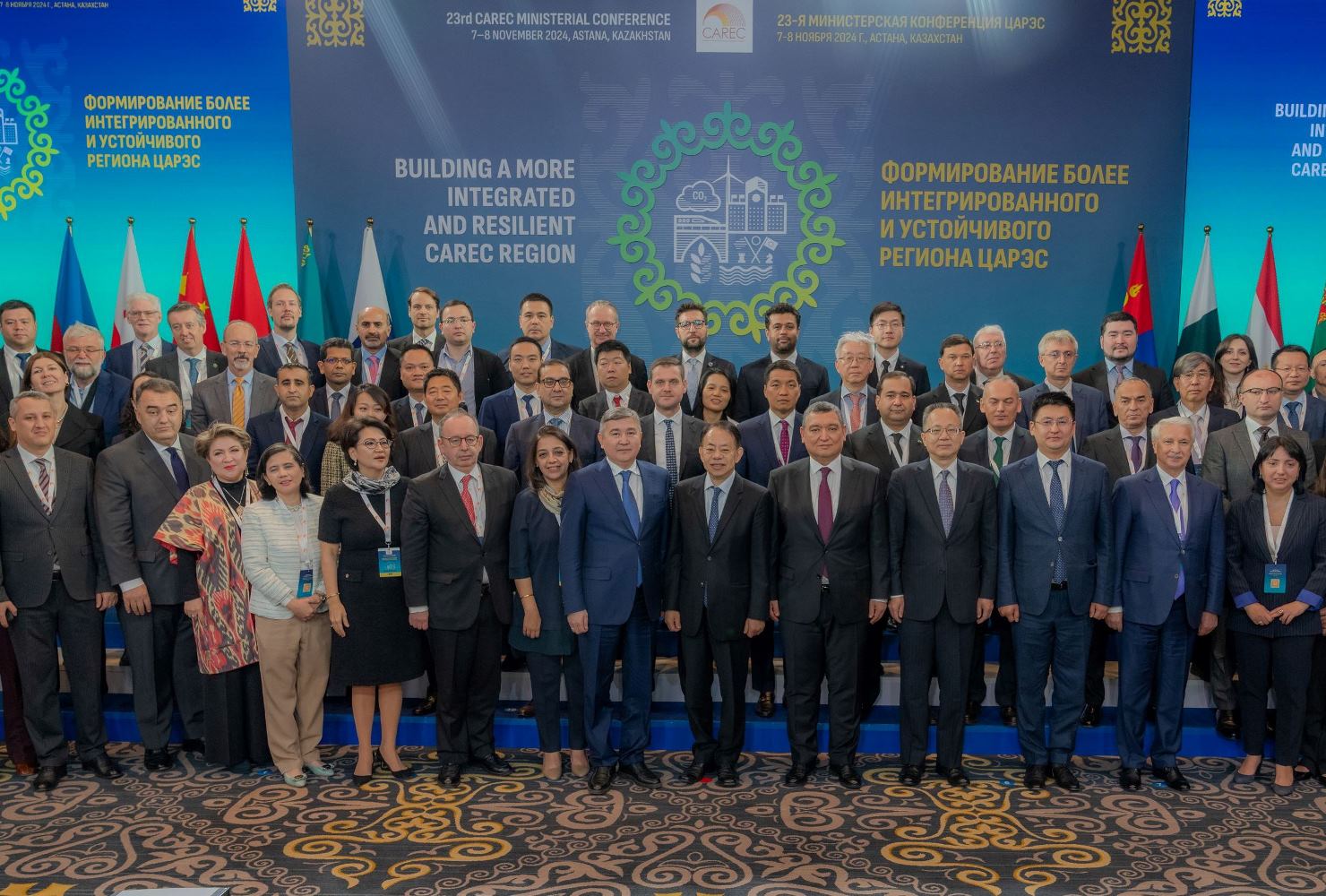
The endorsement took place at the 23rd CAREC Ministerial Conference that took place in Kazakhstan’s capital, Astana, on November 8.
Ministers reportedly also endorsed the Midterm Review of the CAREC 2030 Strategy, which recommended reinvigorating regional cooperation and enhancing operations toward climate-smart development and regional public goods, among others.
Tajikistan government delegation was headed by Nematullo Hikmatullozoda, Assistant to the President on Economic Affairs, who is the CAREC National Focal Point from Tajikistan, and comprised Daler Juma, Minister of Energy and Water Resources, and Farhod Vosidiyon, Deputy Minister of Economic Development and Trade.
“The approval of the CAREC Climate Change Action Plan and the establishment of the Climate and Sustainability Project Preparatory Fund are significant milestones in our collective efforts to address climate change,” said Asian Development Bank (ADB) President Masatsugu Asakawa, who delivered a keynote address at the conference. “By working together, we can build resilient infrastructure, develop early warning systems, and create a greener future powered by renewable energy.”
The CAREC Program is a partnership of countries in Central Asia, the Caucasus, South Asia, and East Asia, and development partners aiming to promote sustainable development through regional cooperation. It facilitates practical, results-based regional projects and policy initiatives to accelerate economic growth and reduce poverty in the region. ADB hosts the CAREC Secretariat. The CCAP, spanning from 2025 to 2027, prioritizes initiatives to implement the CAREC Climate Change Vision. It focuses on four main areas to tackle climate challenges in the region. It aims to help countries better prepare for and respond to climate risks; enhance the water-energy-food nexus; promote low-carbon growth by reducing emissions and expanding renewable energy; and create a CAREC climate platform.
The CSPPF will assist CAREC countries in developing bankable regional climate projects aligned with their commitments under the Paris Agreement. Today, ADB also signed fund contribution agreements with the Ministry of Finance of the People’s Republic of China and the Ministry of Economy and Finance of the Republic of Korea, generating a total of $5 million initial funding for CSPPF.
Since Tajikistan joined ADB in 1998, the bank has provided over $2.7 billion in assistance to the country, including over $2.2 billion in grants. In 2024, ADB has committed a total of $220 million grant assistance to Tajikistan.
Established in 1966, the Asian Development Bank is owned by 68 members—49 from the region.