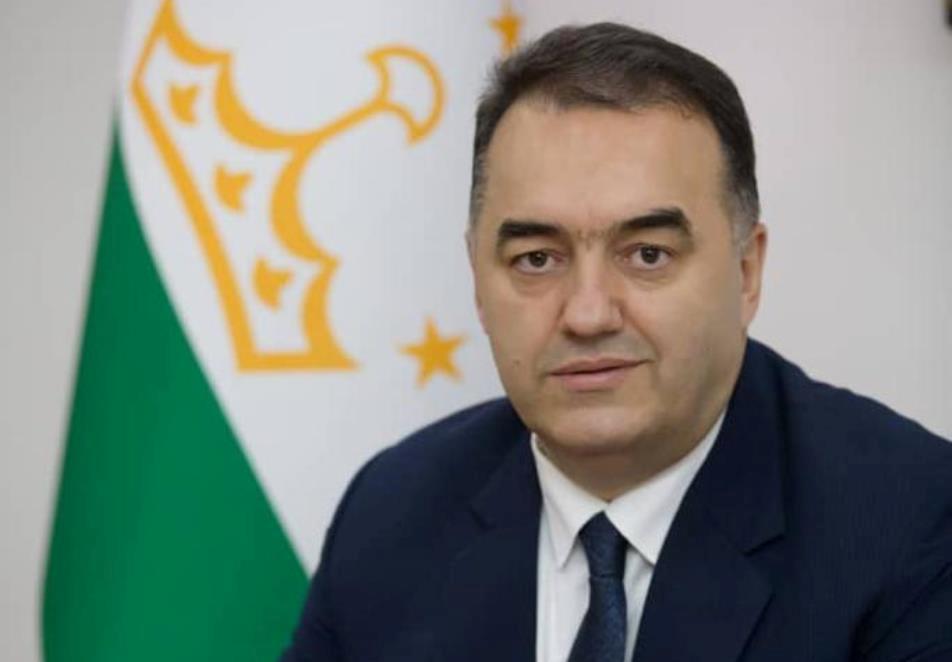
The Minister of Energy and Water Resources of Tajikistan, Daler Juma, discussed the country's ongoing efforts to expand energy sector capacity and reduce electricity losses in an interview with Digest-Press.
The minister highlighted several key directions, including increasing the electricity system's capacity to 10 GW, boosting electricity exports to 10 billion kWh, diversifying energy production, and reducing electricity losses to 10%.
Achievements in the energy sector
Over the past five years, electricity production in Tajikistan has grown by 8.7%, from 20.7 billion kWh in 2019 to 22.5 billion kWh in 2024.
Electricity exports have also increased. In 2019, exports amounted to 2.4 billion kWh, rising to 3.7 billion kWh in 2024, according to the minister.
Over the next five years, Tajikistan’s energy potential is expected to grow by 4 GW, driven by the construction of new facilities such as the Roghun Hydropower Plant (HPP) and Sebzor HPP, as well as the modernization of existing plants like Nurek HPP, Sarband HPP, and Qayroqqum HPP. Additionally, development of solar and wind power plants will contribute to this growth.
By 2030, the country’s energy capacity is projected to reach 10 GW.
The implementation of the CASA-1000 power transmission project aims to increase electricity exports to Pakistan via Afghanistan, providing a significant boost to the country’s export potential. The Afghan section of the project is scheduled for completion by 2026.
The Tajik and Kyrgyz parts of the project have already been completed and are ready for integration into the regional grid.
After 15 years of operating in isolation, Tajikistan reconnected to the Central Asian Unified Power Grid in June 2024, resuming parallel operations with the regional network.
Reducing energy losses
Commercial losses are expected to decline with the introduction of digital metering systems. A project to reduce losses is already being implemented in Dushanbe’s Sino district with support from local investors.
Similar projects previously carried out in the Gorno-Badakhshan Autonomous Region (GBAO) and Khujand (Sughd province) successfully reduced losses to 6-8%.
Attracting Investments
Attracting investments to Tajikistan’s energy sector remains a key focus of the Ministry's efforts. Over the years of independence, 36 investment projects worth US$2.7 billion have been implemented.
In 2024, four agreements totaling US$90.8 million were signed, including US$25 million in loans and US$65.8 million in grants. Additionally, work continues on signing three new agreements.
Currently, 11 government investment projects in the energy sector are being implemented, including the reconstruction of Sarband and Qayroqqum HPPs, the CASA-1000 project, energy transmission network improvements, and programs to reduce electricity losses across various regions.
These projects have attracted US$1.4 billion in funding.
Projects in GBAO
In GBAO, seven projects are being implemented, including the construction of the Sebzor HPP, solar power plants, and initiatives to improve energy efficiency and promote renewable energy sources.
The total investment in these projects is US$133 million.