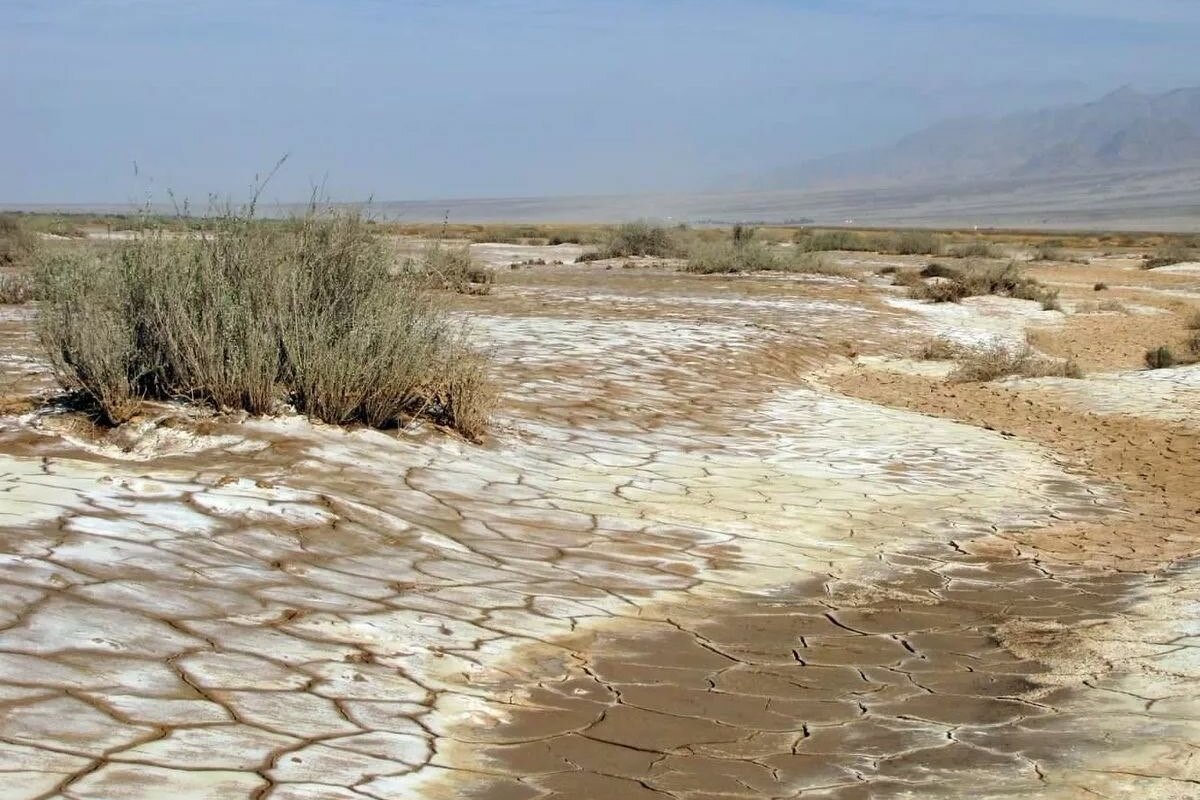
Approximately 1.4 billion hectares of land globally, or 10.7% of the world's total land area, are affected by salinization. In Tajikistan, saline land accounts for 15% of the total area of agricultural land.
This is highlighted in the first global report in 50 years on the state of saline soils, issued by the United Nations Food and Agriculture Organization (FAO).
The report was presented at the International Soil and Water Forum 2024, which was held in Bangkok in mid-December.
According to the report, 1.4 billion hectares of land worldwide are already affected by salinization, with an additional 1 billion hectares at risk due to the climate crisis and poor resource management.
The report, titled Global Status of Salt-Affected Soils, emphasizes the scale of the problem. Salinization reduces soil fertility, decreasing yields of crops like rice and legumes by up to 70% in the most affected regions. This is especially critical given the global population growth that necessitates increased food production.
The report notes that 10.7% of irrigated and rain-fed arable land is affected by salinization, with some countries experiencing severe impacts.
Afghanistan, China, Kazakhstan, Iran, and the United States reportedly account for 70% of the world’s saline soils.
Key drivers of salinization include natural and human-induced factors. The climate crisis exacerbates drought, raises sea levels, and leads to salinization in coastal areas. Poor agricultural practices, such as inadequate drainage, use of low-quality irrigation water, and excessive fertilizer use, worsen the situation.
The FAO recommends strategies such as:
- Mitigation: Installing drainage systems, improving crop rotation, and mulching.
- Adaptation: Growing salt-tolerant crops (halophytes) and utilizing bioremediation.
Salinized land in Tajikistan
According to Tajikistan’s Agency for Land Reclamation and Irrigation, 15% of the country's land is saline, and 18% is rocky.
The current irrigated land area per capita in Tajikistan is only 0.075 hectares, one of the lowest figures in Central Asia. Projections indicate this may drop to 0.06 hectares by 2030 due to population growth, posing additional risks to the country's food security.
Inefficient use of land and water resources as well as poor irrigation systems, exacerbate the problem. This has led to waterlogging and soil salinization, with up to 310,000 hectares at risk of secondary salinization, threatening further reductions in arable land.
The government’s 2022-2027 National Program aims to bring 16,900 hectares of irrigated land into agricultural production, creating approximately 64,000 new jobs. Funding sources include the state budget, investment projects, and domestic and foreign direct investments.