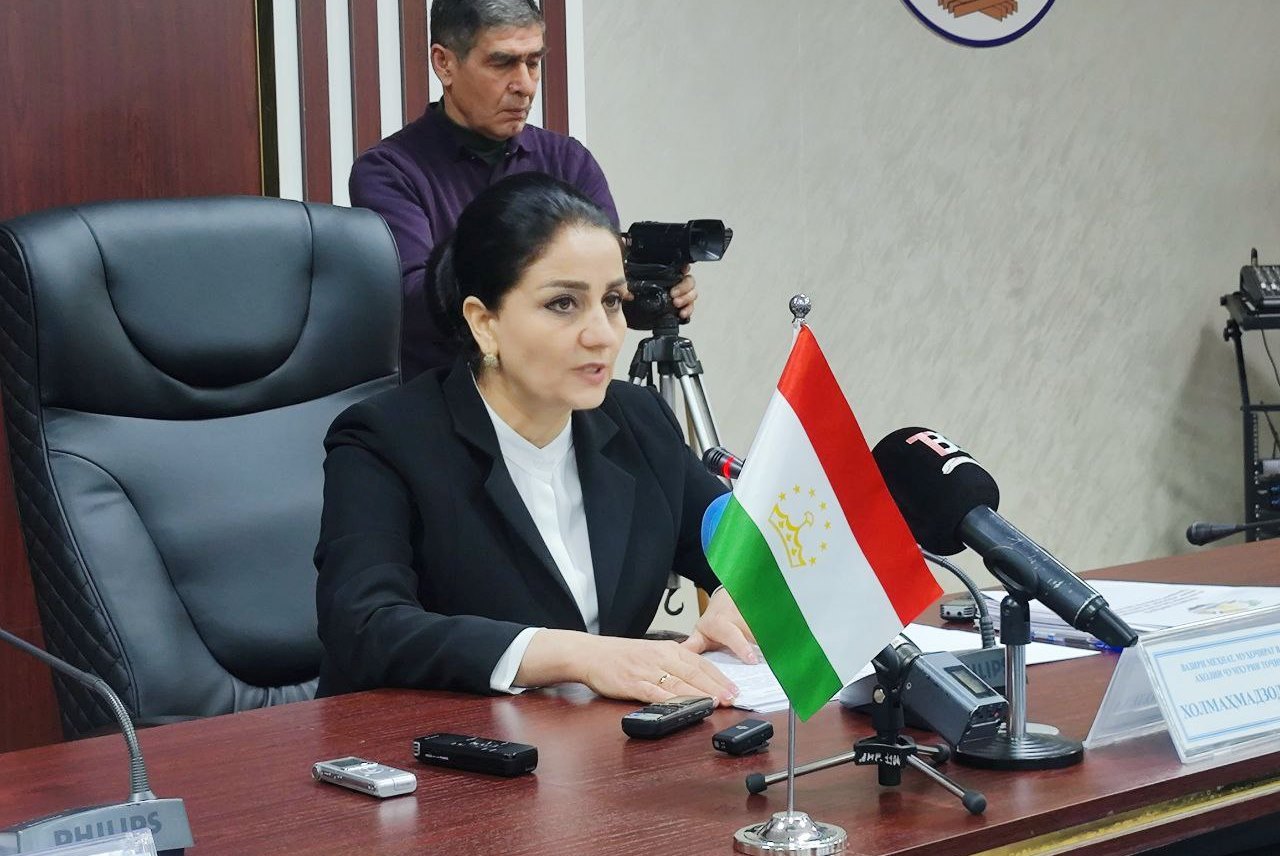
In 2024, Tajikistan established mutually beneficial partnerships in the field of labor migration with several countries, including South Korea, Japan, Kuwait, Belgium, Poland, Serbia, the United Kingdom, the United States, Canada, Latvia, Germany, and Singapore, Ms. Soleha Kholmahmadzoda, Tajikistan’s Minister of Labor, Migration, and Employment, told reporters in Dushanbe on February 11.
According to her, this step will provide Tajik citizens with new opportunities to work abroad.
"One of the government’s main objectives is to create new opportunities for labor migrants and expand international cooperation with various countries," she stated.
Expanding international agreements on labor migration
Kholmahmadzoda emphasized that in 2023, the Ministry of Labor signed 41 legal agreements in the labor sector with 15 countries, including Russia, Belarus, Azerbaijan, Kazakhstan, Uzbekistan, Turkmenistan, Iran, Turkey, India, Qatar, Kuwait, the UAE, China, Japan, and South Korea.
A key focus was on developing a legal framework to further strengthen bilateral relations. In 2024, the ministry prepared 12 new cooperation agreements with Russia (including its regions, such as Tatarstan), as well as Georgia, Poland, Serbia, Belgium, the UK, South Korea, Japan, Qatar, Kuwait, and Saudi Arabia.
These initiatives aim to strengthen cooperation in labor migration, improve working conditions, and enhance migrant rights protection.
Improving working conditions and migrant adaptation
Kholmahmadzoda also stated that one of the key priorities is improving labor conditions and social protection for Tajik migrants abroad. Efforts are underway to sign new agreements with foreign countries.
The minister highlighted the importance of helping labor migrants adapt to host countries by:
- Establishing mechanisms for professional training;
- Teaching new skills to increase migrants’ competitiveness in the global labor market.
She also noted that adult training centers in Tajikistan are currently preparing workers for Japan, South Korea, and Kuwait.
Each of these countries has specific requirements for foreign labor, especially regarding:
- Professional qualifications;
- Language proficiency.
After completing their training and passing exams, graduates will be eligible to work abroad in these destinations.