
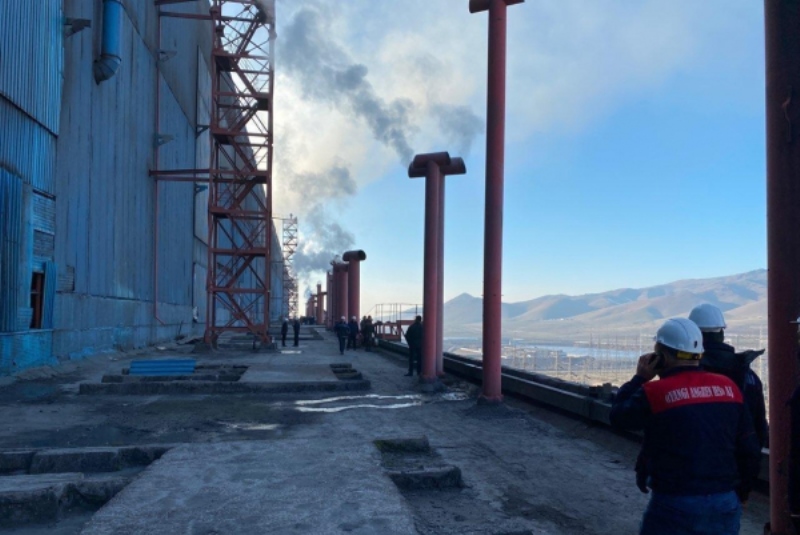
The electric power sector in Central Asia, despite its vast potential for renewable energy, remains largely dependent on fossil fuels.
The International Renewable Energy Agency (IRENA) has released its latest annual statistical report on renewable energy worldwide — Renewable Capacity Statistics 2025.
The data used in the publication comes from various sources, including official national statistics, IRENA’s own questionnaires, industry association reports, consultants, and media outlets.
According to the data, Central Asian countries made some progress in transitioning to green energy from 2015 to 2024, but the sector remains predominantly “red.”
Only a few countries in the region have taken a systematic approach to the transition to renewable energy, while others have made only modest efforts.
In 2024, the total installed renewable energy capacity in the region reached 19,583 MW (including 2 MW from Turkmenistan), a 47% increase compared to 13,324 MW in 2015.
By comparison, across the entire continent (Asia), renewable energy capacity increased 3.3 times — from 722.7 GW in 2015 to 2,382 GW in 2024, while globally, capacity grew 2.4 times, from 1,851.1 GW to 4,448 GW.
Uzbekistan
Among the Central Asian countries, Uzbekistan achieved the most significant increase in renewable energy capacity — more than 2.7 times.
This growth is due to the construction of solar power plants (2,275 MW), hydropower plants (511 MW), and wind power plants (500 MW).
The share of renewables in Uzbekistan’s total electricity capacity increased from 14.2% to 24.4%.
Kazakhstan
Kazakhstan also saw a notable increase in renewable capacity — up by 93.1%, from 2,807 MW in 2015 to 5,419 MW in 2024.
Growth came mainly from wind power (1,336 MW), solar power (1,139 MW), and hydropower (132 MW).
The share of renewables in Kazakhstan’s power capacity rose from 13.2% to 22% over the same period.
Tajikistan
Tajikistan remains the regional leader in terms of installed renewable energy capacity, even though growth over the 2015–2024 period was only 15.8% — from 4,957 MW to 5,738 MW.
Most of the country’s “green” energy comes from hydropower plants.
According to IRENA, the share of renewables in Tajikistan’s total electricity capacity declined from 92.2% in 2015 to 88.9% in 2024.
However, the Ministry of Energy of Tajikistan claims that 98% of the country's electricity is currently produced from hydropower, placing it sixth in the world in terms of green energy production.
Yet, according to official statistics, in 2024, 92.6% of electricity was generated by hydropower and a very small amount by solar plants (only 1.2 million kWh).
It’s possible the ministry is referring to the spring-summer season, when thermal power plants (total installed capacity of 718 MW, including the Yovon heating plant) are not in operation.
Kyrgyzstan
According to IRENA, Kyrgyzstan’s installed renewable energy capacity actually decreased by 11.4%, from 3,677 MW in 2015 to 3,258 MW in 2024, due to the decommissioning of some hydropower facilities.
The share of renewables in the country’s total capacity fell from 85.3% to 77.9%.
Untapped potential
Central Asia has high renewable energy potential — including hydro, solar, wind, and geothermal resources.
Thanks to geographical features such as many sunny days, mountain rivers, and vast plains, the region is well-positioned for sustainable energy development.
According to the University of Central Asia (UCA), the region’s technical hydropower potential is about 542 billion kWh per year, including: 317 billion kWh in Tajikistan; 142 billion kWh in Kyrgyzstan; and 83 billion kWh in the other three countries combined.
Most of this potential remains untapped
Solar power
Solar energy is seen as one of the most promising directions. Kazakhstan has a technical solar potential of up to 3.76 million MW. Uzbekistan and Turkmenistan can each produce up to 180,000 MW and 210,000 MW, respectively.
Tajikistan and Kyrgyzstan have lower technical potential but still enough to meet local energy needs.
Wind and geothermal
Wind energy potential is unevenly distributed. Kazakhstan has the highest capacity — up to 354,000 MW. Some regions of Uzbekistan, Turkmenistan, and Kyrgyzstan have favorable wind conditions, but they are underutilized.
In terms of geothermal energy, Kazakhstan and Uzbekistan lead with up to 54,000 MW and 1,000 MW, respectively. While still underdeveloped, geothermal energy could be a valuable resource for heating and electricity in specific areas.
Bioenergy
Bioenergy — using agricultural and organic waste — could be a solution for energy-deficient rural areas.
