
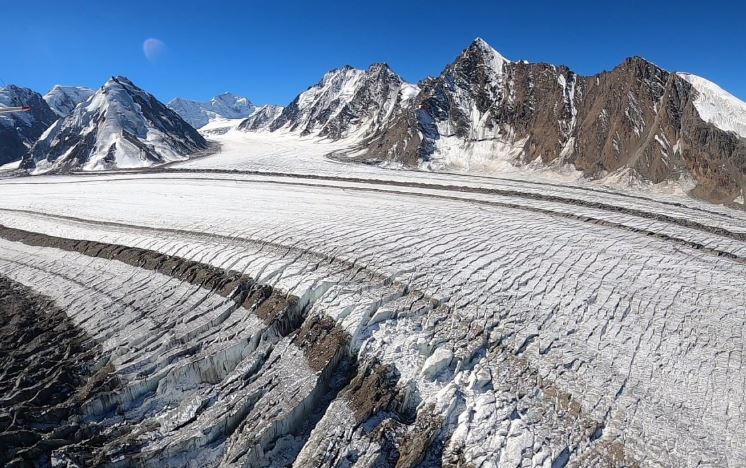
Thee first-ever High-Level International Conference on Glacier Preservation launched in Dushanbe on May30, bringing together more than 2,500 participants from 80 countries worldwide.
At the pre-conference forums, which took place on May 29, alarming data were presented regarding the scale of glacier losses and climate threats to Central Asia.
Key facts:
- Over the past 50–60 years, Tajikistan’s glaciers have shrunk by 20% in volume and 30% in area.
- The country’s average annual temperature has risen by 0.7–1.9 °C over 65 years, depending on the region.
- In Central Asia, glacier volume has decreased by more than 30%, with projections indicating a loss of more than half of the glaciers by 2050.
- Tajikistan has about 14,000 glaciers, of which approximately 1,000 have already disappeared over the past 150 years.
- Glaciers provide water for more than 70 million people in the region.
- The melting rate of some glaciers (e.g., Vanjyakh) reaches up to 16 meters per year.
Dangers and consequences:
- Glacier melting leads to risks of natural disasters: floods, landslides, droughts, threatening social and economic stability.
- Loss of water resources could reach up to 27%, negatively impacting vulnerable populations, especially children.
- Glacier disappearance already affects the region’s food security by worsening conditions for agriculture.
Measures and initiatives:
- Tajikistan possesses significant hydroelectric resources (527 billion kWh per year), creating potential for the development of “green” energy.
- International organizations, including UNICEF, the UN, FAO, and the World Food Programme, call for active involvement of youth, women, and the scientific community in climate action.
- The forum discusses regional cooperation, glacier monitoring, development of green bonds, sustainable agriculture, and digital technologies.
- Plans include the creation of a regional glaciology coordination center for experience exchange and development of joint adaptation strategies.
Forums and dialogues:
- Events have been held focusing on glacier monitoring, women’s leadership in environmental sustainability, agricultural adaptation, innovative technologies, and the development of cross-border cooperation.
- Special attention is paid to engaging youth and expanding the role of women as change leaders.
Conclusion:
Glacier loss is not a distant threat but a real crisis requiring urgent and joint action. The conference in Dushanbe is becoming an important platform to unite the efforts of Central Asia and the international community in combating the consequences of climate change.
