The Government of Tajikistan has approved a draft agreement with Uzbekistan regarding the delivery of electricity from the Roghun hydropower plant (HPP). The agreement, which outlines the basic principles of cooperation in the field of electricity, was approved by a government decree.
The draft document, published on the legal information portal of Tajikistan’s Ministry of Justice, establishes the terms for the supply of electricity from the Roghun HPP to Uzbekistan. The volume and conditions of these supplies will be determined by a separate electricity purchase agreement between OJSC NBO Roghun and Uzbekistan's state-owned energy company, Uzenergosohtish.
The price for the planned electricity from Roghun HPP will be set at 3.4 US cents per kWh (inclusive of VAT at a zero rate), with an annual increase of one percent applied to the established price throughout the duration of the contract. This indexing will begin in the second year of electricity supply.
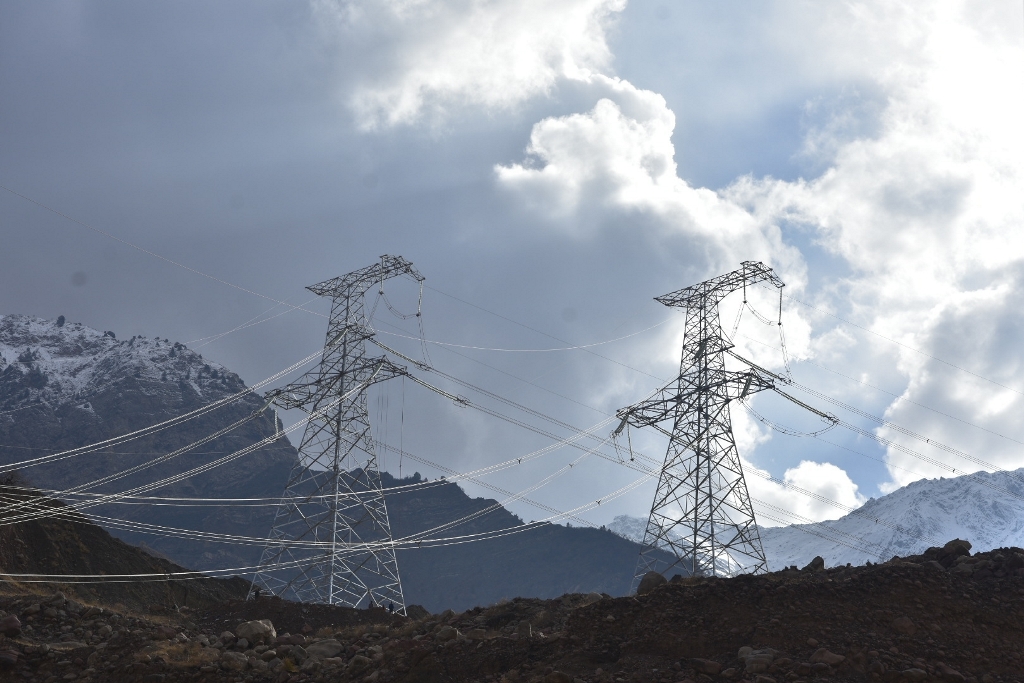
Electricity from the Roghun HPP will be delivered to Uzbekistan according to a schedule agreed upon by the system operators of both countries, primarily during times of planned power deficits in Uzbekistan's energy system. This will take place via interstate power transmission lines.
Roghun electricity supplies will occur in parallel with those from Barqi Tojik (Tajikistan’s national energy company).
During the construction phase of the Roghun HPP, supplies will be made during the vegetation period (from April 1 to September 30 each year). Once the Roghun HPP reaches full design capacity, electricity deliveries will occur monthly throughout the year.
The agreement will come into effect once both sides have completed their internal state procedures and formally notified each other through diplomatic channels.
The agreement is set for 20 years, with extending for subsequent 10-year periods unless one side notifies the other in writing via diplomatic channels at least six months before the end of the current term of its intention to terminate the agreement.
It is worth noting that since 2018, Barqi Tojik has been supplying electricity to Uzbekistan during the vegetation period.
The first two units of the Roghun hydropower plant, which are currently operating at low capacity, were commissioned in 2018 and 2019, and they now operate at partial capacity.
According to data from the Ministry of energy and Water Resources (MoEWR), the Roghun hydropower plant last year generated 1.22 billion kWh of electricity, which accounted for about 5.5 percent of the total electricity production in the country in 2024 (over 22.4 billion kWh).
In total, six units with a capacity of 600 MW each will be installed in the plant's powerhouse.
The plant is currently managed by OJSC NBO Roghun, which is under government control.
It is expected that after full completion, the Roghun hydropower plant will be transferred to the balance of OJSC Barqi Tojik, which manages the country’s state-owned power generation facilities.
The full completion of the Roghun project is expected by 2035. Once completed, Roghun HPP will be the largest hydropower plant in Central Asia, with an installed capacity of 3,600 MW. Its annual electricity generation after full commissioning will range from 13 to 17 billion kilowatt-hours, accounting for about 65-85% of Tajikistan's total annual electricity production.