In Russia, it is necessary to introduce a special children's SIM card regime in order to protect minors from fraudsters and Internet threats. This proposal was made on November 3 by the Artyom Sheikin, Deputy Chairman of the Council for the Development of the Digital Economy at the Federation Council (Russia’s upper chamber of parliament).
"To protect children from scams and cyber risks, it is necessary to go beyond technical filters. Russia already has a system of whitelisting services with temporary restrictions on mobile Internet, and this experience can be developed by creating a special children's SIM card mode, where the child's phone only works with verified contacts and websites, and in case of suspicious calls, notification is automatically sent to parents," TASS quoted him as saying.
Sheikin stressed that it is important to actively use the built-in children's modes of smartphones, which limit the installation of applications and filter calls and messages. In addition, the senator considers it necessary to conduct educational work with children — to tell them about typical fraud schemes and to include the basics of digital security in school curricula.
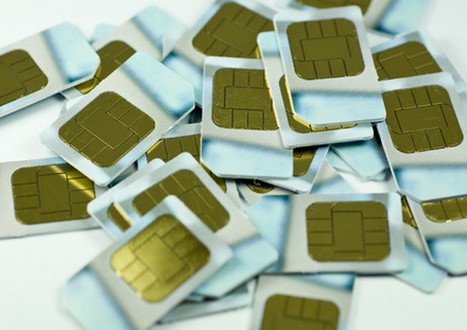
Meanwhile, the Ministry of Digital Development of Russia has announced the launch of a new initiative involving SIM cards specifically designed for minors. These "children's" SIM cards will allow parents to monitor their child’s digital activity, including tracking their location. The move aims to enhance parental control over their child's online presence. RBC reported on November 5 that the announcement was made by the Minister of Digital Development, Maksut Shadayev. The relevant draft law is reportedly under development.
According to Shadayev, the new SIM cards will be available to children under the age of 14, but only with parental consent. The service will be voluntary, allowing parents to decide whether or not to apply for such a card.
One of the key features of the children's SIM cards is that they will block access to social media and other services that have age restrictions. This move is intended to protect minors from exposure to content not suitable for their age.
In addition to blocking certain online platforms, the cards will allow parents to track their child's location and filter internet content without needing to go through legal channels. Telecommunications operators will be required to provide these services upon parental request.
The draft law and the technological framework for implementing the new SIM card category are expected to be published in the coming months. Telecommunications providers will also need to develop special tariffs and mechanisms for parental control.
Meanwhile, Chairman of the State Duma (Russia’s lower chamber of parliament) Vyacheslav Volodin announced on November 3 that a law had begun to operate in Russia providing for the blocking of SIM cards in case of exceeding the established limit per person. Now a Russian citizen can register no more than 20 subscriber numbers, and a foreign citizen can register no more than 10.