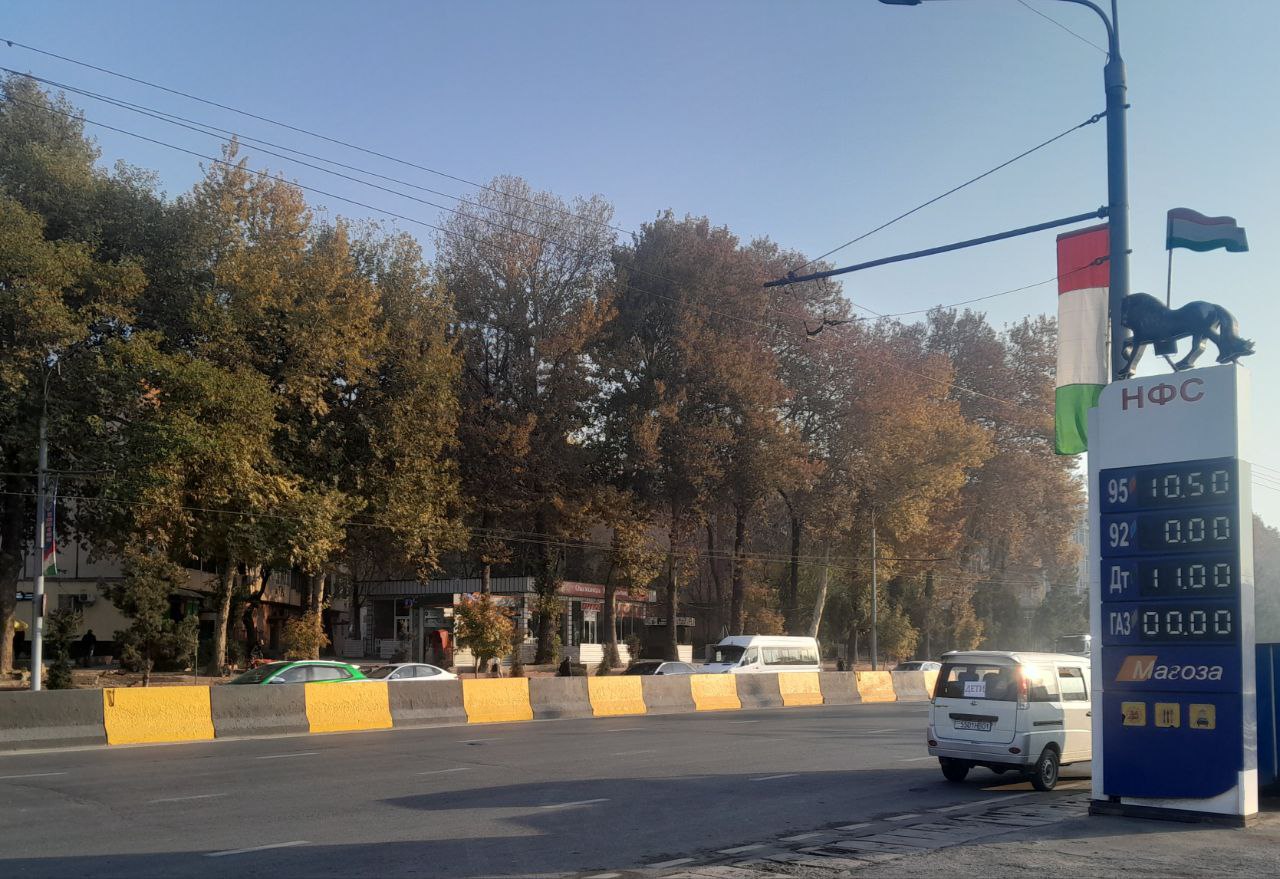
Tajikistan has seen a sharp rise in prices for gasoline and liquefied petroleum gas (LPG) since the beginning of November, along with an acute shortage of LPG. This was confirmed by the Antimonopoly Agency under the Government, citing its fuel market monitoring.
Officials say the main reasons include reduced imports, price hikes in supplier countries, and a new export ban imposed by Kazakhstan. According to a decree issued by Kazakhstan’s Minister of Energy on November 11, the export of LPG by road and rail has been suspended for six months.
"Fuel price fluctuations are driven by a persistent shortage of petroleum products and rising costs in exporting countries. This has become a consistent trend in recent years," the agency said.
Customs statistics show that from January to October 2025, LPG imports to Tajikistan fell by 20,000 tons, or 6.4%, compared to the same period last year. Over the ten-month period, the country reportedly imported 291,100 tons worth $198.9 million, at an average price of $683 per ton.
Kazakhstan provides the bulk of Tajikistan’s LPG imports, accounting for 62% (180,000 tons), followed by Russia with 38% (111,100 tons).
Meanwhile, total petroleum product imports reached 947,100 tons, up 78,100 tons year-on-year.
Due to falling supplies, major cities including Dushanbe are facing severe LPG shortages. Since early this week, many gas stations have run out, while others are selling it at sharply increased prices — from 5.5 to 6.7 somonis per liter, compared to 4.2 somonis just days earlier.
Tajikistan’s Ministry of Energy and Water Resources (MoEWR) confirmed that the crisis stems from Kazakhstan’s restrictions, including limitations on fuel transportation via its railways.
LPG has been the dominant auto fuel in Tajikistan over the past decade due to its affordability. In the early 2010s, as gasoline and diesel prices rose, most drivers switched to gas. By the mid-2010s, over 60% of vehicles in the country were powered by LPG. However, recent years — particularly in the capital — have seen a growing shift toward electric vehicles, gradually reducing demand for traditional fuels.