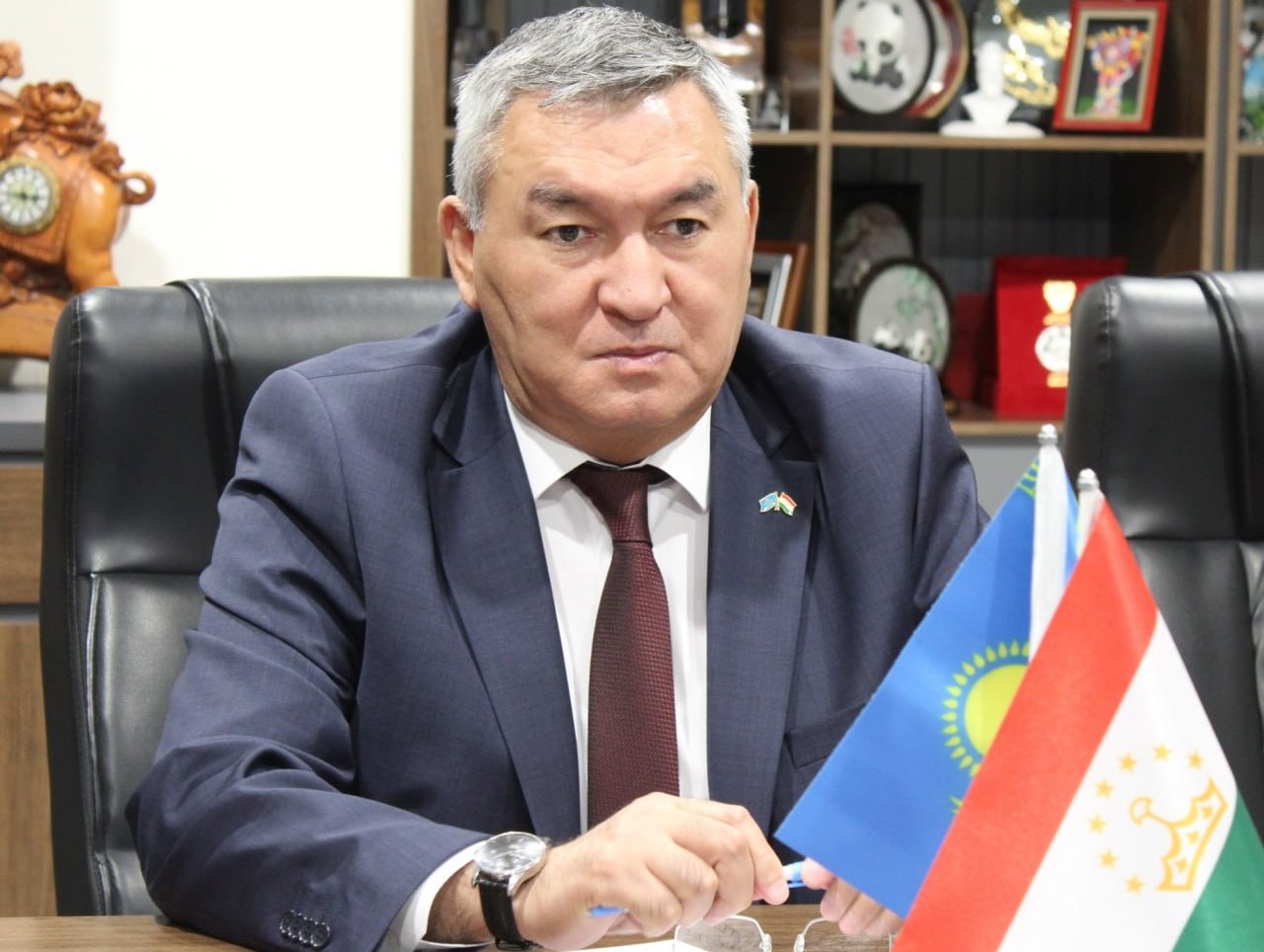
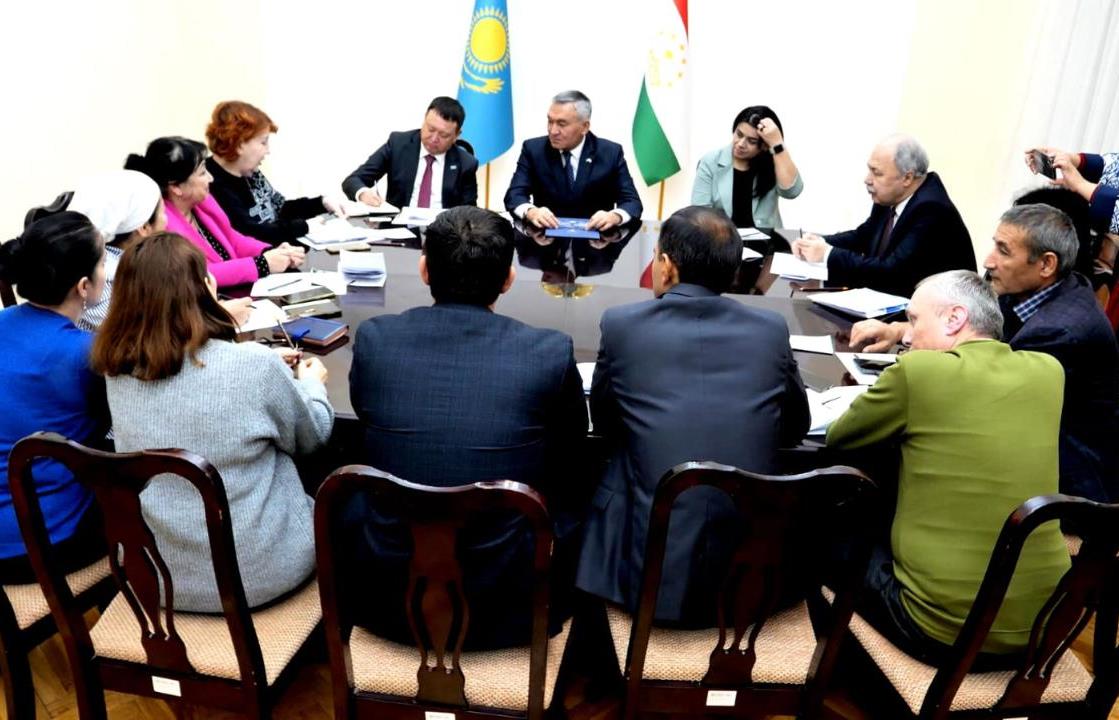
Kazakhstan and Tajikistan are aiming to increase their trade turnover to $2 billion, while also strengthening economic, humanitarian, and digital cooperation. This was announced by Kazakhstan’s Ambassador to Tajikistan, Valikhan Turekhanov, on December 17 at a briefing in Dushanbe dedicated to the results of bilateral cooperation in 2025 and key priorities for the future.
He noted that by the end of 2025, the volume of mutual trade is expected to reach around $1.2 billion, reflecting a steady positive dynamic in bilateral relations.
Looking ahead, Turekhanov emphasized plans to maintain the current pace of political engagement, work consistently towards the $2 billion trade target, and expand cooperation in industry, agro-processing, logistics, and digital commerce.
Among other priorities are healthcare, humanitarian and educational cooperation, as well as coordination on multilateral platforms concerning security, water, energy, and climate issues.
The ambassador stressed that relations between Kazakhstan and Tajikistan are stable, based on trust and mutual respect, supported by long-standing traditions of friendship and strategic partnership.
In 2025, a number of significant bilateral and multilateral engagements took place. Tajikistan’s President Emomali Rahmon visited Kazakhstan during the “Central Asia – Italy” and “Central Asia – China” summits, and also hosted Kazakhstan’s President on a working visit to Dushanbe. In February, Tajikistan’s Foreign Minister visited Astana on an official trip, and in August, the then Foreign Minister of Kazakhstan, Murat Nurtleu, paid a working visit to Tajikistan.
A key outcome of the talks was the signing of the Treaty on Friendship, Good-Neighborliness and Cooperation for the Development of Central Asia in the 21st Century, as well as reaffirming the goal of increasing bilateral trade to $2 billion.
Economy and trade: growth and new goals
The ambassador highlighted the steady growth in trade and economic ties. Over the past five years, trade turnover between Kazakhstan and Tajikistan has increased by 29%—from $909.8 million in 2020 to $1.29 billion in 2024. In the first ten months of 2025, mutual trade reached $981.8 million, with the year-end total expected to be around $1.2 billion.
Kazakhstan’s exports to Tajikistan reached $906.8 million, accounting for 13.7% of Tajikistan’s total imports. The foundation of mutual trade includes food products, metal goods, petroleum products, chemicals, construction materials, and equipment. Exports of Kazakh wheat and sunflower oil are growing, and cooperation between relevant government agencies of both countries is expanding.
To further strengthen cooperation, the 19th session of the Intergovernmental Commission on Economic Cooperation was held in Astana in August. Preparations are underway for a roadmap to increase trade turnover through 2030, as well as a separate roadmap for agricultural cooperation for 2026–2027.
Economic cooperation has also been boosted by the accreditation of Kazakhstan’s Freedom Finance Bank in Tajikistan, which has launched an IT hub and introduced digital financial services.
Humanitarian and educational cooperation
Special attention was given to humanitarian cooperation. Kazakhstan continues to support Tajik youth through educational programs and scholarships for study at Kazakhstani universities, as well as by expanding cultural and academic exchanges.
In 2025, Kazakhstan provided Tajikistan with humanitarian aid in the form of food-grade grain and diesel fuel worth $3.6 million. Over the past five years, the total volume of humanitarian assistance has exceeded $21 million.
Cooperation in the field of digitalization is also developing actively. Throughout the year, joint projects were discussed in the areas of e-government services, digital trade, and fintech. In May, 100 Tajik specialists completed training at leading IT schools in Kazakhstan.
Regional and international agenda
Valikhan Turekhanov emphasized the importance of bilateral cooperation within the frameworks of the UN, CIS, SCO, CSTO, and consultative meetings of Central Asian heads of state. In 2025, Dushanbe solidified its role as a key regional hub for international dialogue by hosting the CIS summits, the “Central Asia – Russia” format, a high-level international conference on glacier preservation, and the “Dushanbe Invest – 2025” investment forum.
Special attention is being paid to regional security issues, the situation in Afghanistan, water and energy challenges, and the climate agenda.