Agreement on reducing the use of hydrofluorocarbons signed in Dushanbe

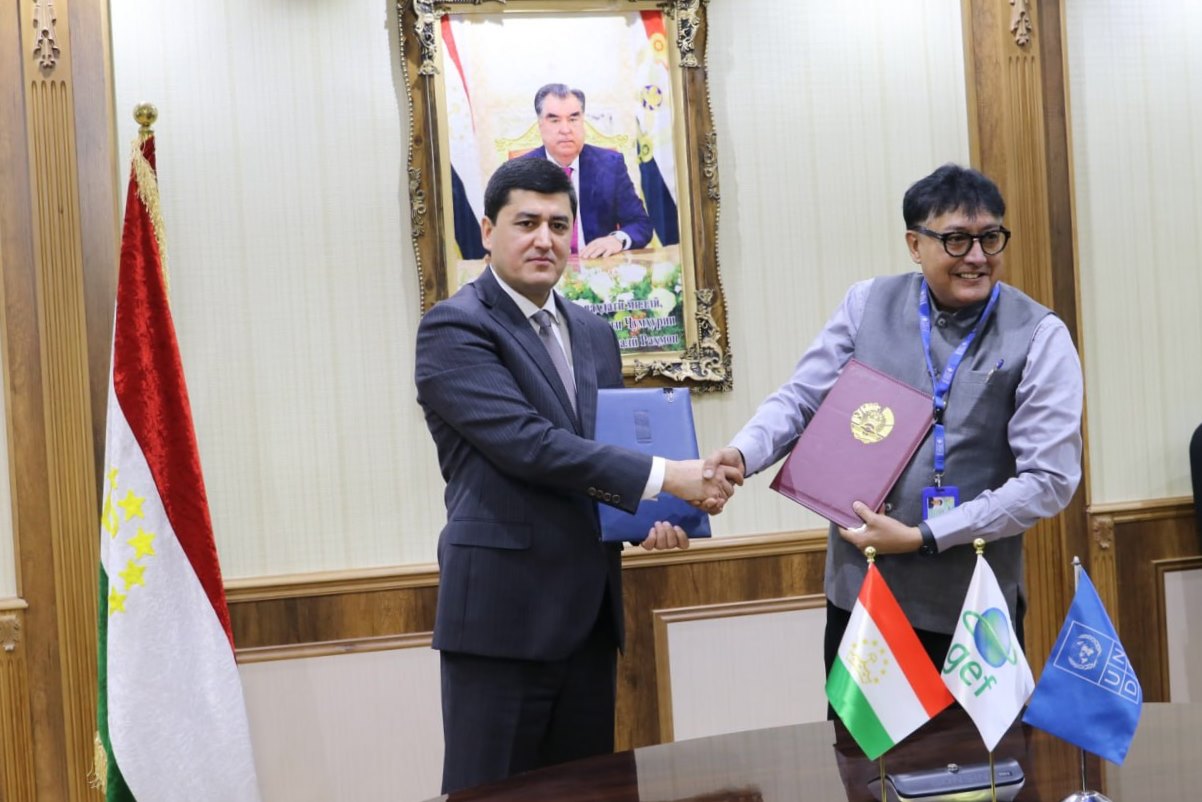
An agreement aimed at the gradual reduction of hydrofluorocarbons—substances harmful to the climate—has been signed in Dushanbe. The document was signed by the Committee for Environmental Protection under the Government of Tajikistan and the United Nations Development Programme (UNDP) on Jnuary 12, the Committee’s press service reported. The agreement provides for the implementation of the […]

Asia-Plus

An agreement aimed at the gradual reduction of hydrofluorocarbons—substances harmful to the climate—has been signed in Dushanbe. The document was signed by the Committee for Environmental Protection under the Government of Tajikistan and the United Nations Development Programme (UNDP) on Jnuary 12, the Committee’s press service reported.

The agreement provides for the implementation of the project “Integrated Program for the Reduction of Hydrofluorocarbons and Sustainable Cooling in Tajikistan.” The project is financed by the Global Environment Facility and is designed to help the country fulfill its international climate commitments under the Kigali Amendment to the Montreal Protocol.

The main goal of the initiative is to reduce the use of hydrofluorocarbons by 70 percent by 2029.

Hydrofluorocarbons are synthetic organic compounds containing fluorine and hydrogen atoms. They are widely used in refrigerators, air conditioners, and other cooling equipment, but are among the most potent greenhouse gases and have a significant negative impact on the global climate.

The project provides for a phased strengthening of controls over the import of hydrofluorocarbons and equipment containing them, improvement of refrigerant management throughout their entire life cycle, and a reduction in harmful emissions into the atmosphere. Special attention will be given to the transition to modern, energy-efficient, and environmentally friendly cooling technologies.

The implementation of the project is expected to significantly reduce greenhouse gas emissions, improve energy efficiency, promote the development of green technologies, and strengthen Tajikistan’s climate resilience. The initiative also aligns with the priorities of the country’s National Development Strategy until 2030 and the Sustainable Development Goals.

It should be recalled that on June 30, 2022, Tajikistan became the 136th country to ratify the Kigali Amendment to the Montreal Protocol, thereby committing to the phased reduction of hydrofluorocarbons.

Join us on social media!

Article translations:

Related Article

Оби зулол
Оби зулол

Most Read

Recent Articles

25 Years in Touch: On Generation Change, “Digital” and “Invisible” Work

In its 25th anniversary year, "MegaFon Tajikistan" summarizes its technological development and outlines future directions. On the key stages of network evolution, prospects for...

The number of entrepreneurs in Tajikistan increases by 4.3%

The number of entrepreneurs operating under a patent is increasing the fastest.

Trump announces “very good” talks with Iran and the possibility of a quick agreement. Tehran did not comment on this

The President of the United States claims that Tehran has agreed to the US demand to abandon the development of nuclear weapons.

Police report the discovery of the remains of a man who had been missing since December 2025

A friend of the murdered person has been detained on suspicion of particularly brutal murder.

Residents of a settlement in Sughd: “Afghan refugees have disappeared from the Dehmoy jamoat”

Earlier, a citizen of Afghanistan was detained on charges of murdering a resident of Khujand.

In Russia, it was proposed to revoke residence permits and temporary residence permits from migrants who do not work for more than two months

During January-March 2026, 90% more residence permits were revoked from migrants in the country compared to the same period last year.

From reach to influence: why advertising no longer works by old rules discussed in Dushanbe

Market research forces a complete reconsideration of the advertising budget allocation strategy.

Facial recognition cameras are being tested in Tashkent schools

Biometric control over children is being implemented without their explicit consent.