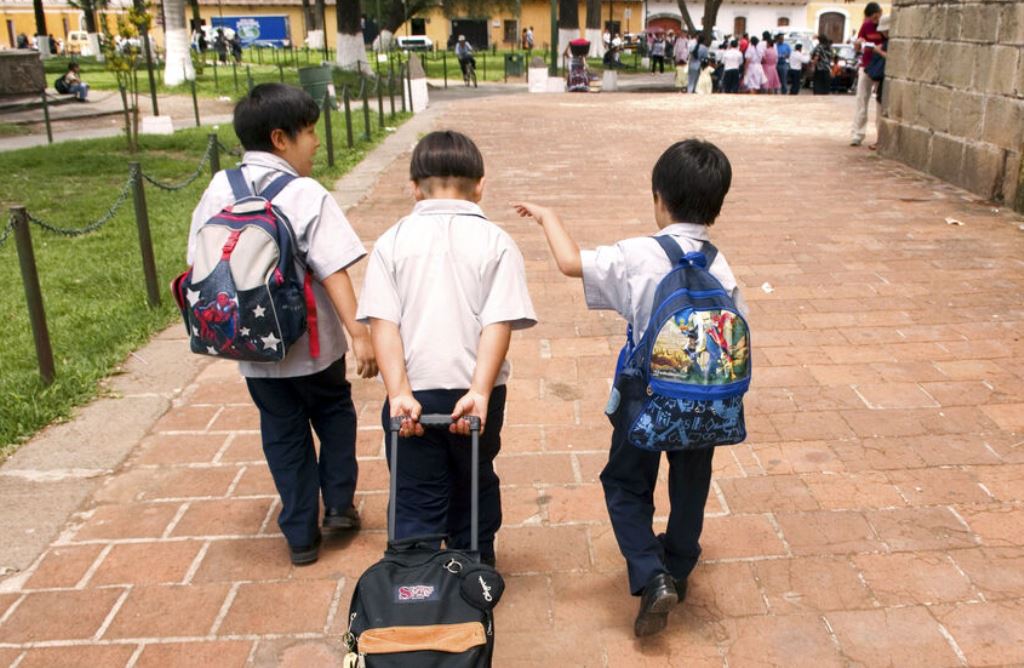
After the introduction of a law requiring migrant children to pass a language proficiency test before enrolling in Russian schools, thousands of children have been left without education.
Since April 1, 2025, it became mandatory for migrant children to demonstrate a certain level of Russian language knowledge before being accepted into educational institutions. However, this law has faced criticism from human rights defenders and some Russian officials, as well as from the realities that migrants face.
“We cannot accept them in school”
Tahmina Karimova (the names have been changed), a migrant from Tajikistan living in Kaluga, encountered the problem of enrolling her daughters in the first grade this year. “I prepared all the documents as required, took them to one of the schools in the city. However, they told me: ‘We cannot accept your children because they don’t know Russian, and there are no available spots,’” she says. Her attempts to apply to other schools also failed, leaving her children without education.
Another migrant, Jafar Ibrohimov, also could not enroll his brother in a school in the Leningrad region despite applying to several schools. One of the directors frankly said: "Every day, the number of you (migrants) increases, and we are not obligated to accept everyone. Besides, you don’t know Russian."
After his brother was denied school enrollment, Ibrohimov was forced to send him back to Tajikistan to continue his education there.
The new law and its consequences
As of April 1, 2025, a law requiring the testing of migrant children’s Russian language proficiency before school enrollment came into force. This move has caused many problems for migrants, with their children being excluded from the education system. According to the Federal Service for Supervision in Education (Rosobrnadzor), after the implementation of the new law, only about 12% of applicants were accepted into schools. Around 88%, or 20,600 children, were denied education.
This law has faced criticism from human rights advocates and some Russian officials, such as Rustam Minnikhanov, President of Tatarstan Republic, who pointed out that children should have the right to education regardless of their language skills.
Protecting the rights of migrant children
International laws, such as the UN Convention on the Rights of the Child, guarantee the right to education for all children, regardless of their background or language. In Russia, the Federal Education Law also ensures that foreign nationals have the right to education on equal terms with Russian citizens.
Experts emphasize that despite the existing laws, migrants often face rejections from schools. Shuhrat Latifi, a migration expert, explains that in cases of denial, parents should demand an official document stating the reason for refusal. If the refusal is unlawful, parents can appeal to the prosecutor's office or the courts, as well as file a complaint with the Children’s Ombudsman.
Lack of Tajik classes and distance learning
Tahmina Karimova’s attempts to find a school with Tajik language classes or arrange distance learning proved unsuccessful. She admits that she did not approach the prosecutor or the courts because she does not believe that Russian authorities would protect her children’s rights. “My search for a school or at least a Tajik class didn’t succeed. I couldn’t find them in other cities. As far as I know, there are no Tajik classes or schools in Russia,” she says.
The Ministry of Education of Tajikistan had previously stated that there are no Tajik schools or classes in Russia. Distance learning for Tajik children abroad was also not organized, and the reason given was low internet speeds and energy limitations.
“If such classes were available and official, my children wouldn’t be left without education,” says Tahmina. She has been forced to send her children back to Tajikistan to learn Russian, and after that, she plans to try enrolling them again in Russia.