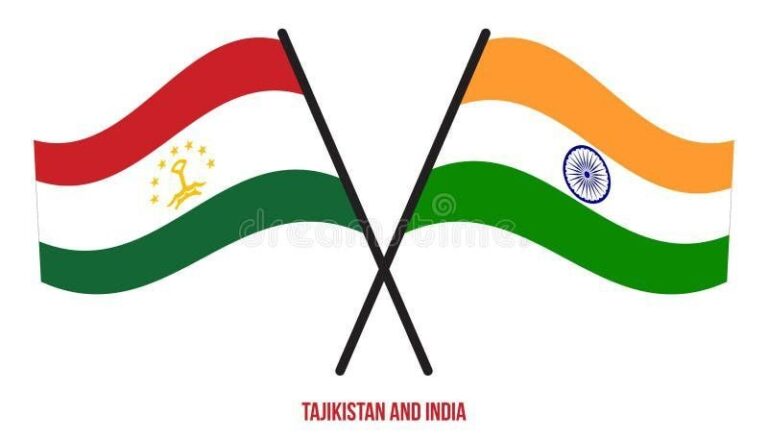
In a series of high level diplomatic engagements, India expanded its outreach to different geographical regions across the world. In this series, Ministry of External Affairs (MEA) Secretary (West) Sibi George met Tajikistan’s Deputy Foreign Minister Sharifzoda Farukh Homiddin in Minsk on the sidelines of III Minsk International Conference on Eurasian Security.
MEA Spokesperson Randhir Jaiswal confirmed the meeting with the Tajik delegation in a post on X. “Secretary (West) Sibi George met Deputy FM Sharifzoda Farukh Homiddin of Tajikistan. Both sides reviewed India–Tajikistan bilateral relations and discussed ways to further strengthen cooperation,” Jaiswal wrote. According to officials, the talks focused on consolidating the traditionally close and cordial ties between New Delhi and Dushanbe, marked by deep-rooted historical, cultural and linguistic linkages.
India and Tajikistan established diplomatic ties in August 1992, and the relationship has since evolved into a broad-based partnership spanning political, development, security, and cultural cooperation. Officials noted that Tajikistan has consistently supported India in multilateral bodies, including votes in favour of India at UN institutions and endorsement of its candidature for key positions. Tajikistan has previously backed India’s membership bids for the Intergovernmental Committee for the Safeguarding of Intangible Cultural Heritage, the UN Security Council non-permanent seat for 2021–22, and India’s aspiration for permanent membership in the UNSC.
India’s relationship with Tajikistan is anchored in deep civilizational and historical ties that span millennia. Records preserved in Buddhist annals trace India–Tajikistan linkages as far back as 2,500 BCE, pointing to early cultural and civilizational interactions across the region. Archaeological findings in Panjikent, located in present-day Tajikistan, provide further evidence of these ancient connections, revealing artistic, religious and trade exchanges that shaped early contact between the two societies.
Remnants of Zoroastrian temples and Buddhist viharas scattered across Tajikistan stand as enduring markers of India’s civilizational connections with Central Asia. These historical sites underscore the region’s role as a meeting ground of major Asian civilizations and highlight the depth of Indo–Central Asian engagement long before modern political boundaries emerged.
During the medieval period, two major streams of interaction defined India’s engagement with Tajikistan and the broader Central Asian region. The first was the steady movement of Buddhist monks, scholars and missionaries from India into Central Asia, with Tajikistan serving as a crucial transit corridor. These emissaries carried religious texts, philosophical ideas and artistic traditions that contributed to the spread of Buddhism across the region and onward to China.
The second major linkage was trade. Commercial caravans moved through the mountain passes and plains of Central Asia, connecting India with the ancient Silk Road. Goods, technologies, languages and cultural traditions flowed across these routes, weaving India and Tajikistan into a larger network of transcontinental exchange.
A new phase in Indo–Tajik relations emerged with the rise of the Mughal Empire in India. The dynasty’s founder, Zahir-ud-din Babur, hailed from the Fergana Valley—an area in close proximity to modern Tajikistan—and travelled through the region before crossing the Khyber Pass into the Indian subcontinent. His decisive victory over Ibrahim Lodi in 1526 laid the foundation of Mughal rule in India, initiating an era that further reinforced historical and cultural affinities between South Asia and Central Asia.
Today, these layers of shared heritage continue to influence and enrich contemporary India–Tajikistan relations, providing a strong civilizational basis for cooperation in the modern era.
The cultural dimension of the partnership also remains robust. Indian films and television serials dubbed in Russian and Farsi continue to be widely popular in Tajik households. The Swami Vivekananda Cultural Centre in Dushanbe, operated by the Indian Council for Cultural Relations (ICCR), offers regular training in Kathak, Tabla and Hindi language studies. Yoga, too, has seen a surge in popularity, with the International Day of Yoga celebrated enthusiastically across the country. Cultural exchanges, including ICCR-funded performances, participation of Tajik artists in India’s Surajkund Crafts Mela, and academic collaborations such as the Hindi-Urdu Chair at Tajik National University, reflect the close people-to-people ties that support the broader diplomatic relationship.
The discussion between George and Homiddin also touched upon travel and consular cooperation. India maintains a liberal visa regime for Tajik nationals, with most visas processed within one to two days. A large number of Tajik visitors prefer India’s e-visa system for tourism and medical travel. Tajikistan, too, operates a simplified e-visa regime, facilitating mobility between the two nations.
The MEA highlighted the significance of these engagements with Tajikistan, noting that they come at a time when India is actively strengthening its diplomatic footprint across Central Asia. As part of its “Extended Neighbourhood”, New Delhi has increased high-level exchanges, strategic dialogues and collaborative initiatives with the region's countries.
India’s ties with Tajikistan, in particular, continue to benefit from strong political support from Dushanbe in multilateral forums. Tajikistan has publicly supported India’s admission to the Shanghai Cooperation Organisation and backed its accession to the World Trade Organization in 2013. India, in turn, has consistently supported Tajikistan’s water-related initiatives at the United Nations and endorsed its candidature to ECOSOC.
As New Delhi’s diplomatic calendar intensifies towards beginning of the year, officials indicated that more engagements with Central Asian partners are expected. In the backdrop of regional security shifts, emerging economic opportunities, and the need for closer cultural and people-to-people exchanges, India and Tajikistan reaffirm their commitment to strengthening ties and people to people contact between two countries.
https://www.mea.gov.in/Portal/ForeignRelation/Bilateral_Brief_EOI_Dushanbe__Nov_2022.pdf