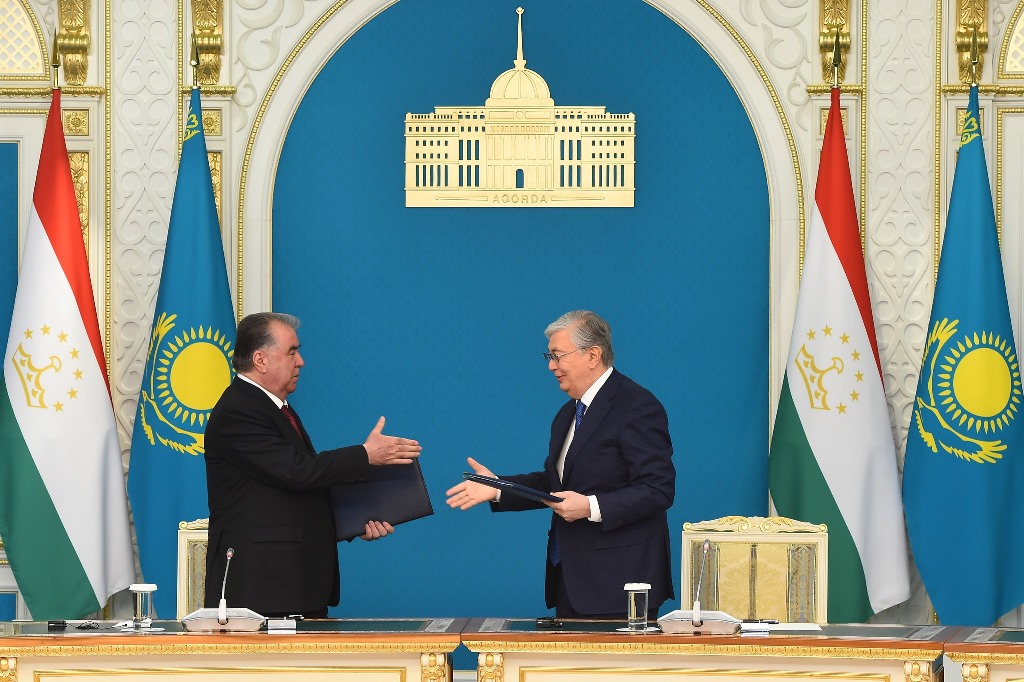
In a significant development, Kazakhstan's President Kassym-Jomart Tokayev has proposed renaming the country’s future one-chamber parliament to "Kurultai." Orda.kz says this suggestion was put forward yesterday during a session of the National Kurultai, a consultative body that meets annually.
Constitutional reform
Tokayev emphasized that the upcoming year would be one of the most crucial for Kazakhstan, significantly influencing the nation's future. He stated that the country is entering a new phase of large-scale political modernization, with the upcoming parliamentary reform at its core.
"In my address, I proposed the creation of a unicameral parliament. As you know, this critical issue has been widely discussed in society," Tokayev said.
A specially-formed working group analyzed all proposals related to the parliamentary reform and considered various directions for its implementation. The president personally oversaw this process. He outlined the main proposals discussed in the group:
· Parliament's Name: Tokayev suggested naming the new parliament "Kurultai," explaining that the historical and cultural significance of the term resonates strongly with the people of Kazakhstan.
· Number of MPs: The issue sparked intense debate. The conclusion was that the parliament should consist of 145 seats. However, Tokayev emphasized that the focus should not be on the number of seats, but on the quality of parliamentarians. It is vital that the parliament consists of true patriots and qualified professionals.
· Deputy speakers and committees: The new parliament may have up to three deputy speakers, and the number of committees should not exceed eight.
· Parliamentary competencies in key state appointments: Tokayev proposed that key bodies, including the Constitutional Court, the Supreme Audit Chamber, and the Central Election Commission, be appointed exclusively with the consent of parliament. Additionally, the president suggested that members of the Supreme Court be elected by parliament based on the president’s recommendations.
· Election system: MPs will be elected using a proportional representation system, meaning that the number of parliamentary seats will correspond to the votes received by each political party. However, Tokayev believes that the majoritarian system, where MPs are elected from specific regions or districts, should be preserved for maslikhats (local representative bodies).
· Quota for the assembly of the People of Kazakhstan: The quota for the Assembly of the People of Kazakhstan (APK) will be abolished.
· Quota for women, youth, and people with disabilities: The existing quotas for these groups will remain.
· Party election threshold: The 5% threshold for political parties to enter parliament will remain.
· Term length: Deputies will be elected for a five-year term.
· Lawmaking process: A three-step process for passing laws is proposed: first, parliament will approve the draft law as a whole; second, they will approve any amendments; and third, the law will be adopted.
Creation of the National Council of Kazakhstan
Tokayev also proposed the establishment of the National Council of Kazakhstan. This new body will assume the core functions of the APK in promoting interethnic and interfaith harmony, including representatives from various ethnic groups, regions, and population segments. It will continue the mission of both the APK and the National Kurultai.
On the other hand, the National Council will also be a new institution with the status of the highest advisory body in the country. It will focus on domestic policy, state ideology, and the Constitution, among other key national issues.
The National Council will comprise 126 members: 42 from ethnic-cultural organizations, major public associations, maslikhats, and regional public councils. All members will be appointed by the president, while the council will elect its chairman. The council will also have two deputy chairs and a head of the secretariat. The highest decision-making body will be the session, convened at least once a year.
Introduction of the vice-president position
Kazakhstan will also introduce a new position—the Vice-President—set to be enshrined in the Constitution. The vice-president will be appointed by the president with the consent of parliament through a simple majority vote.
The vice-president is expected to:
· Represent Kazakhstan at international forums and in negotiations with foreign state delegations.
· Represent the president’s interests in parliament.
· Interact with domestic and international public, political, scientific, and cultural organizations.
· Carry out other presidential assignments.