As of early 2026, the total outstanding debt for electricity in Tajikistan, including arrears from previous years, has reached 3.63 billion somonis (approximately $390 million), according to the Ministry of Energy and Water Resources (MoEWR).
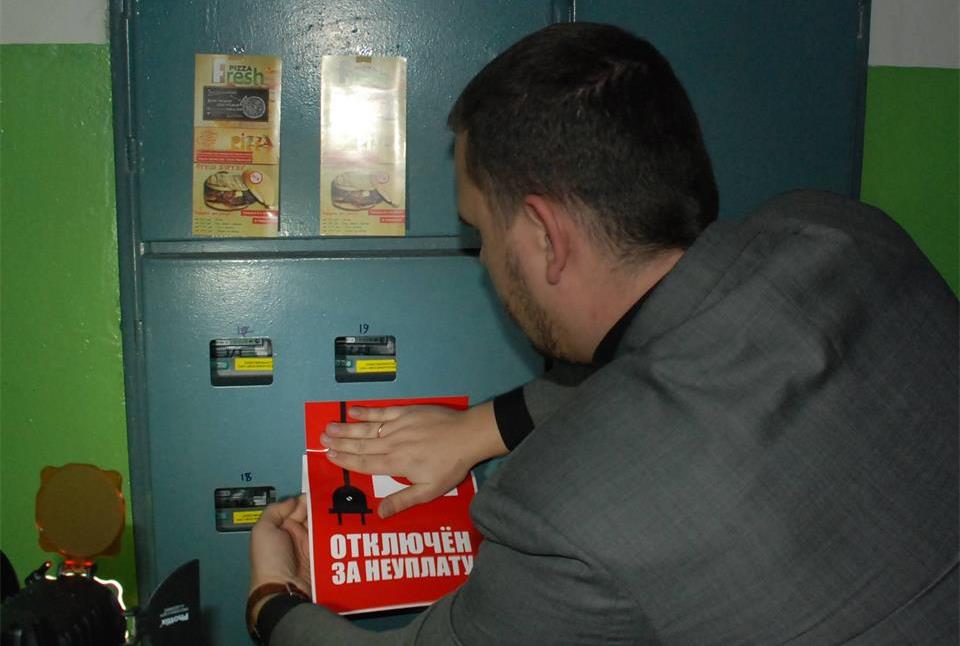
Nearly one-third (32%) of this total debt is attributed to unpaid electricity bills from residential customers, amounting to 1.16 billion somonis. The Ministry has also identified key debtors, including the Tajik Aluminum Company (TALCO), agricultural enterprises, and the Agency for Irrigation and Reclamation.
Major electricity debtors in Tajikistan as of January 1, 2026
(with account of previous years' debt)
Total debt: 3 billion 634.8 million somonis (approximately $390 million)
· Residential customers: 1,161.7 million somonis
· TALCO (Tajik Aluminum Company): 823.8 million somonis
· Agriculture: 246.1 million somonis
· Irrigation Agency: 279.7 million somonis
· Other consumers: 1,123.6 million somonis
However, the Ministry reported that the collection of payments from residential customers for electricity in 2025 was fully achieved, with a 100% payment rate. Industrial and commercial sector consumers (excluding TALCO) reportedly paid 98% of their electricity bills last year.
Overall, the Ministry noted that the total collection of funds from the domestic market in 2025 reached 92.6%, with 6.5 billion somonis collected—an increase of 33% (1.6 billion somoni) compared to 2024.
Meanwhile, electricity losses in 2025 amounted to around 4 billion kilowatt-hours (15%), which is a reduction of 482 million kWh (3.6 percentage points) compared to the previous year.
"Thanks to the implementation of practical measures, losses in the generation (0.37%) and transmission (3.1%) sectors are in line with international standards. However, the loss rate in distribution networks, which remains at 15.6%, still requires close attention," the Ministry stated.
According to the Ministry, the total electricity production in Tajikistan in 2025 was approximately 24 billion kWh, which is nearly 1.6 billion kWh (6.5%) more than in 2024.
Reducing 'ghost consumers'
In the summer of 2025, Tajikistan's state-owned OJSC Electricity Distribution Networks, responsible for supplying and selling electricity to end consumers, reported a gradual decrease in the volume of household debt for electricity since 2021.
As of July 1, 2025, the debt from household consumers reportedly stood at about 1.7 billion somonis, which is 40.3 million somonis lower compared to the beginning of the year. By the start of 2026, as mentioned earlier, the debt from households had dropped to nearly 1.2 billion somonis.
In his address to a meeting of both chambers of the parliament on December 16, 2025, President Emomali Rahmon stated that the situation regarding electricity provision to the population would improve thanks to the introduction of modern billing and payment technologies.
"Before the implementation of modern metering and payment systems, 30-40% of the population did not pay for the electricity they consumed, according to Barqi Tojik. However, with the new billing system, 100% of the population will be accounted for as fully paying for their electricity costs," Rahmon noted.
He also emphasized that there were cases where payments were "fully collected from the population but were then misused, and artificial debts were imposed on the population, creating enormous arrears."
'Ghost consumers' discovered after restructuring
Two years ago, following the restructuring of the energy holding company Barqi Tojik, OJSC Electricity Distribution Networks reportedly discovered non-existent electricity consumers on the domestic market. These so-called "ghost consumers" had created difficulties for the proper functioning of the billing system.
According to the new company, electricity was previously recorded as consumed by non-existent households, which led to discrepancies and problems with accurate billing. In the past, large volumes of electricity were counted as used by household consumers, even though this was not the case.
It was noted that "in order to reduce electricity loss figures, non-existent consumers had been introduced into the program, which continues to create difficulties for the system's proper functioning today."