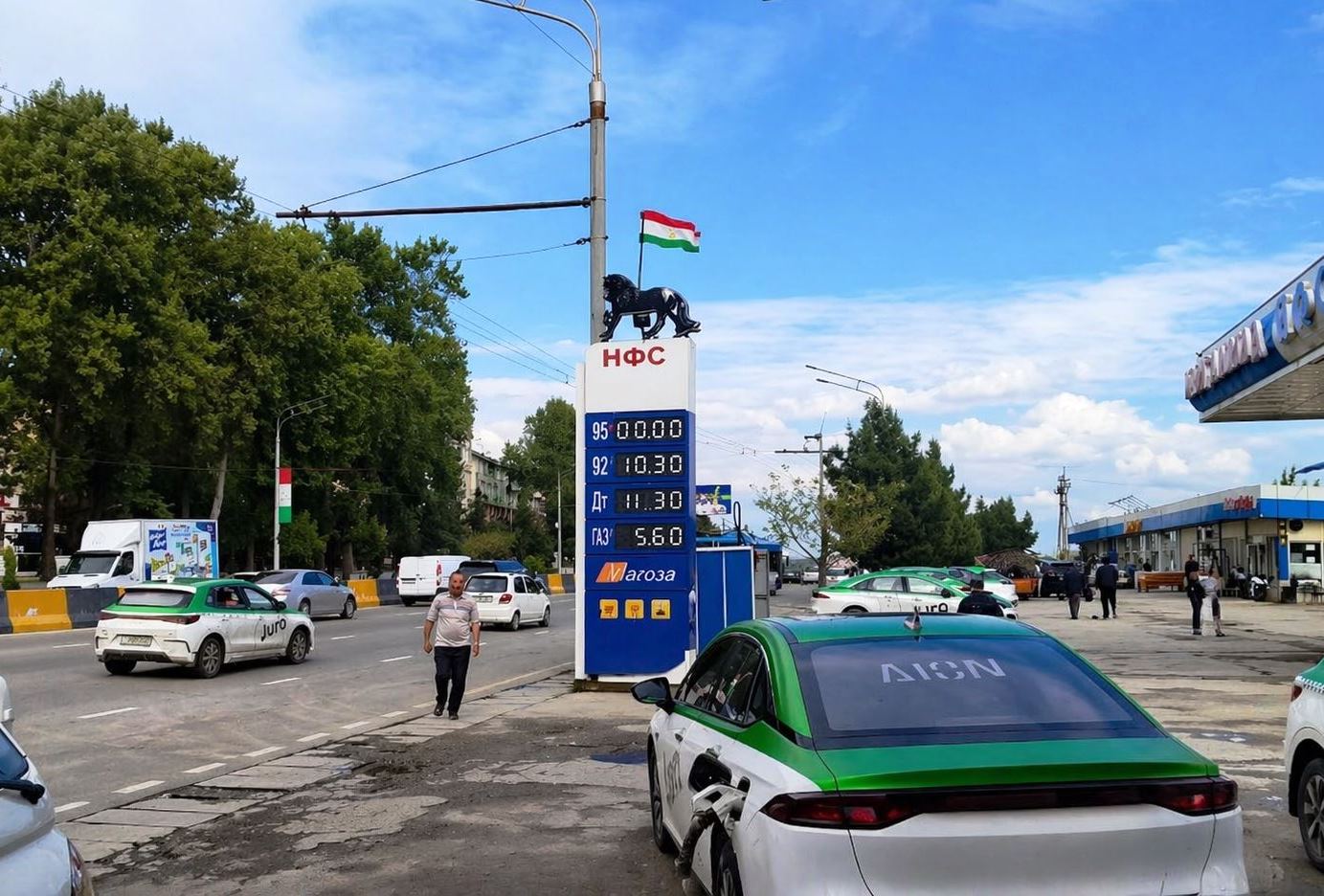
The cost of fuel at gas stations in the capital of Tajikistan has increased by an average of 8-9% since the beginning of March this year.
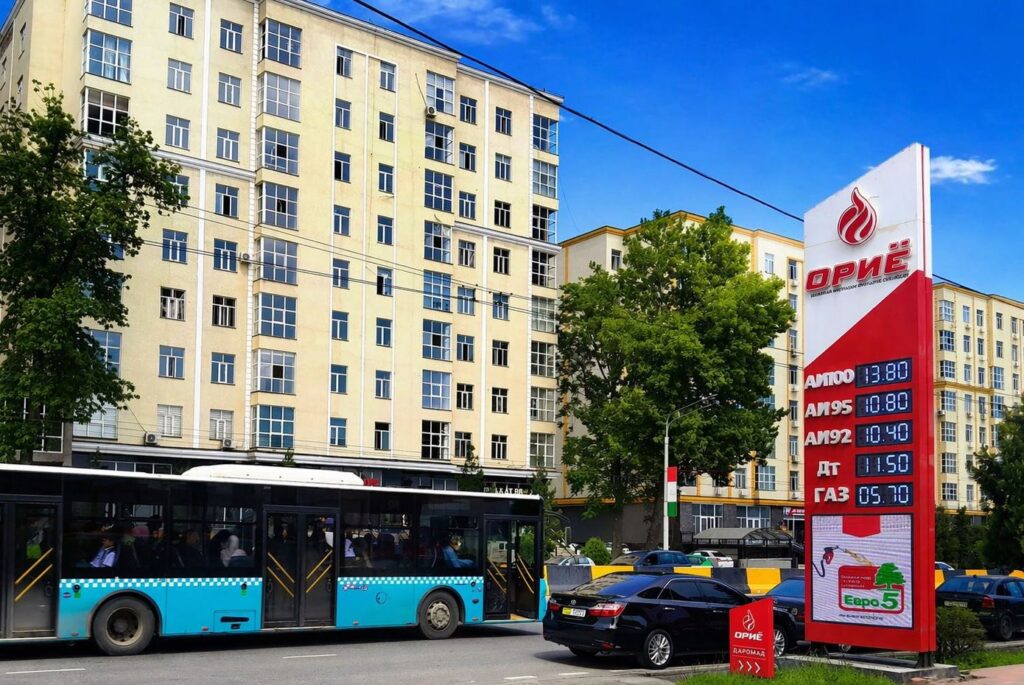
Thus, the price for one liter of 92-octane gasoline, which is the most sought-after grade of automobile gas in the country, rose from 9.5 somoni per liter in early March to today’s 10.3 somoni. Prices for diesel fuel increased by about the same level: from 10.4 somoni to 11.3 somoni.
The cost of liquefied gas increased comparatively insignificantly — by 6%. If at the beginning of March it was possible to refuel with this rather popular fuel in Dushanbe for 5.3 somoni (per liter), today you will have to pay at least 5.6 somoni.
The cost of fuel in the capital varies depending on the location of the gas stations: in the central part of the city, prices are slightly higher than on the outskirts.
Fuel suppliers and sellers explain the increase in its cost by the rise in producer prices.
It should be noted that the main supplier of petroleum products to Tajikistan is Russia. Under the indicative balance, Tajikistan last year received over 1.2 million tons of preferential petroleum products and liquefied gas from Russia, which accounts for more than 70% of the total import volume of this product.
Tajikistan also imports these types of fuel from Kazakhstan, Uzbekistan, Turkmenistan, and some other countries in insignificant volumes.
According to the Agency for Statistics under the President of Tajikistan, the country has imported over 325 thousand tons of petroleum products worth more than $251 million over the first three months of this year. This means that each ton of fuel cost importers $772. Compared to January-MArch last year, supplies of petroleum products to Tajikistan over the first three months of this year has increased by 11.4% in weight, and the cost has reportedly increased by 8.6%.
The War is to Blame
Armed aggression by the US and Israel against Iran, according to global media reports, has affected the cost of petroleum products worldwide through the “oil — processing — retail prices” chain. The result — in most countries, fuel has become more expensive, but the effect has been uneven.
According to Al Jazeera, the highest increases in petroleum products were in Cambodia (almost 70%), Vietnam (50%), Nigeria (35%), Laos (33%), Canada (28%).
In other Central Asian countries in March-April, fuel prices rose moderately: by 2%-5%, and in some republics (Uzbekistan and Turkmenistan) remained stable despite the global surge due to the conflict in the Middle East. This is explained by stable prices from Russian producers and the availability of their own products in sufficient volumes in some countries of the region.
It should be noted that the rise in global oil prices, and consequently the cost of petroleum products, was triggered by the closure of the Strait of Hormuz, through which about 20% of the oil from the Persian Gulf is supplied to the global markets.