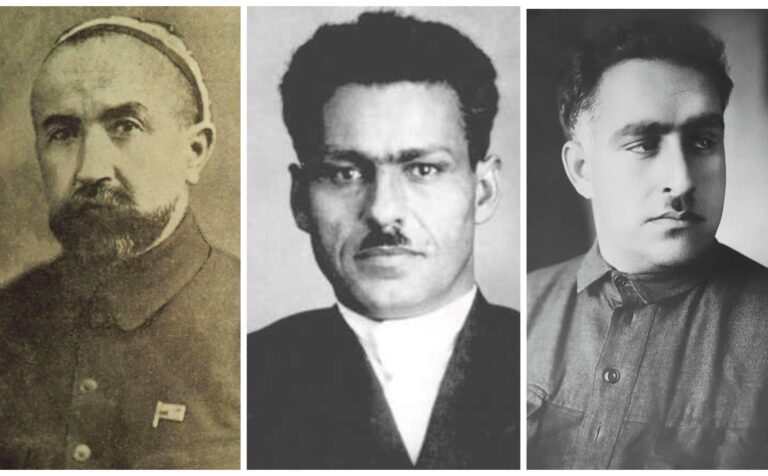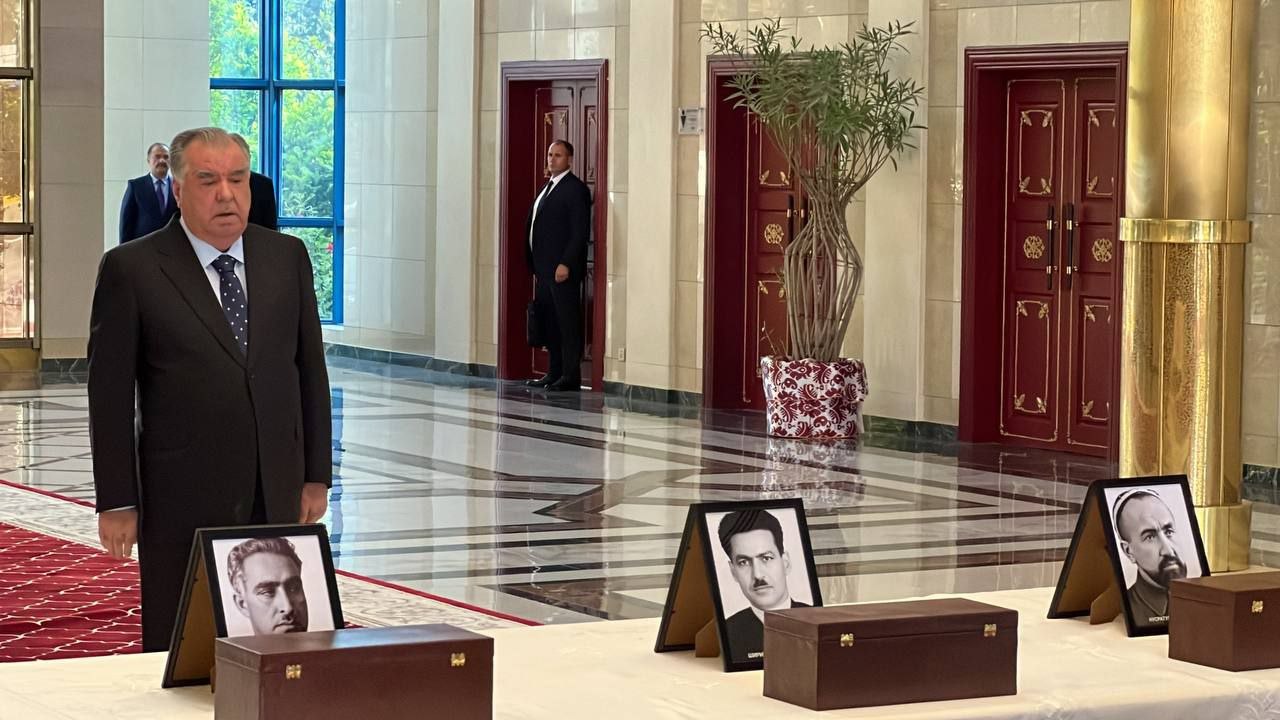
A handful of soil from the graves of Shrinsho Shotemor, Nusratullo Makhsoum — Heroes of Tajikistan, as well as Nisar Muhammad, one of the founders of Tajikistan, was delivered from Moscow to Dushanbe.
The containers with soil from the burial sites of these prominent figures of Tajikistan’s modern history were received by the President of Tajikistan, Emomali Rahmon, on the morning of May 19, who honored their memory.
A funeral prayer (janoza) was be held at the Central Cathedral Mosque of Dushanbe named after Imam Azam, in which Dushanbe Mayor Rustam Emomali participated. After this, the symbolic soil was buried at the Luchob cemetery.
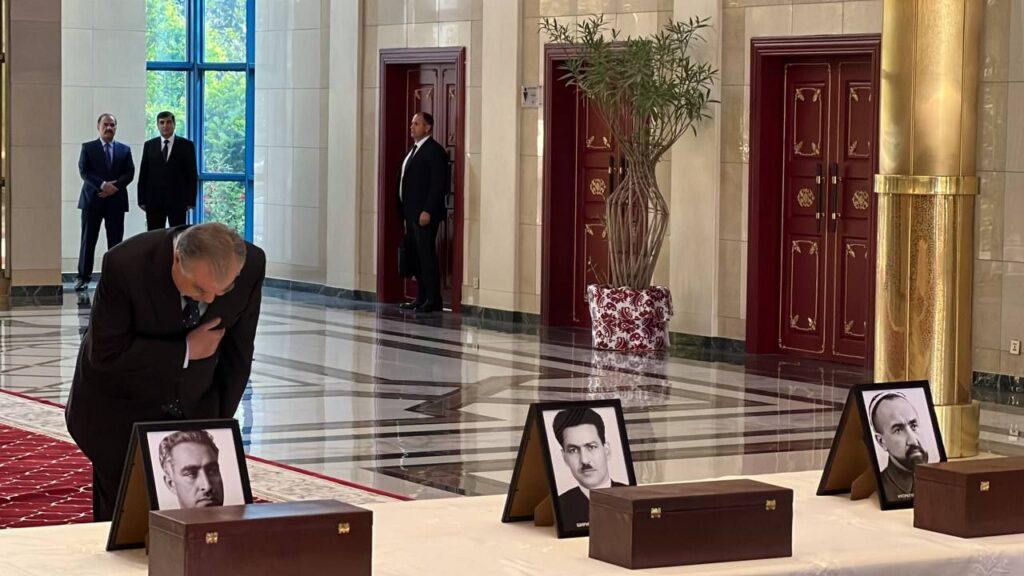
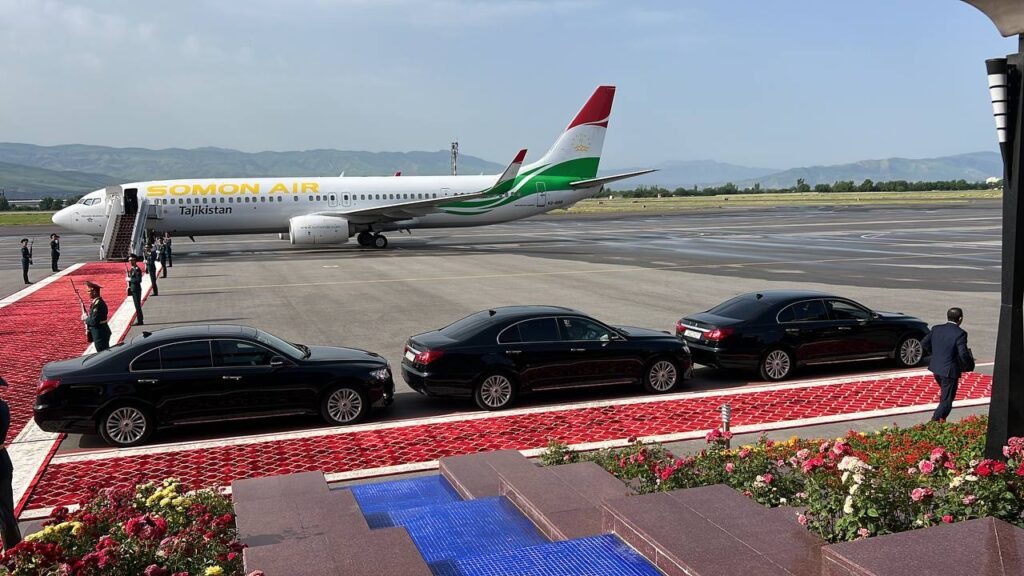
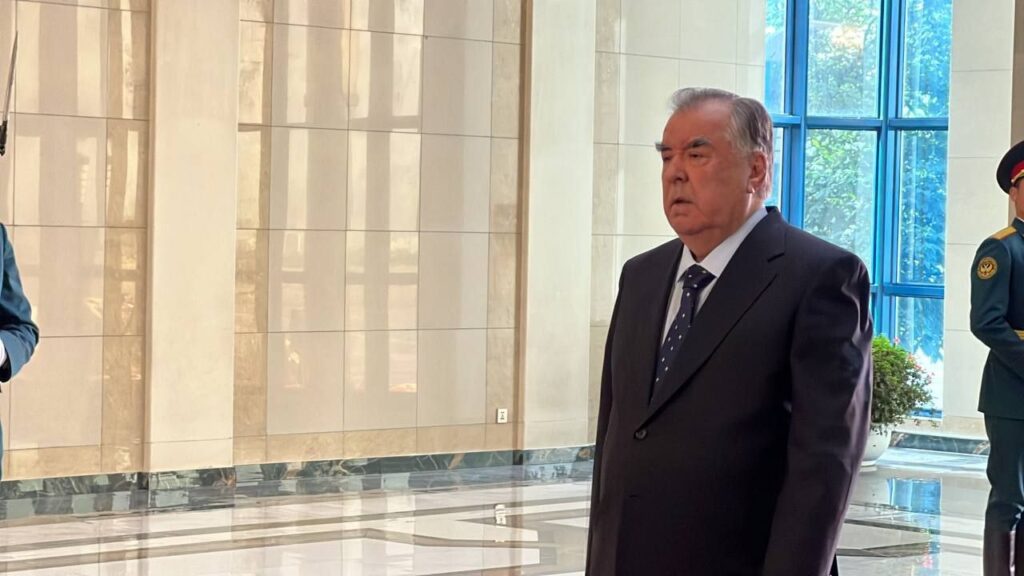
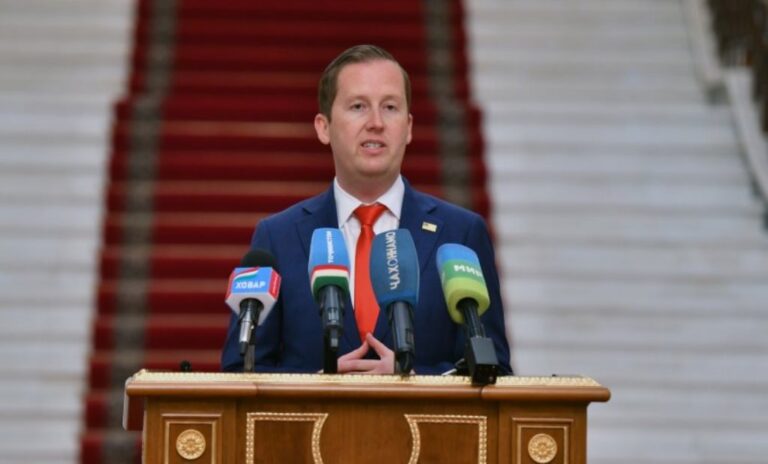
A handful of soil from the burial sites of Nusratullo Makhsoum, Shirinsho Shotemor, and Nisar Muhammad, which are located at the Donskoye cemetery in Moscow, was received by the Minister of Foreign Affairs of Tajikistan, Sirojiddin Muhriddin, on May 18.
The Ministry of Foreign Affairs of Tajikistan stated that the delivery of the symbolic soil of these founders of Tajikistan “embodies the spiritual connection of historical figures with the Motherland to which they dedicated their lives.”
The ministry noted that the initiative to deliver symbolic soil from the burial sites of the heroes of Tajikistan was implemented by direct order of Emomali Rahmon and “is considered an important event in the framework of the state policy aimed at restoring historical justice and preserving national memory.”
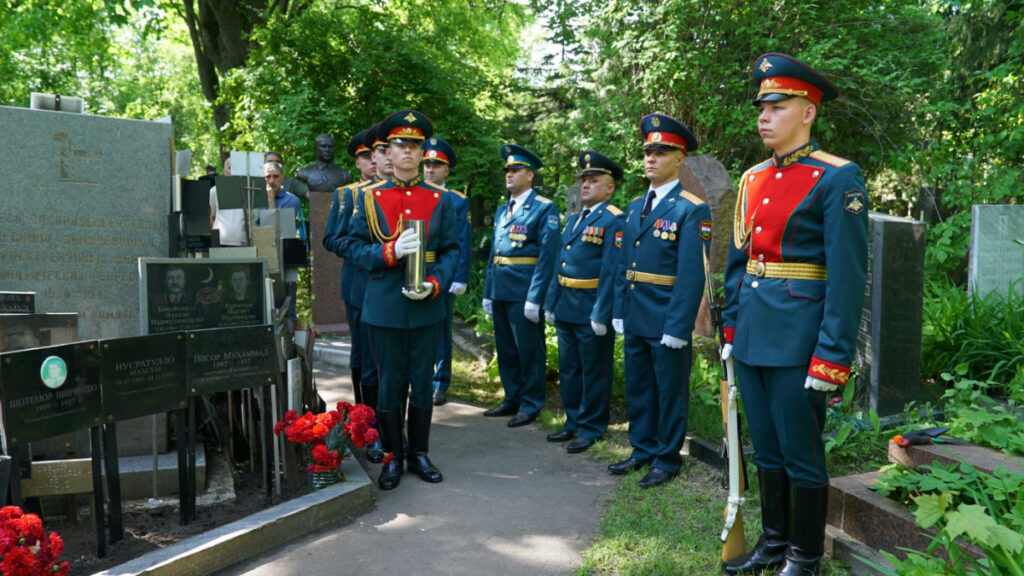
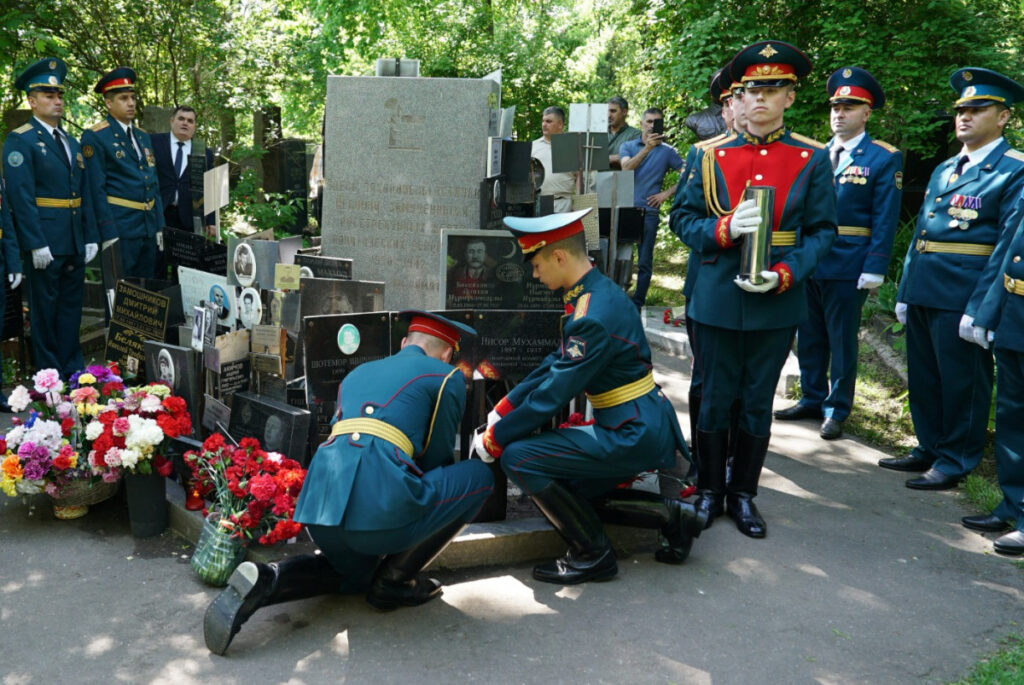
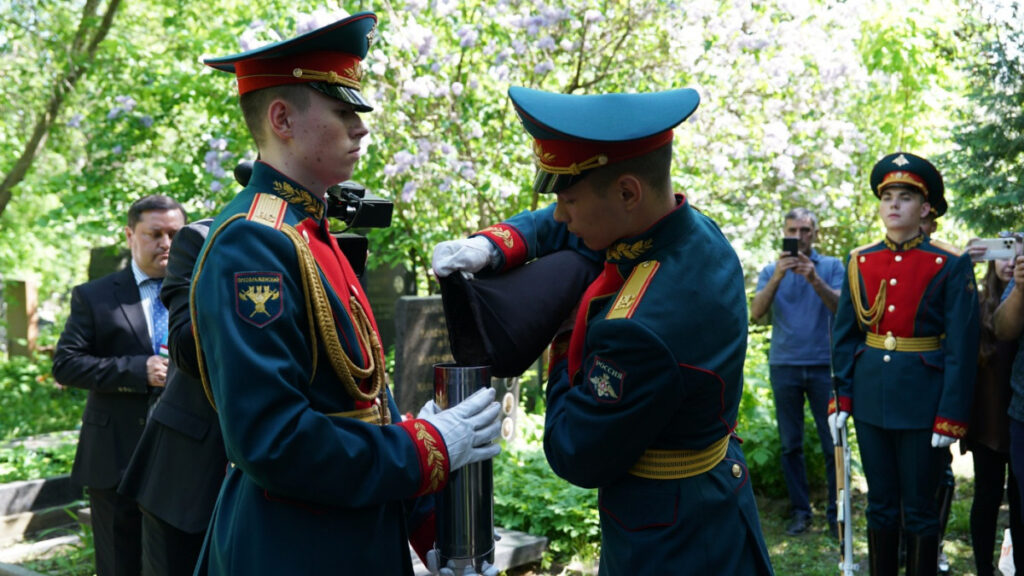
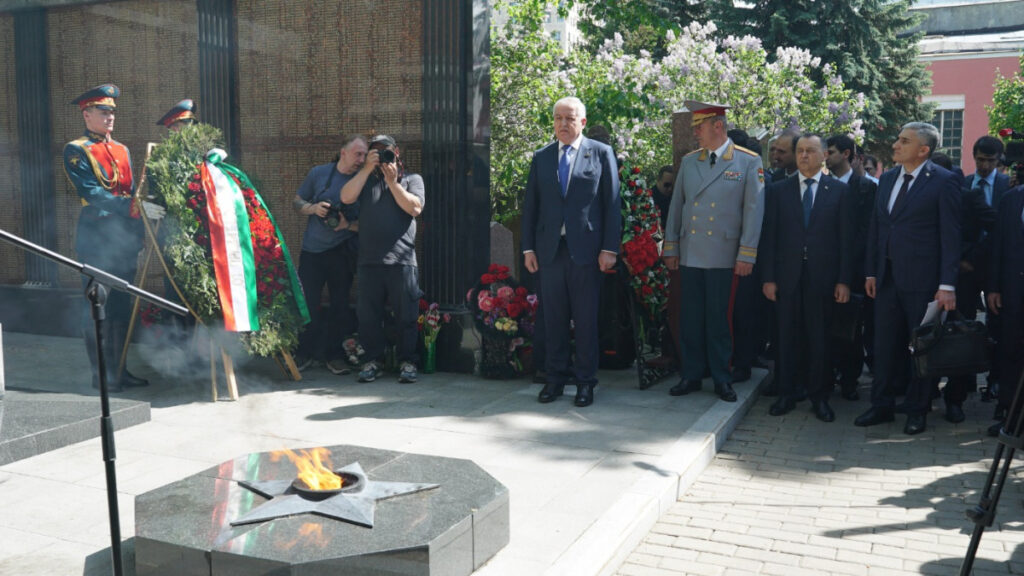
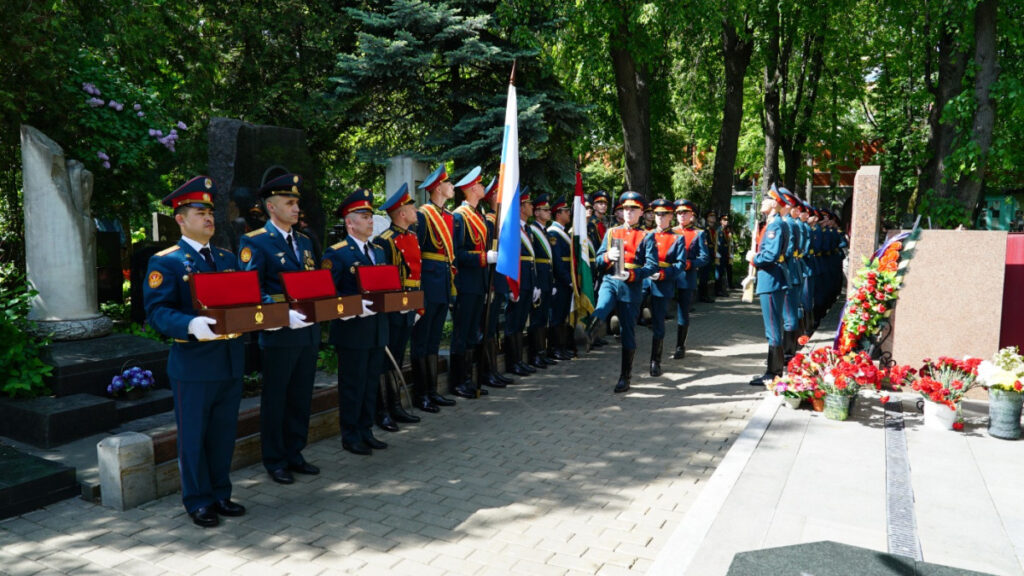
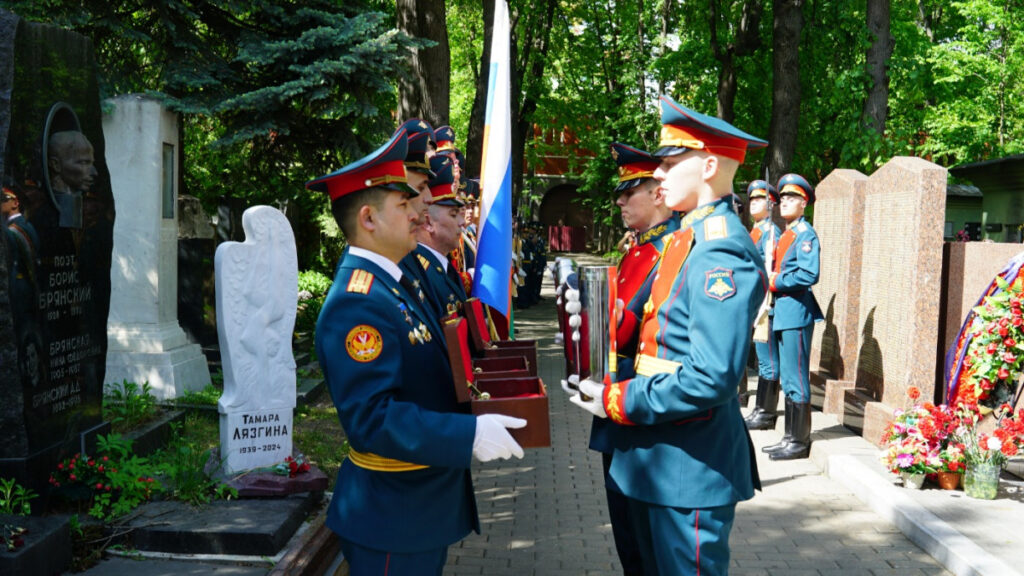
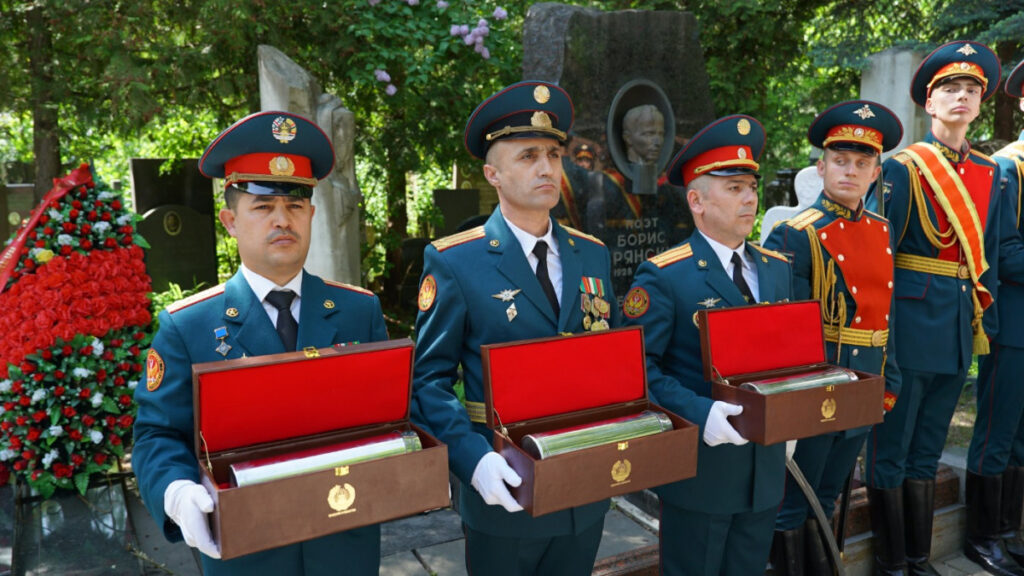
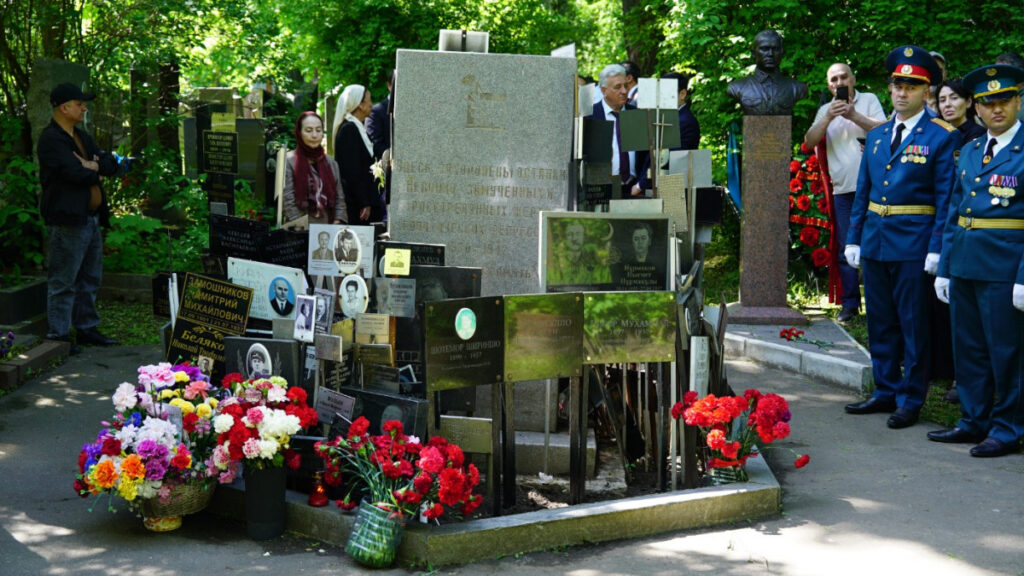
Shirinsho Shotemor, Nusratullo Makhsoum, and Nisar Muhammad were executed in Moscow in 1937 during the Stalinist repressions on political charges. They were buried in mass graves near Moscow. After Joseph Stalin’s death, in the 1950s-1960s, the cases of these figures were reviewed, and they were fully rehabilitated.
Shirinsho Shotemor
Shirinsho Shotemor, a Hero of Tajikistan, was one of the founders of Soviet Tajikistan. He played an important role in the national-territorial delimitation of Central Asia, the establishment and development of Tajikistan, the creation of the first Tajik newspapers and publications, schools, and universities, as well as in defending the rights of the young republic, which was constantly under pressure from pan-Turkist forces.
Historical sources highly appreciate Shirinsho Shotemor’s contribution to the construction of Tajik statehood and the preservation of Tajik identity. He participated in the creation of the first Tajik newspaper in Turkestan — “Ovozi Tojik,” which began publishing in Samarkand in September 1924, and also contributed to the publication of the first textbooks and the introduction of teaching in the Tajik language in Soviet schools.
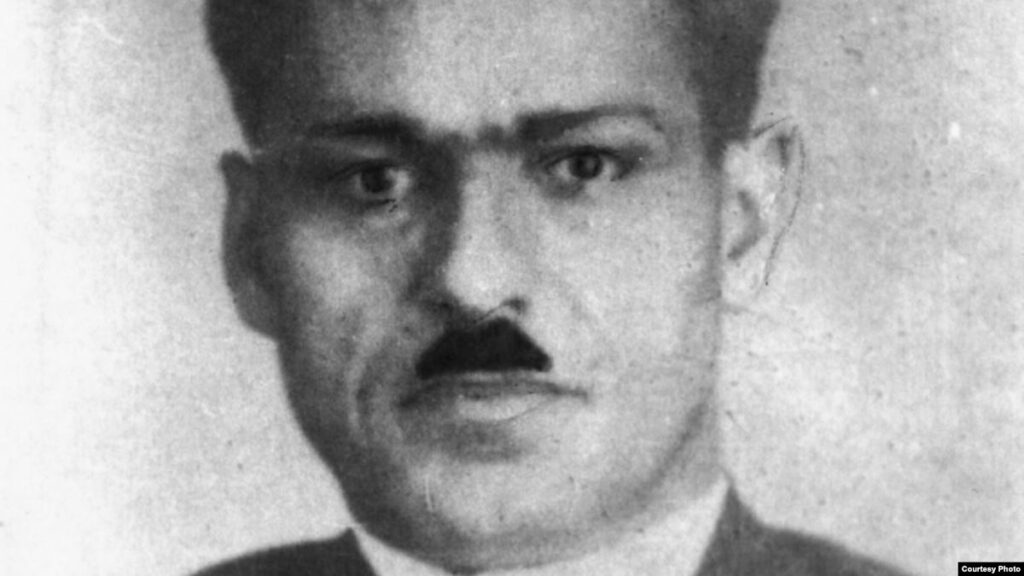
This visionary and educated leader was one of the main initiators of opening schools throughout the newly formed Tajikistan.
Despite all his merits before Soviet power and efforts to maintain peace among the Tajik people, he was unjustly declared an “enemy of the people.” Shirinsho Shotemor was arrested and executed on October 27, 1937. Only decades later, in the early 1960s, was he declared innocent. On June 27, 2006, he was awarded the title of Hero of Tajikistan.
Nusratullo Makhsoum
Nusratullo Maksum is one of the key figures in the political history of Tajikistan and one of the founders of the Tajik SSR. During a difficult political period, he consistently fought for the creation of the foundations of Tajik statehood, and his name is forever etched in history.
In the 1920s, Tajikistan was an autonomous republic within Uzbekistan, but thanks to the efforts of Nusratullo Maksum, it became a separate union republic within the Soviet Union.
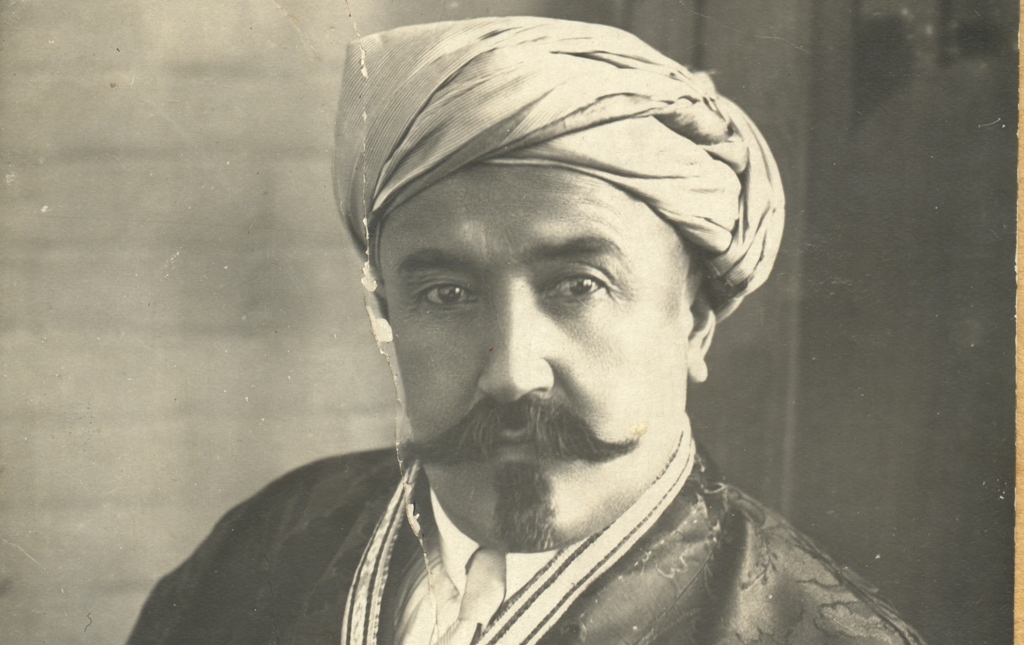
Unfortunately, he also became a victim of political repressions and the campaign to search for “enemies of the people” in 1937. On November 1, 1937, Nusratullo Maksum was executed. Only in December 1958 was he fully rehabilitated. On June 27, 2006, he was awarded the title of Hero of Tajikistan.
Nisar Muhammad
Nisar Muhammad was born in 1897 in Peshawar, in the territory of modern-day Pakistan, which was then part of British India. Later, he moved to Central Asia, where he became the first Minister of Education of Tajikistan. Moreover, he represented Tajiks in the enlightenment commission of the Bukhara Republic.
According to researchers, Nisar Muhammad made a significant contribution to the development of Tajik culture and education. However, in October 1937, during interrogations, he was accused of espionage and bourgeois nationalism and was killed without trial. His body was cremated. In the 1950s, he was fully rehabilitated.
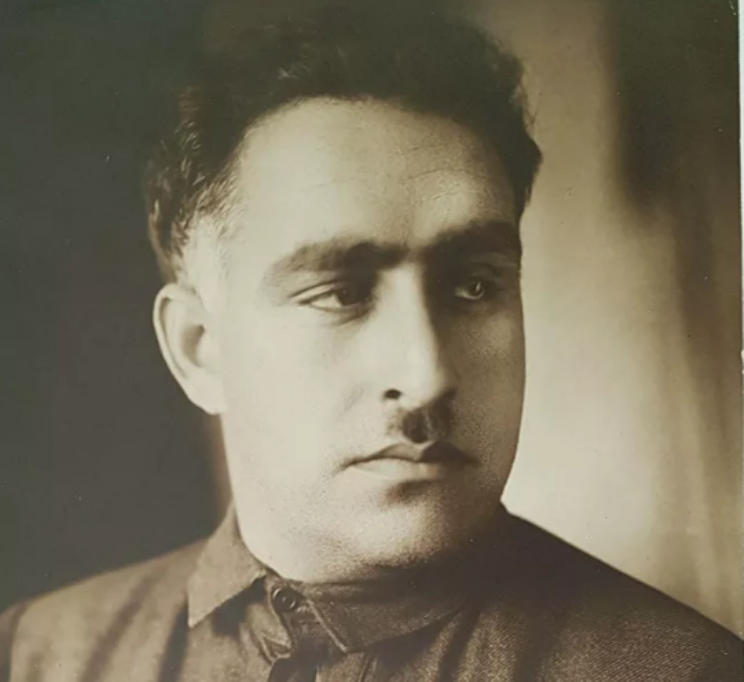
Nisar Muhammad was one of the authors of the first textbooks for Tajik schools in Central Asia. In 1923, he wrote the textbook “Arithmetic” for Tajik schools, as well as the book “Collection of Rubaiyat and Sayings of Tajiks of Shugnan.”
He played an important role in opening schools, libraries, colleges, and other cultural and educational institutions for Tajiks in Tashkent, Samarkand, Fergana, Khujand, and Dushanbe.
In 1922, Nisor Muhammad taught at the Central Asian State University. In 1926–1929 and in 1930, he twice held the position of People’s Commissar for Education of Tajikistan — effectively the Minister of Education. In 1932, he taught Urdu and Pashto at the Institute of Oriental Studies in Moscow.