
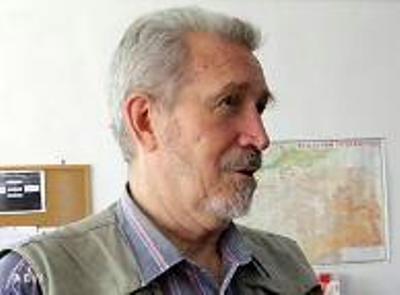
DUSHANBE, May 18, 2011, Asia-Plus — Conducting assessment studies for the Roghun hydroelectricity project is just a waste of time, Georgy Petrov, the head of the hydropower lab at the Institute for Water Problems, Hydropower and Ecology of the Academy of Sciences of Tajikistan, said in an interview with Asia-Plus.
“The assessment studies are senseless, because the problem is not in the project but in parties (Tajikistan and Uzbekistan) that cannot come to an understanding,” said the expert. “Instead of organizing these useless assessment studies Tajikistan had to enlist any qualified European company for improvement of the Roghun hydroelectricity project.”
Petrov doubts that the World Bank’s assessment studies will run counter to interests of any of parties. “Most likely, there will be inconsiderable comments and recommendations,” noted he, “In whole, the World Bank, in its assessments, will proceed from the “stint nobody” policy.”
In the meantime, the first set of riparian information-sharing and discussion meetings on the assessment studies for the proposed Roghun Regional Water Reservoir and Hydropower Project (Roghun HPP) opened in Almaty, Kazakhstan yesterday. Tajik delegation attending the meeting is led by the First deputy Prime Minister Asadullo Ghulomov. The government delegations of six countries (Afghanistan, Kazakhstan, Kyrgyzstan, Tajikistan, Turkmenistan and Uzbekistan) are meeting on May 17-18 and a discussion meeting for representatives of civil society will take place tomorrow.
The World Bank has established two independent Panels of Experts: Engineering and Dam Safety Panel and an Environmental and Social Impact Assessment Panel. At the conclusion of his visit to Tajikistan, the World Bank Director for Strategy and Operations for the Europe and Central Asia (ECA) Region Mr. Theodore Ahlers said on May 12 that the first reports outline the methodology for the assessments. According to him, the process will continue in phases, with the next round of consultations taking place tentatively in the fall of 2011. “We are committed to completing the assessments as quickly as possible, consistent with international quality standards. The final reports should be available by the end of 2012,” Mr. Ahlers said.
The consultants’ recommendations will be reviewed by the Panels of Experts, as well as the riparian governments and civil society stakeholders in the period from September to November 2011 when the next round of riparian consultations will take place. The draft Environmental and Social Impact Assessment is expected to be disclosed in December 2011.
Tajikistan’s plans to build the Roghun HPP have raised serious concerns across the border in Uzbekistan. Uzbek officials argue that because it could take up to 18 years to fill, the Roghun project will severely reduce the amount of water flowing into Uzbekistan.
In March 2010, the government of Tajikistan and the World Bank signed a memorandum of understanding (MoU) on cooperation to achieve sustainable development of Tajikistan”s energy resources, secure supply of energy services to the people of Tajikistan and promote balanced economic growth. Under this document, the techno-economic, the environmental and social impact assessments for the Roghun hydroelectricity project will be conducted Hydropower Project (HPP).
The World Bank has reached an understanding with the Government of Tajikistan that no new construction would commence until after the techno-economic and environmental/social studies have been shared and discussed with riparians, and the studies are reviewed by the independent Bank-funded Panel of Experts to determine feasibility.