DUSHANBE, November 5, 2009, Asia-Plus — A ceremony to mark the establishment of an OSCE-supported operational humanitarian mine clearance unit within the Ministry of Defense (MoD) was held at the OSCE Office in Tajikistan today.
The document on the establishment of the humanitarian demining unit within the MoD was signed by the First Deputy Minister of Defense, Ramil Nadyrov, and Deputy Head of the OSCE Office in Tajikistan, Klaus Rasmussen.
“Setting up a national humanitarian mine clearance capacity within the Tajik armed forces is an important step for Tajikistan in fulfilling its obligations as a signatory of the Ottawa Treaty,” said Klaus Rasmussen, Deputy Head of the OSCE Office in Tajikistan. “We recognize the dire impact that the mine threat has for development, security and public safety and are proud to support Tajikistan in this way.”
Mr. Rasmussen noted that the unit would have a staff of 16. According to him, the unit will be provided with all necessary technical equipment due funds from the OSCE Office in Tajikistan, which has allocated €5.2 million (equivalent to more than US$7.62 million) for these purposes.
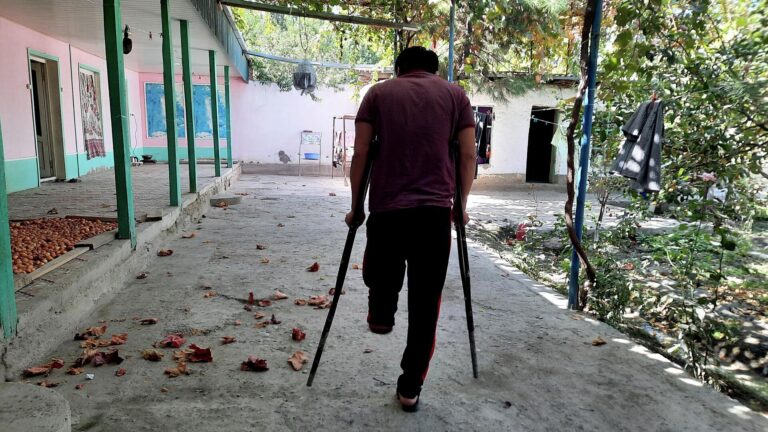
General Nadyrov noted that the new unit would be sent to work on the Tajik-Afghan border in Khatlon’s Panj district. According to the MoD estimates, more than 200,000 antipersonnel mines were laid in that area, he added. Since 1992 landmines have killed more than 354 people and injured 448 more in Tajikistan, the deputy minister said.
“Clearing landmines contributes to the country”s economic and environmental security, as more land becomes available for agriculture and reforestation, and helps improve cross-border cooperation and monitoring,” said Jonmahmad Rajabov, the Head of Tajik Mine Action Cell (TMAC) at the ceremony.
We will recall that most land mines in Tajikistan were laid during the five-year civil war, which ended in 1997. In many areas the mines still pose a deadly threat as well as a major impediment to effective land use.
Additional mines were laid along the Tajik-Uzbek border by the Uzbek authorities in the late 1990s. The action was reportedly taken to stave off incursions by the Islamic Movement of Uzbekistan (IMU). This unilateral decision of Uzbekistan has caused many casualties among the civilian Tajik population. Most of the victims were women and children who were gathering firewood along the border as well as shepherds pasturing cattle in the areas.
According to press release issued by the OSCE Office in Tajikistan, Tajikistan has the largest landmine problem among all Central Asian countries, with more than 15 square kilometers of land in need of mine clearance. Most of the mines were laid during the civil war between 1992 and 1997.
Since 2003, at the Tajik Government”s request, the OSCE has been assisting the country in addressing the humanitarian threat posed by landmines. Over the last five years the OSCE Office in Tajikistan has supported a program of mine clearance, battle area clearance, explosive ordnance disposal and survey activities.
Since September 2004, under the program a total of 2.8 million square meters of mine-contaminated land have been cleared, 42.5 million square meters of suspected mined area reclassified and about 13,000 antipersonnel mines and unexploded ordnances destroyed.