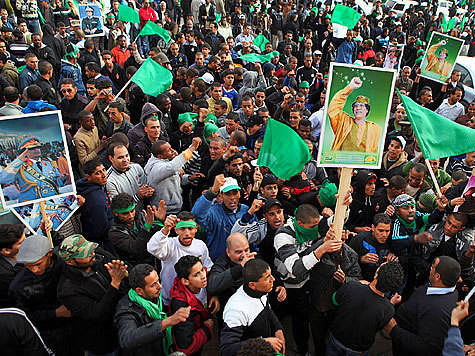
DUSHANBE, February 21, 2011, Asia-Plus — Libyan leader Muammar Gaddafi”s son, Sayf al-Islam, has warned that civil war could hit the country.
According to BBC, his comments came in a lengthy TV address to the nation broadcast as anti-government protests spread to the capital Tripoli. Despite criticizing protesters, he also held out the promise of significant political reforms. He admitted that the police and army had made “mistakes”, but said the death toll was far lower than reported.
In Libya, the main focus of the demonstrations against Colonel Muammar Gaddafi”s 42-year-old rule has been the second city, Benghazi. The violence spread to Tripoli after days of protests in Benghazi, in which at least 233 people have been killed, according to the New York-based group Human Rights Watch (HRW).
Communications are tightly controlled and Benghazi is not accessible to international journalists, but the picture that has emerged is of a city slipping from the grasp of security forces in the biggest challenge to Gaddafi”s rule since the “brotherly leader” seized power in a 1969 military coup, Reuters reported on February 20.
Sayf Gaddafi said opposition groups and outsiders were trying to transform Libya into a group of small states. If they succeeded, he said, foreign investment would stop and living standards would drop drastically. He also criticized the foreign media for what he termed their exaggeration of the extent of the violence in Libya.
In the meantime, at least five people have been killed during widespread anti-government demonstrations in Yemen, according to international media outlets. Four people were killed in the southern port city of Aden by gunfire as police moved to disperse protesters and one person was killed and many injured in the city of Taiz when a grenade was thrown from a car at protesters. In the Yemeni capital Sanaa, supporters and opponents of President Ali Abdullah Saleh clashed on the streets. During what has been described as a nationwide “Friday of rage” (February 10), tens of thousands of protesters in several cities demanded that President Saleh leave office immediately. They are angry about corruption and unemployment in the country. Reuters reported on February 20 that the leader of Yemen”s secessionist Southern Movement was arrested in Aden and shots were fired at a demonstration in Sanaa on Sunday as unrest hit the impoverished Arab country for a ninth consecutive day. Saleh on Sunday renewed his call for opposition parties to continue their dialogue and blamed the last two days of protests, in which five people were killed, on “elements outside the system and the law.”
In Bahrain, opposition groups and anti-government protesters say their demands must be met before they will enter into talks with the Gulf state”s monarchy, according to BBC. They want the government to resign, political prisoners to be released and the deaths of protesters investigated. Six people were killed and many wounded in the last week as security forces used deadly force to quell protests. Demonstrators have re-established a protest camp in Manama”s central Pearl Square after security forces withdrew. The majority Shia population in Bahrain has long said they are discriminated against when it comes to housing and government jobs. They have also been calling for greater political rights from the Sunni royal family. But the protesters have been careful to describe their revolt as non-sectarian, chanting slogans such as: “There are no Sunnis or Shias, just Bahraini unity.”
According to international media outlets, the Middle East region is seeing a wave of pro-democracy protest, fuelled by the fall of Egypt”s Hosni Mubarak on February 11, and long-time Tunisian President Zine al-Abidine Ben Ali in January.