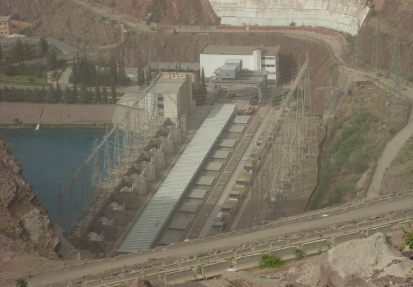
DUSHANBE, March 24, 2011, Asia-Plus — Rural areas of Tajikistan are experiencing limits of electricity usage in connection with abnormally low water flow in the Vakhsh River and low water levels in the reservoir powering the Norak hydroelectric power plant (HPP). Rural residents now have electricity for only two or three hours per day.
Nozirjon Yodgori, a spokesman for Barqi Tojik power holding (the state-owned utility responsible for generation, transmission, and distribution of electricity in Tajikistan), says water levels at the Norak reservoir have fallen to 858.4 meters and “only little more than one meter remains to the critical point.”
“Current water flow rate in the Vakhsh River is now 150-160 cubic meters per second, which is three times lower than last year and two times lower than an average long-term level,” said Yodgori. “Such a low water flow rate in the Vakhsh River has not been registered since 1932.”
According to him, electricity rationing has not yet affected Dushanbe. “Barqi Tojik is doing its level best to ensure regular electricity supply to Dushanbe, but everything depends on the water flow in the Vakhsh River,” the spokesman said.
Barqi Tojik reintroduced electricity rationing on the eve of the Navrouz holiday. According to Radio Liberty’s Tajik Service, Odinamamad Chorshanbiyev, an official with Barqi Tojik, confirmed on March 21 that the power reductions began on March 20. Chorshanbiyev said the main reason for the reintroduction of power rationing in the country is the abnormally weak water flow in the Vakhsh River, currently at 63-70 cubic meters per second, or some 3.5 times less than it was 70 years ago, RFE/RL’s Tajik Service reported, noting that Barqi Tojik officials said that there are no limitations on power to strategic buildings in Dushanbe, but during the night residential buildings in the capital will have electricity for only two hours.
Barqi Tojik apologized to residential customers for the inconvenience the power outage might cause.
In the spring and summer, Tajikistan’s hydropower plants generate a huge amount of electricity that is exported to neighboring countries, but in the autumn and winter, especially if the summer was dry and water levels in reservoirs are low, electricity rationing is introduced in the country.
This winter, electricity rationing did not affect Dushanbe, the regional administrative centers and main cities, while rural areas had electricity for about seven hours a day.