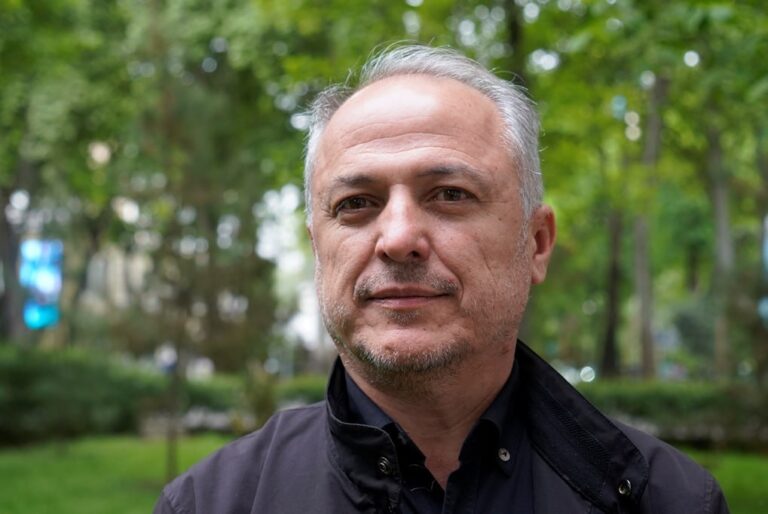
DUSHANBE, October 27, 2011, Asia-Plus — “A statement by Belarusian president about the necessity of withdrawing Uzbekistan from the Collective Security Treaty Organization (CSTO) means nothing and it is not connected with his visit to Tajikistan,” Tajik political scientist Rustam Haidarov told an Asia-Plus in an interview Thursday afternoon.
“Most likely, this statement is connected with the upcoming deployment of the U.S. troops in Uzbekistan,” said Haidarov. “Nothing will change in relations between Tajikistan and Uzbekistan if the latter quits the CSTO. All unsolved problems will remain unsolved.”
According to him, official Tashkent will initiate Uzbekistan’s withdrawal from the Organization itself as soon as the United States deploys its troops in Uzbekistan.
“Uzbekistan is the only country in the region, upon which the United States may relay in terms of deployment of its troops. I am sure that the issue of deployment of the U.S. troops in Uzbekistan has already been solved by political leaders of the neighboring country positively,” said Haidarov. “This means that expert resolution by the World Bank, which is controlled by the United States, will block the completion of construction of the Roghun hydroelectric power plant (HPP) in Tajikistan.”
We will recall that during a meeting with parliament speakers from the Collective Security Treaty Organization (CSTO) member nations in Minsk ahead of his visit to Tajikistan, President Lukashenko offered to review the issue of further participation of Uzbekistan in the Organization.
Some media outlets quoted Lukashenko as saying that Uzbekistan is playing a triple game that does not allow it to be in the CSTO. “I have sent my observations to the President of Russia. We must make a decision on Uzbekistan,” Belarusian leader was cited as saying.
The regional security organization was initially formed in 1992 for a five-year period by the members of the CIS Collective Security Treaty (CST) — Armenia, Kazakhstan, Kyrgyzstan, Russia, Tajikistan, and Uzbekistan, which were joined by Azerbaijan, Georgia, and Belarus the following year. A 1994 treaty “reaffirmed the desire of all participating states to abstain from the use or threat of force,” and prevented signatories from joining any “other military alliances or other groups of states” directed against members states. The CST was then extended for another five-year term in April 1999, and was signed by the presidents of Armenia, Belarus, Kazakhstan, Kyrgyzstan, Russia, and Tajikistan. In October 2002, the group was renamed as the CSTO. Uzbekistan became a full participant in the CSTO on June 23, 2006; and its membership was formally ratified by the Uzbek parliament on 28 March 2008. The CSTO is currently an observer organization at the United Nations General Assembly.